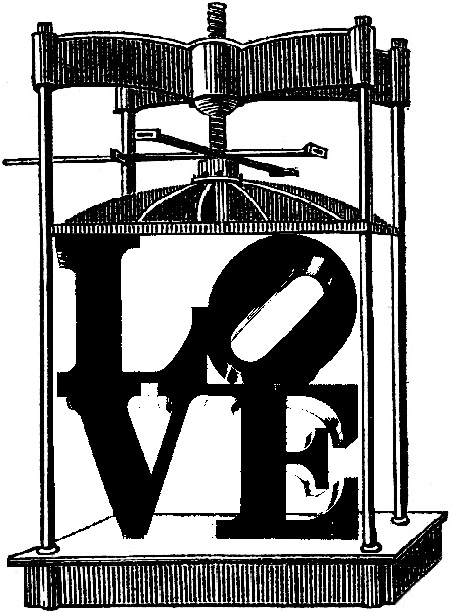
Reaction: Artists Transform the Sample Book
September 5, 2025 – February 2026
Science History Institute Museum & Library, Museum Mezzanine
315 Chestnut Street
Philadelphia, PA 19106
Opening Reception September 5, 2025, 5-7pm
To view images of the exhibition & opening >>>>>>>>
This exhibition by artist-members of the Delaware Valley Chapter of the Guild of Bookworkers draws inspiration from sample books in the Science History Institute’s Othmer Library. For more than three centuries, sample books have showcased both personal and industrial products ranging from decorative fabrics and paper goods to pigments, soaps, and varnishes.
Intended as a marketing tool, the portable and tactile product samples housed in these books aimed to captivate viewers with dazzling colors, textures, and patterns. Many also include handwritten notes, recipes, or chemical formulas, offering insight into scientific, manufacturing, and design changes over time.
Sample books vibrantly bridge science, art, design, and industry, and provide a window into historic trends in color, commerce, industrial production, and more. As such, they remain rich and dynamic items for contemporary interpretation. The artist books displayed here reimagine and interpret the content, visuals, and structures of these historical works.


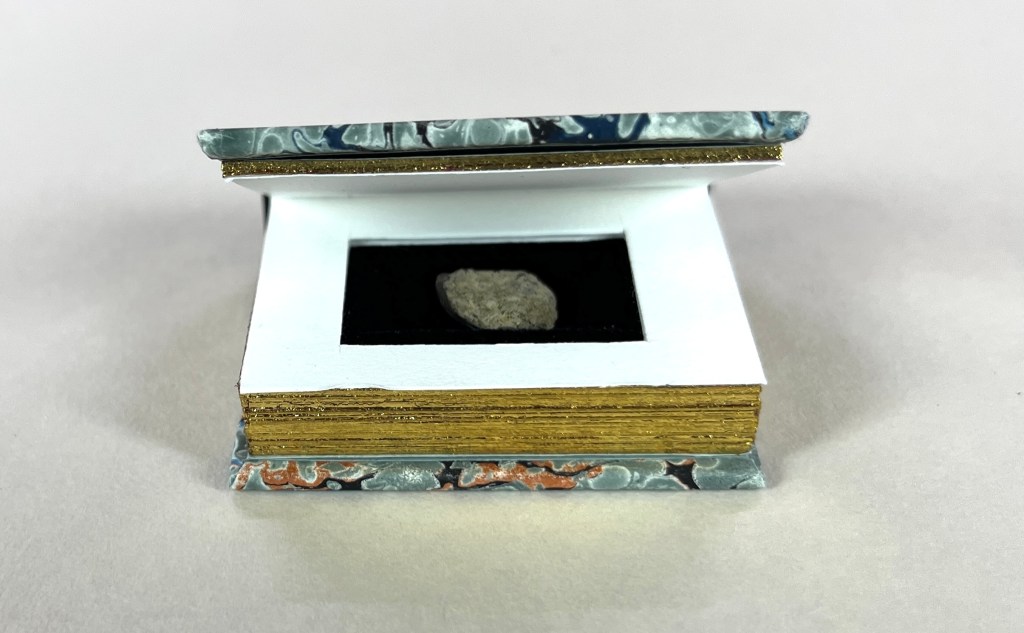

The Little Library of Deep Time
Book board, book cloth, card stock, gold leaf, velvet, marbled paper, rocks, and fossils
These encyclopedia inspired book-boxes hold a sampling of precious-to-me rocks and fossils I collected with a dear friend.


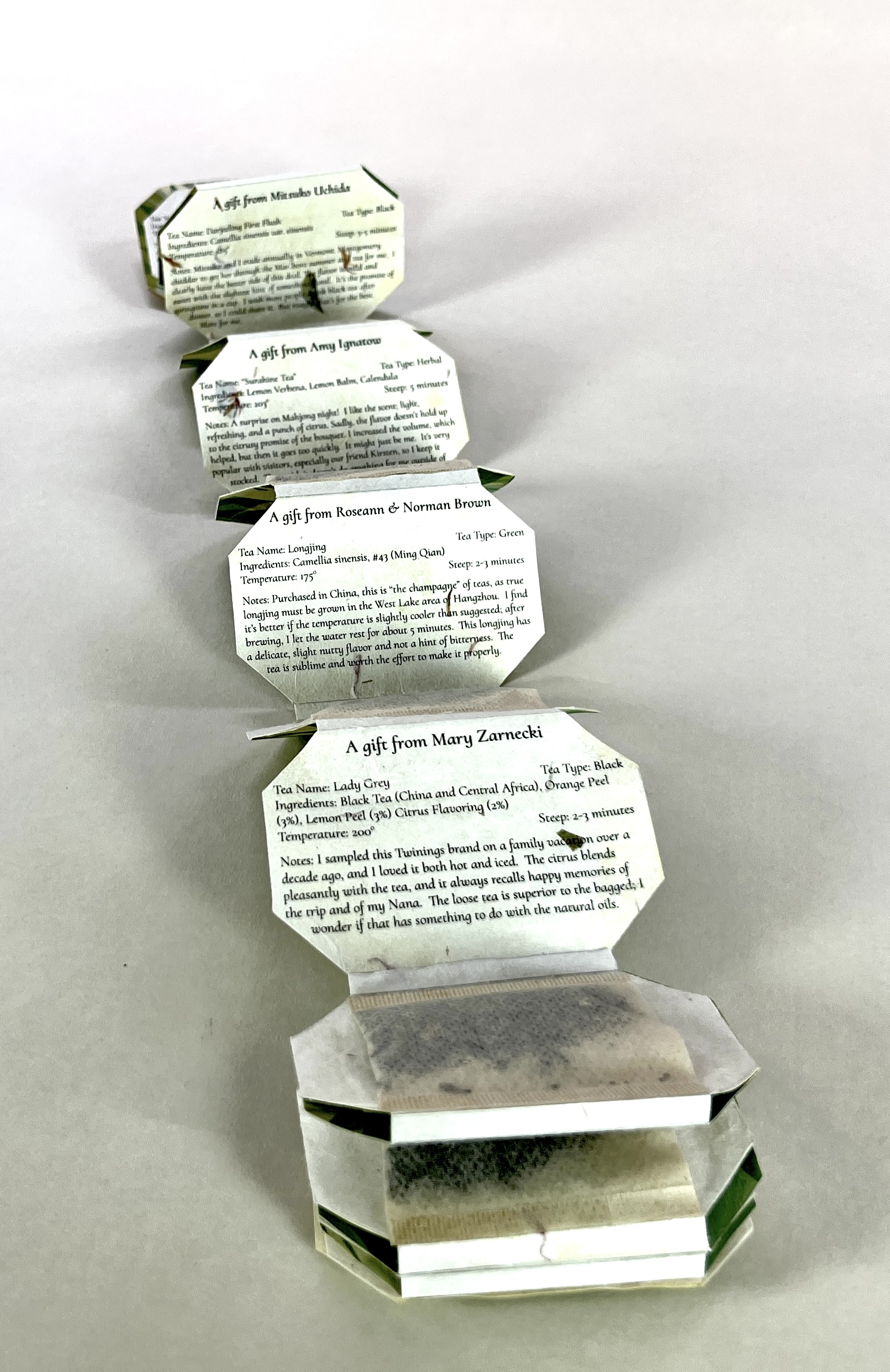
Tea Time: Thoughts That Have Been Brewing
Handmade paper (hand-marbled paper laminated to hand-made paper with tea leaves and flower petals), wood, zinc, tea leaves, ink
A chance encounter with a grinning wooden tea box was the inspiration for this book. The grin meant the tea box’s original career was at an end; a lid that doesn’t close properly is an invitation to pests. It was also an invitation to creativity, as the box became the outer component of this book. Making a proper pot of tea may be the most scientific part of my day. Two scoops into our Brown Betty creates eight cups of joy. The water temperature and time must be exact or the brew risks being weak or bitter. A glance in our tea cabinet confirmed that this had the potential to be a robust project. Tea Time: Thoughts That Have Been Brewing features samples of gifts from friends and family, although some have been repurchased over the years. The memories of the gifts, though, are still just as fresh and invigorating.
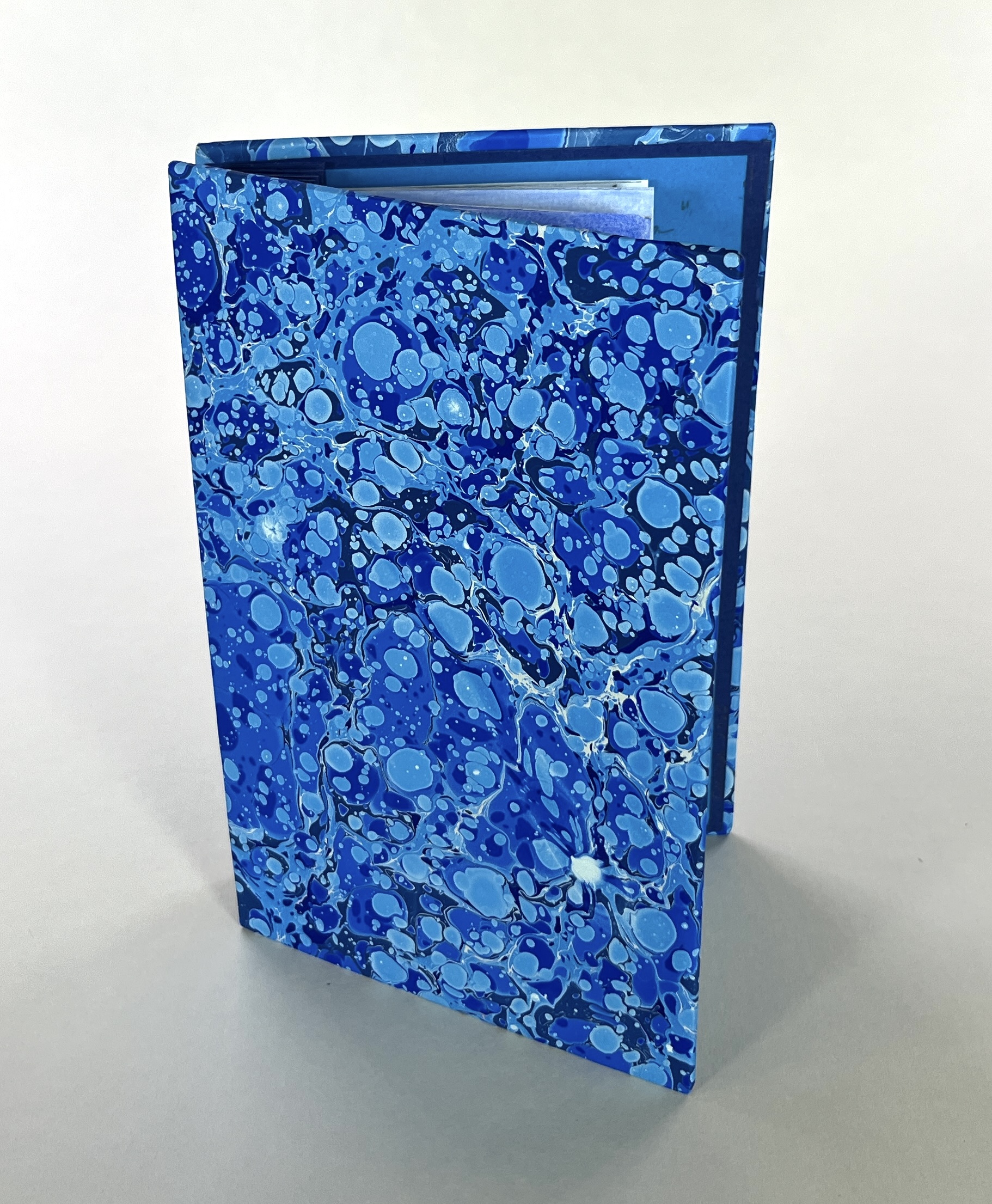
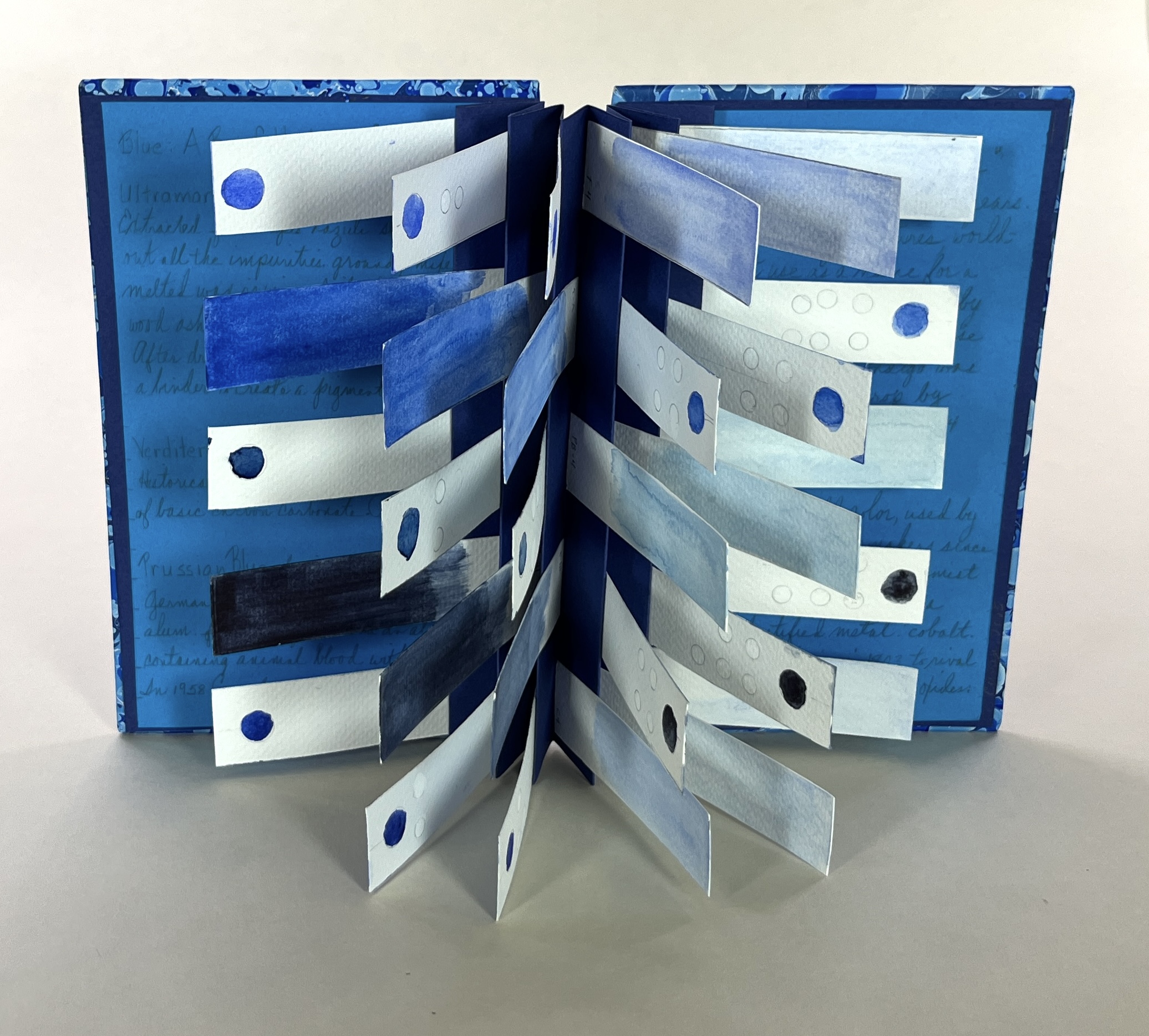


Blue: A Brief History of a Color
Flag structure with watercolors, collage, and pencil on Fabriano Hot Press paper; book board with marbled papers; accordion spine with Canson papers
Blue is magical, the color of skies and oceans, of moods and dreams. Blue has a special place in art history due to its rarity in nature and the difficulty of creating blue pigments and dyes. Historically, artists have often saved their “best” blues for special features in their paintings: the skies, the clothing of royalty and saints, the robes of the Virgin. This sample book shows variations of early shades of blue; the text references their scientific history and cultural impact. The flag book structure lends itself to a progression of shades for each base color, from full to pale, by adding in increasing amounts of white pigment.
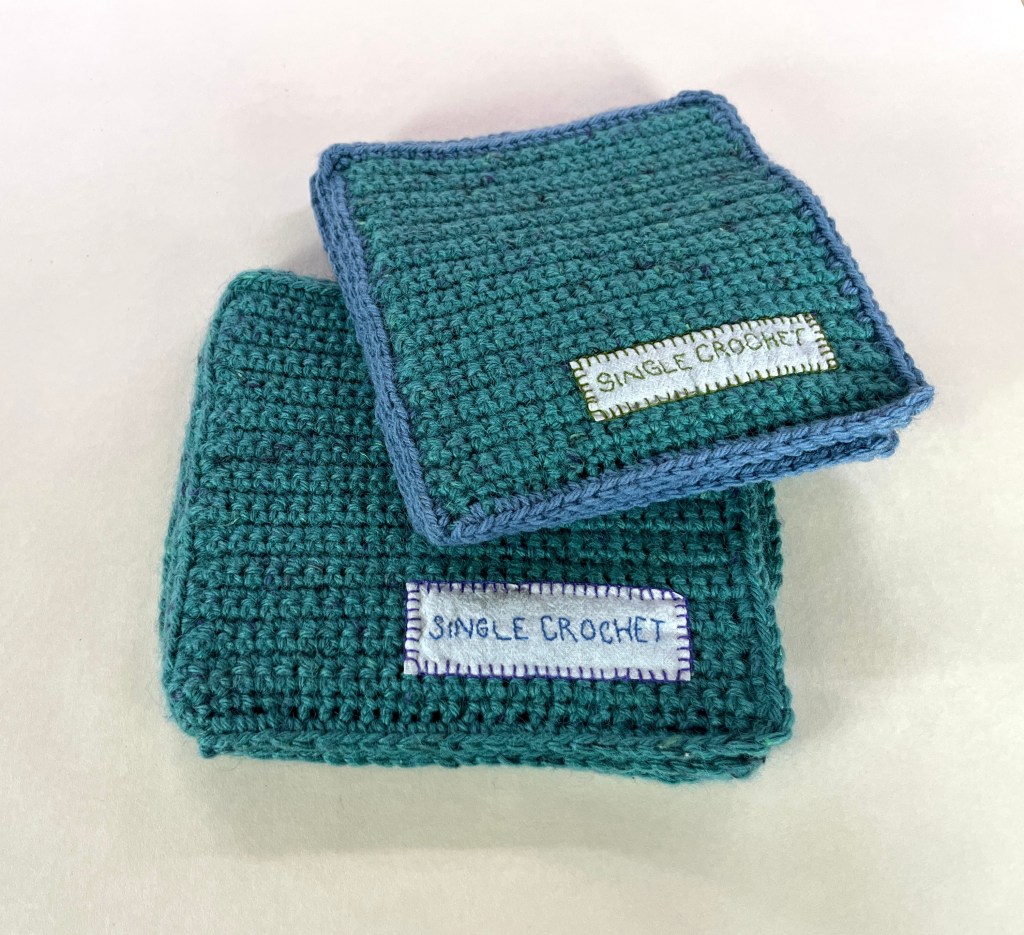

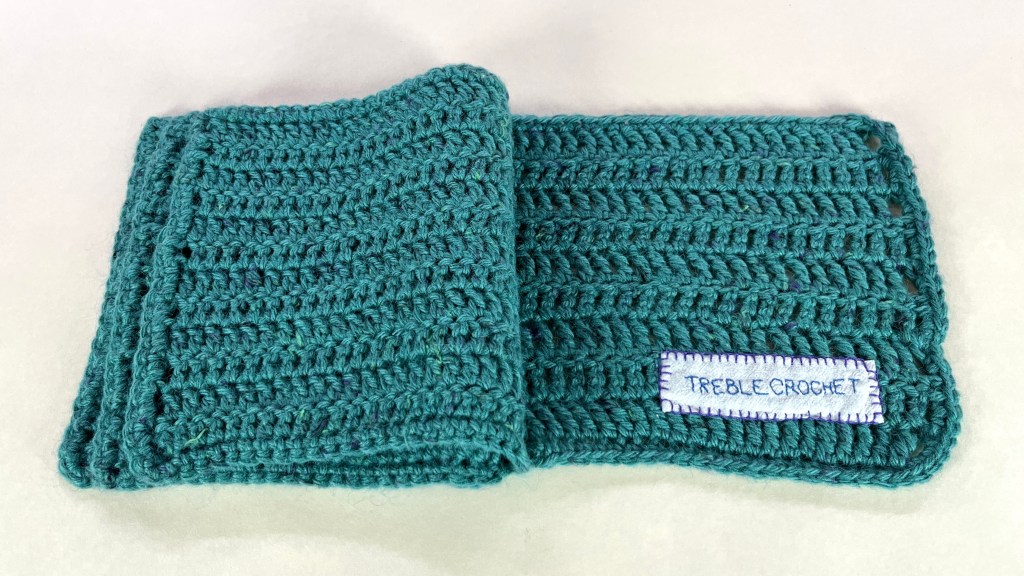
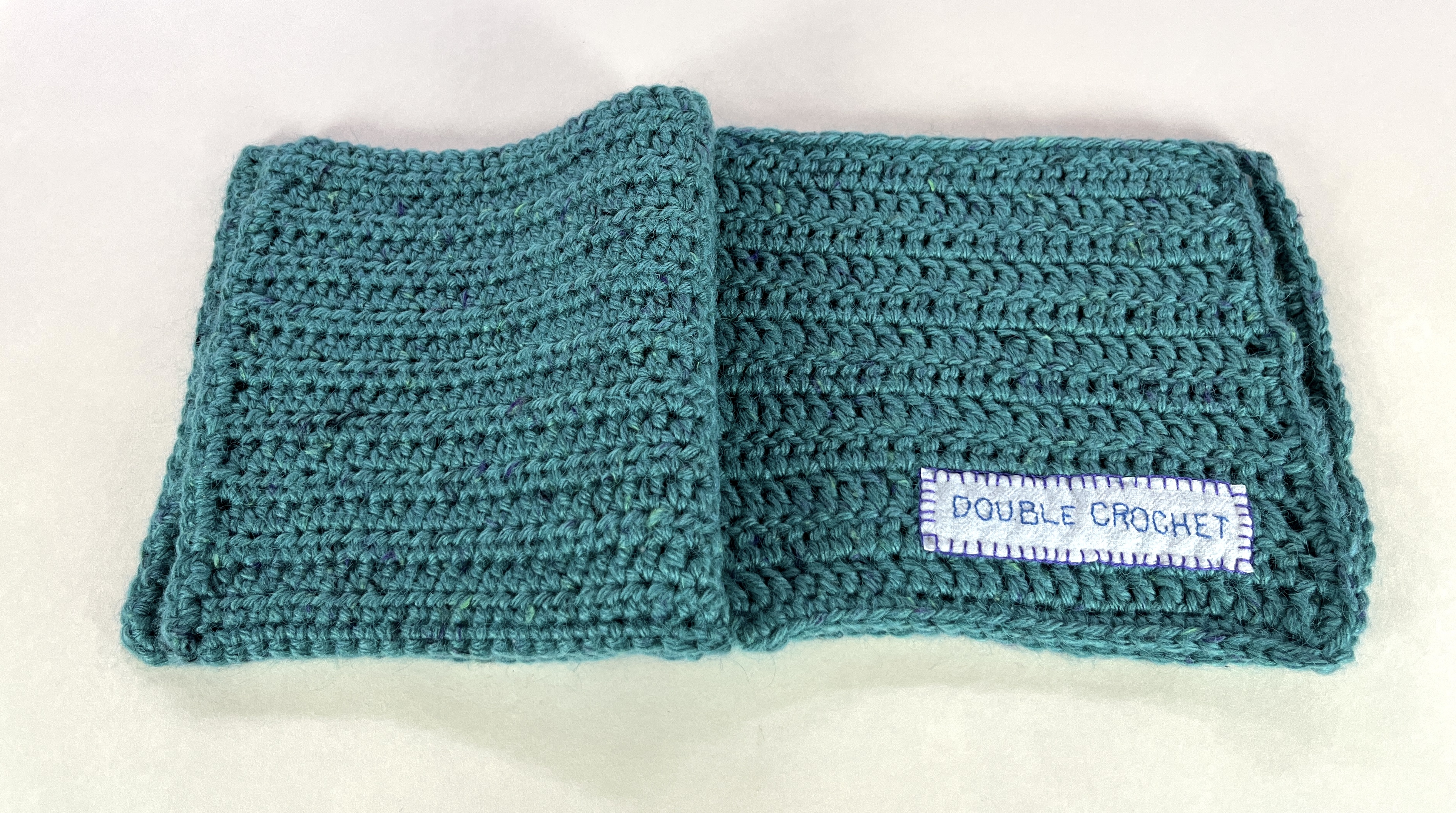

Crochet Samplers
Acrylic yarn, cotton, embroidery thread
In the world of crochet, crafters are often tasked with making a gauge swatch for accurate sizing. This small square combines the suggested yarn type, required hook size, and tension of the crocheter’s stitches to determine if a finished garment will fit or not, and what
adjustments should be made to the written pattern. As a book artist, I see these swatches as pages just begging to be bound into one reference volume. The first volume consists of simple beginner stitches; the second volume consists of advanced stitches. Both serve as a quick reference guide when beginning a new pattern or project.

Color on Color
Marbled papers
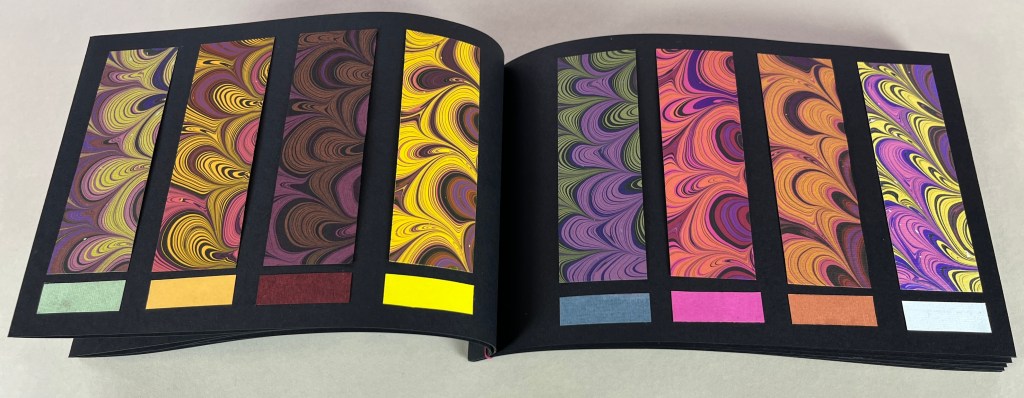
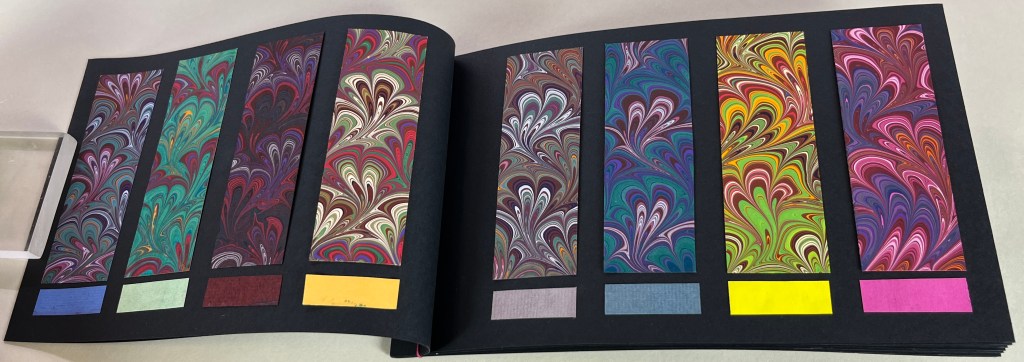
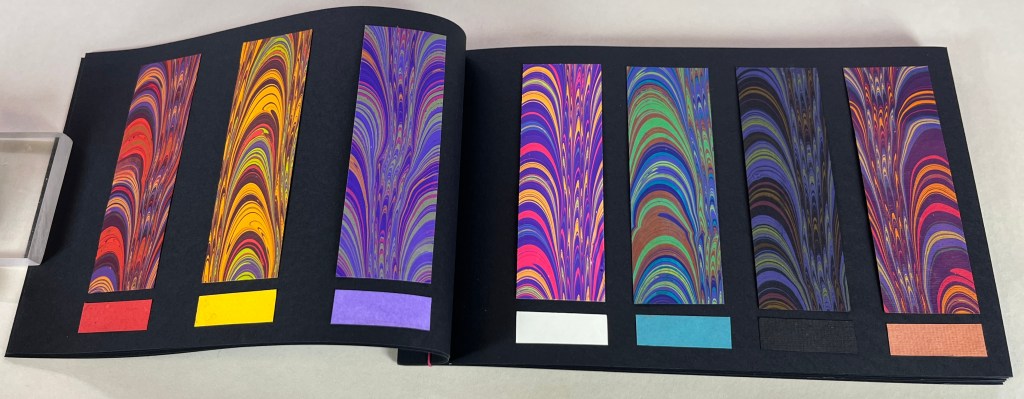
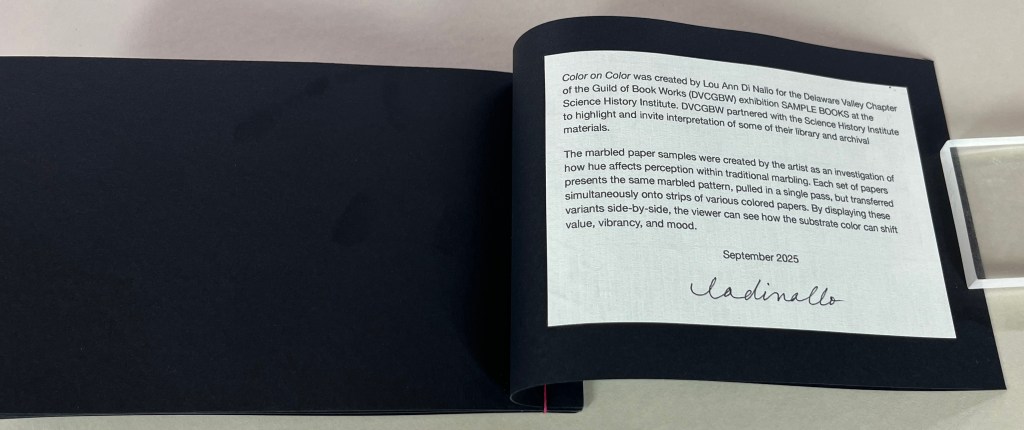
Color on Color is a working sample book that investigates how hue affects perception within traditional marbling. Each set of papers presents the same marbled pattern, pulled in a single pass, but transferred simultaneously onto strips of various colored papers. By displaying these variants side-by-side, the viewer can see how the substrate color can shift value, vibrancy, and mood. The project extends historic color-matching sample books by inviting viewers to reconsider how paper choice shapes meaning.


Botanical Wonders II
Book board and book cloth, cork paper, inkjet prints on Asuka paper
The varied and amazing chemical elements in plants can alter the typical blue color of a cyanotype print. The tannins in the plants combine with the iron in the cyanotype emulsion to create this magic. For a few years now, I have been experimenting with the plants in my yard and with produce from the grocery store to see what colors I can create. Here are some plants I have highlighted in this book: strawberry leaf, yew, nasturtium leaves, avocado pit, persimmon leaf, Japanese maple leaves, onion, banana peel, sycamore leaf, fig leaf, ivy, grape leaves, elderberry leaves, and artichoke leaf.


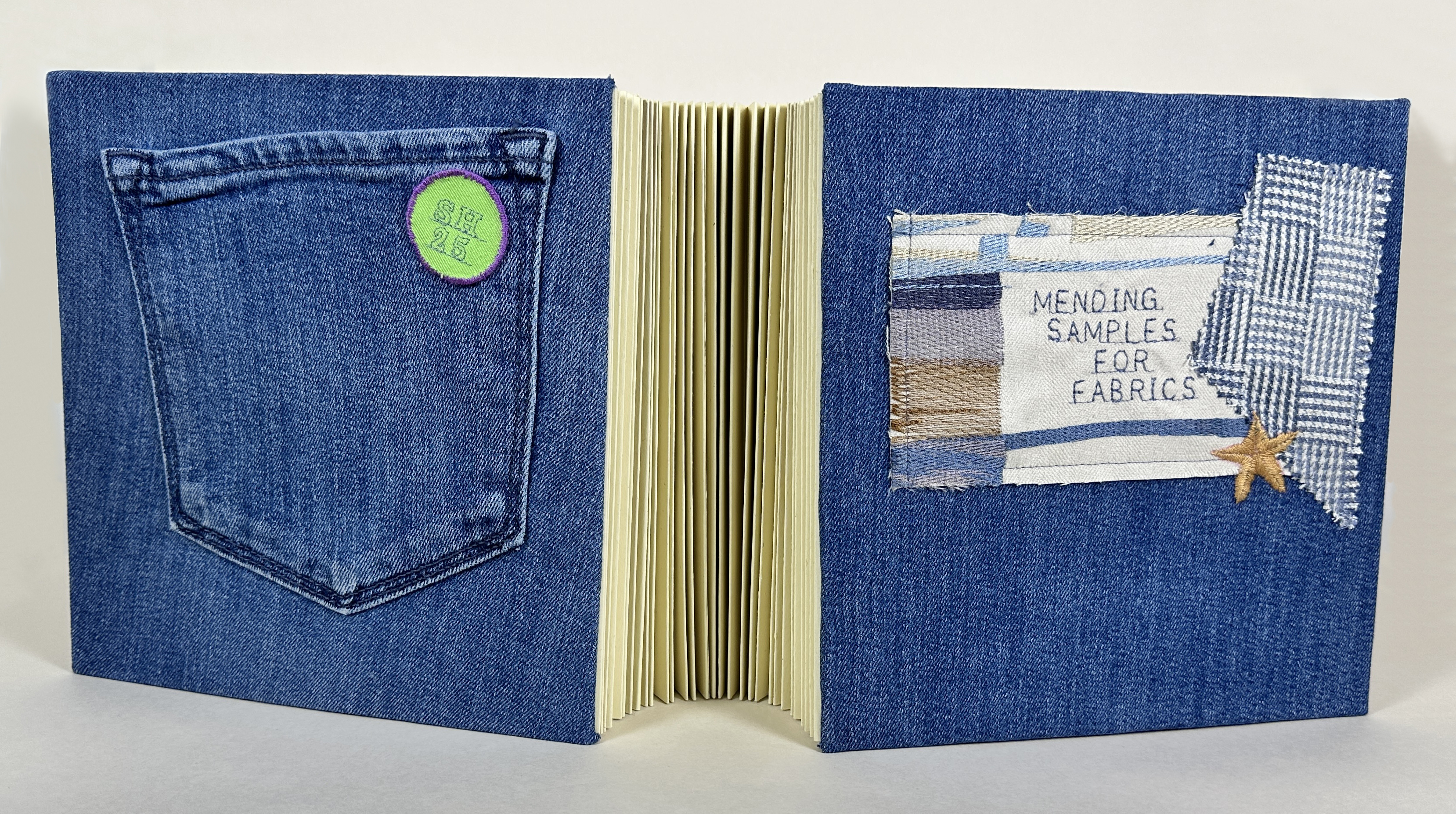
Mending Samples for Fabric
Fabric, thread, yarn, patches, and paper
Mending is having a moment. Driven by a desire for sustainability, economic benefits, and expression of unique individual style, more people are fixing their favorite clothes rather than buying new. Mending Samples for Fabric presents a collection of mending samples each demonstrating a different approach to fabric repair utilizing techniques such as patching, darning, and embroidery. Considerations such as extent of damage, fiber content, and fabric strength are taken into account, and a list of helpful supplies and diagrams of embroidery stitches is provided.


Papers By Prudence
Hand papermaking
This sample book contains handmade papers made by Tina Hudak (and Prudence) over the past decades. Part I includes a booklet that offers a history of their work together, with other notes. Part II contains 10 separate folios with sample papers and their details regarding dyes, additives, style of papermaking, sizes, and more. All are enclosed within an archival box made by this artist. The concept and format are based upon Color for the Hand Papermaker by Elaine Koretsky of Carriage House Press.


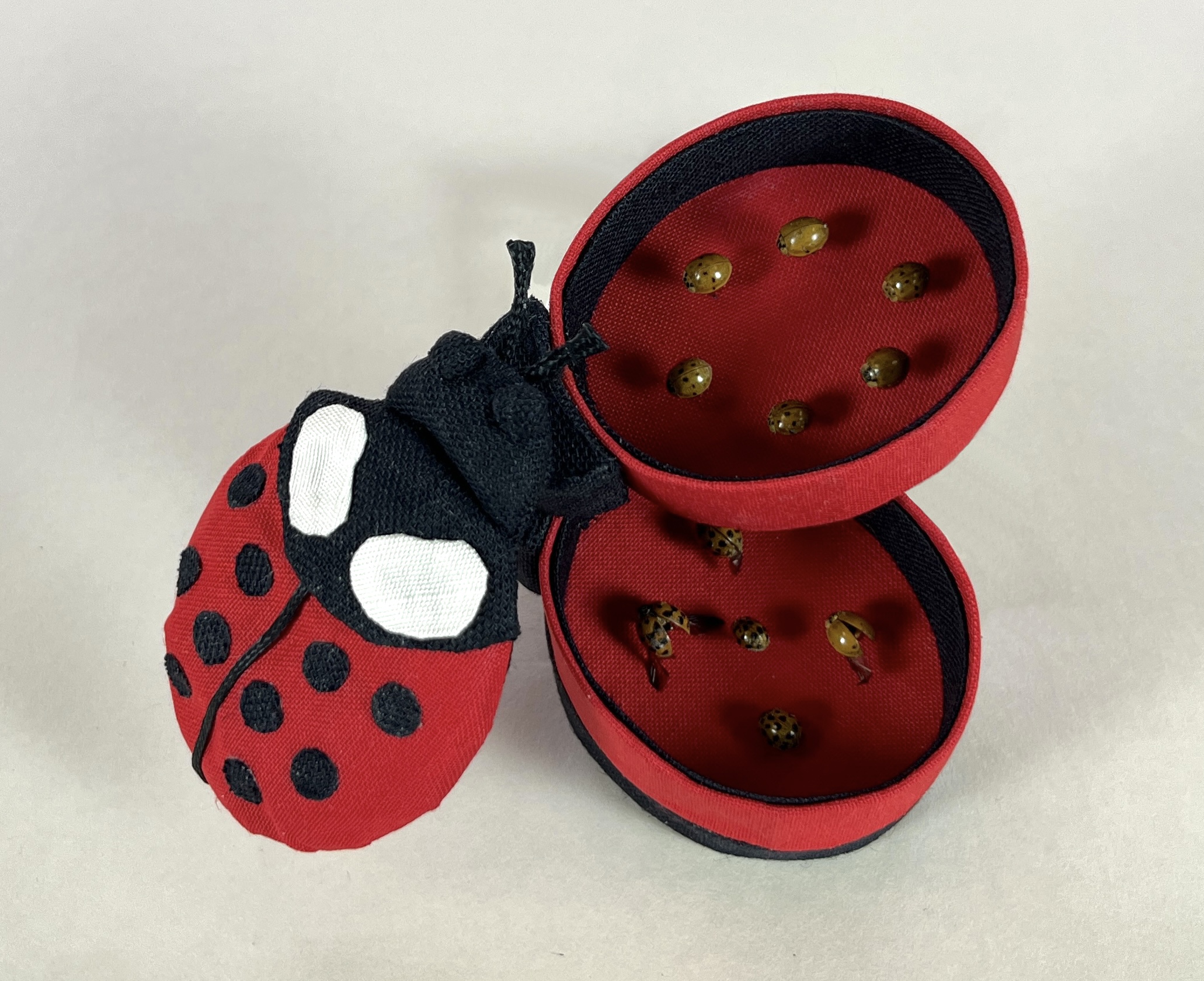
A Sample of Coccinellidae
Bookcloth, thread, various boards, type
As part of my work sometimes I help do environmental monitoring and integrated pest management. I found this sample of beetles while walking through collection storage. I save all the deceased arthropods I find. I felt this little sample set deserved a fitting resting place.
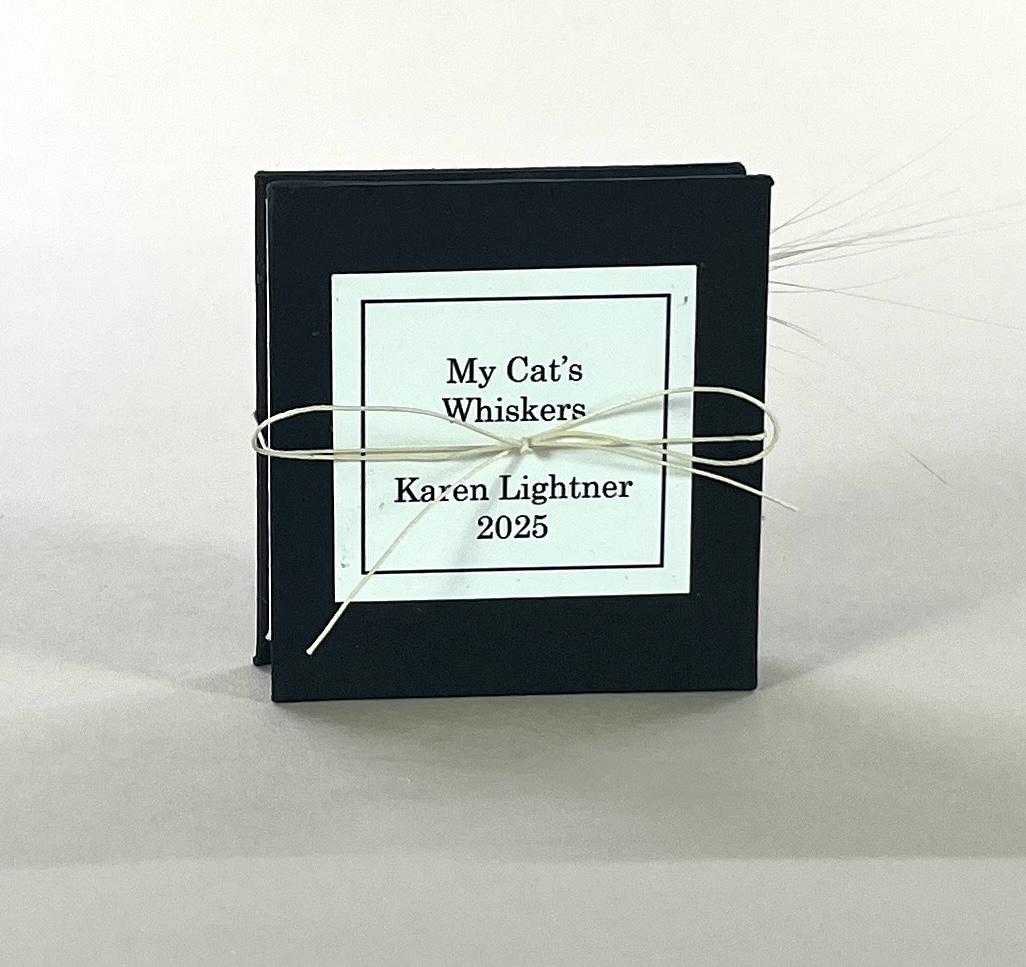
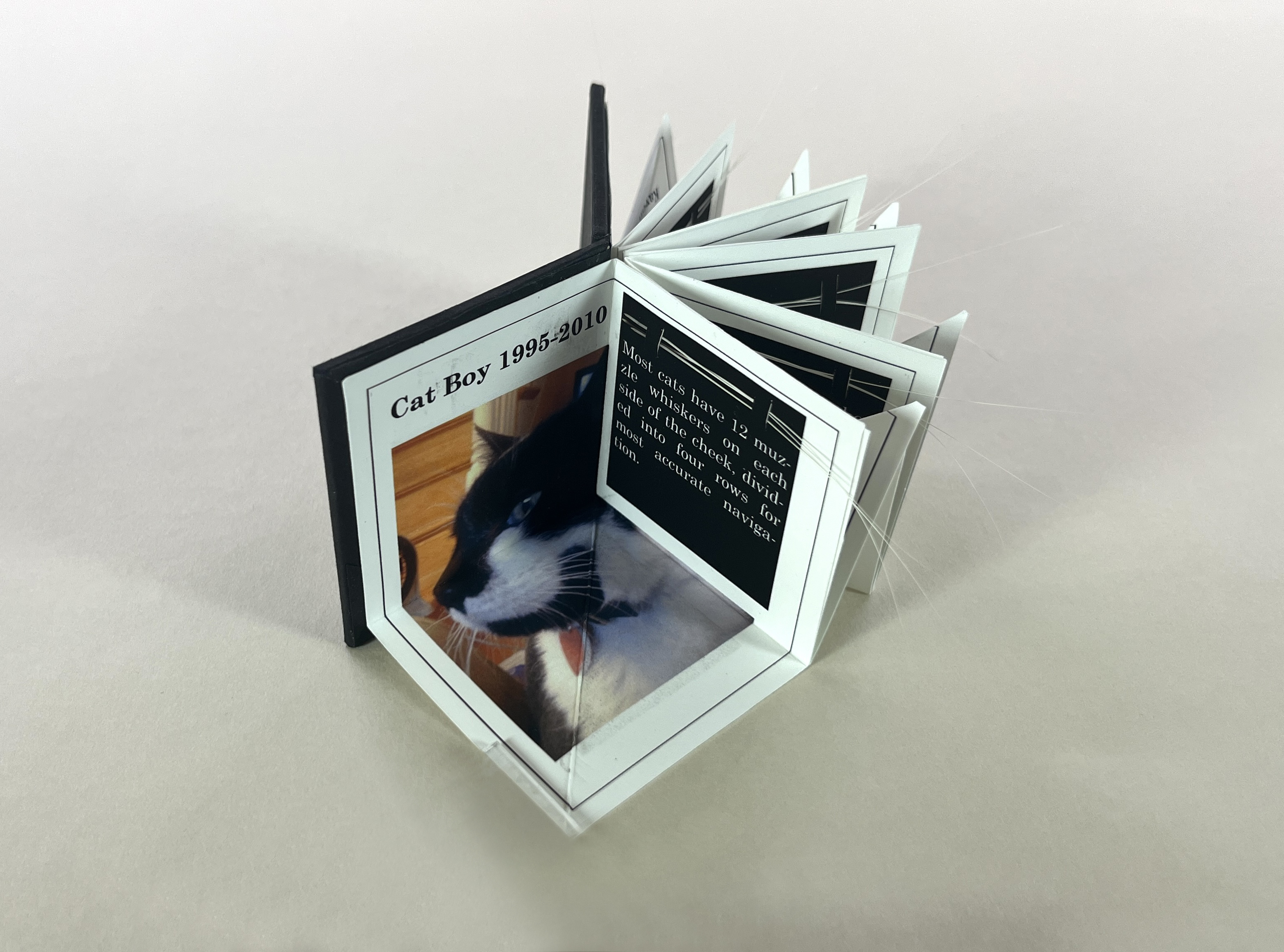


My Cat’s Whiskers
Inkjet print on paper, cat whiskers
In looking at the sample books in the Othmer Library, I was particularly drawn to books with physical objects in them, such as the Bayer Company’s book of colored feathers. Cats shed their whiskers now and then and I started collecting my cats’ whiskers about 40 years ago. I’d find them in random places, on the floor, or on the furniture. Other people collect whiskers, too. On Etsy you can find various whisker storage containers, such as tiny vases.

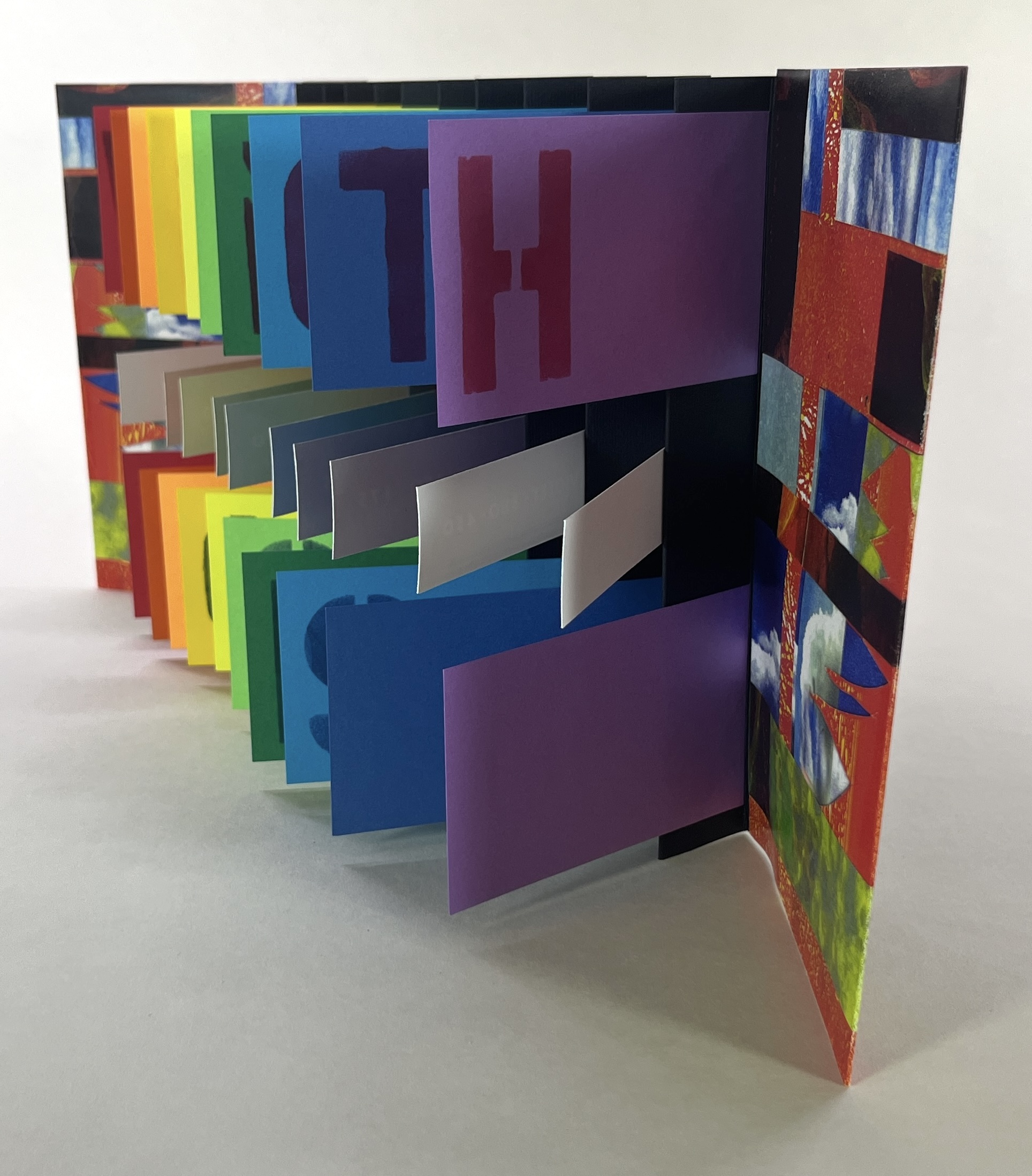
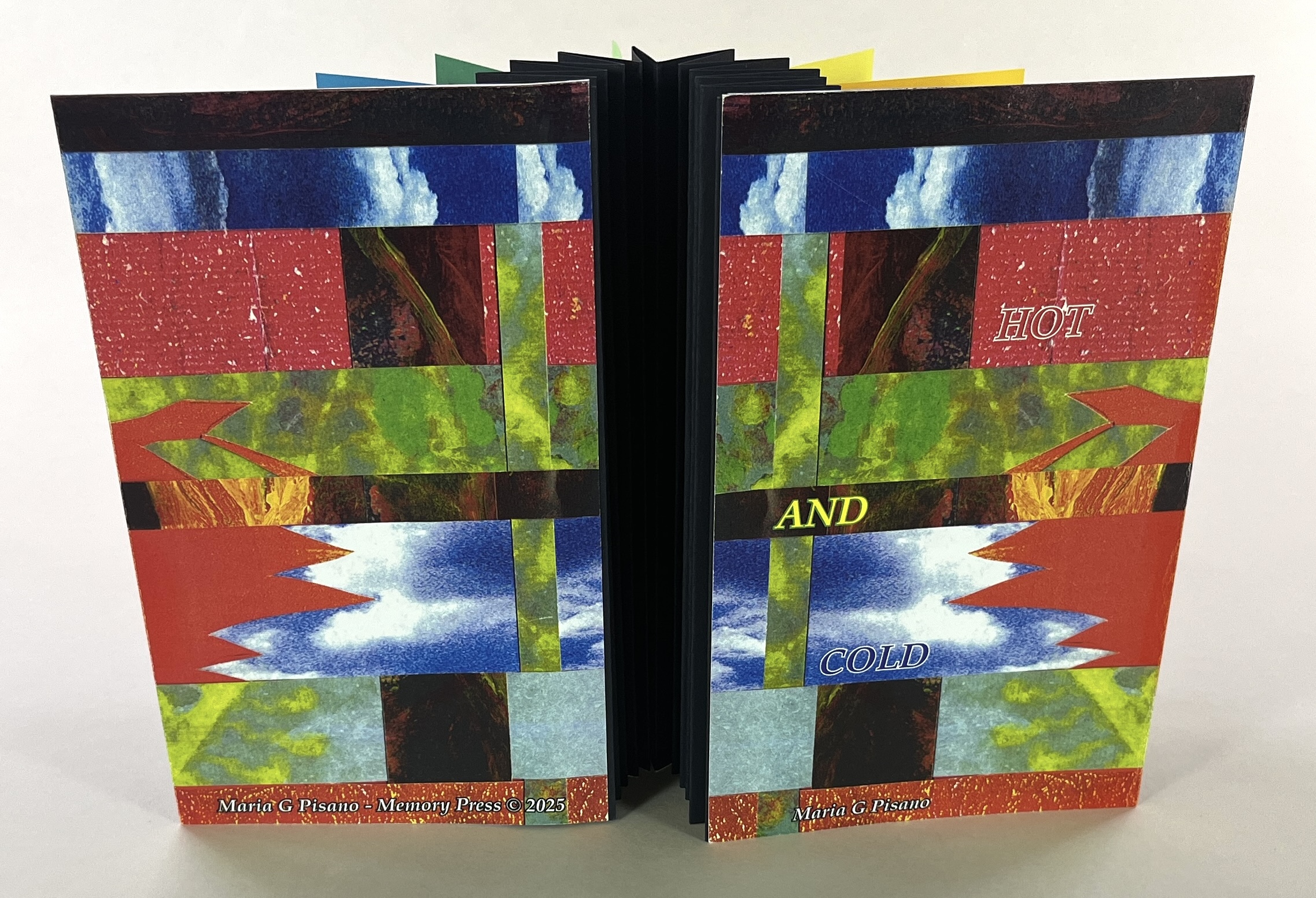

Hot and Cold
Laser printed with stenciled letters
I began to study colors in college using the Color Aid pack; this led me to creating diverse designs showcasing color properties; how visual perception of colors change when they are arranged next to one another; and how to mix and create tints, shades, and hues. I was
introduced to the chemical and scientific aspect of colors in a course on coloring handmade paper. Color has been a large part of my artistic practice in papermaking, printmaking, and artist books. The wavelengths of colors are the theme and subject for this book, Hot and Cold. I have chosen the flag book format as a play on the word “Wave-Length.” As the book is opened, it creates a wave of colors.


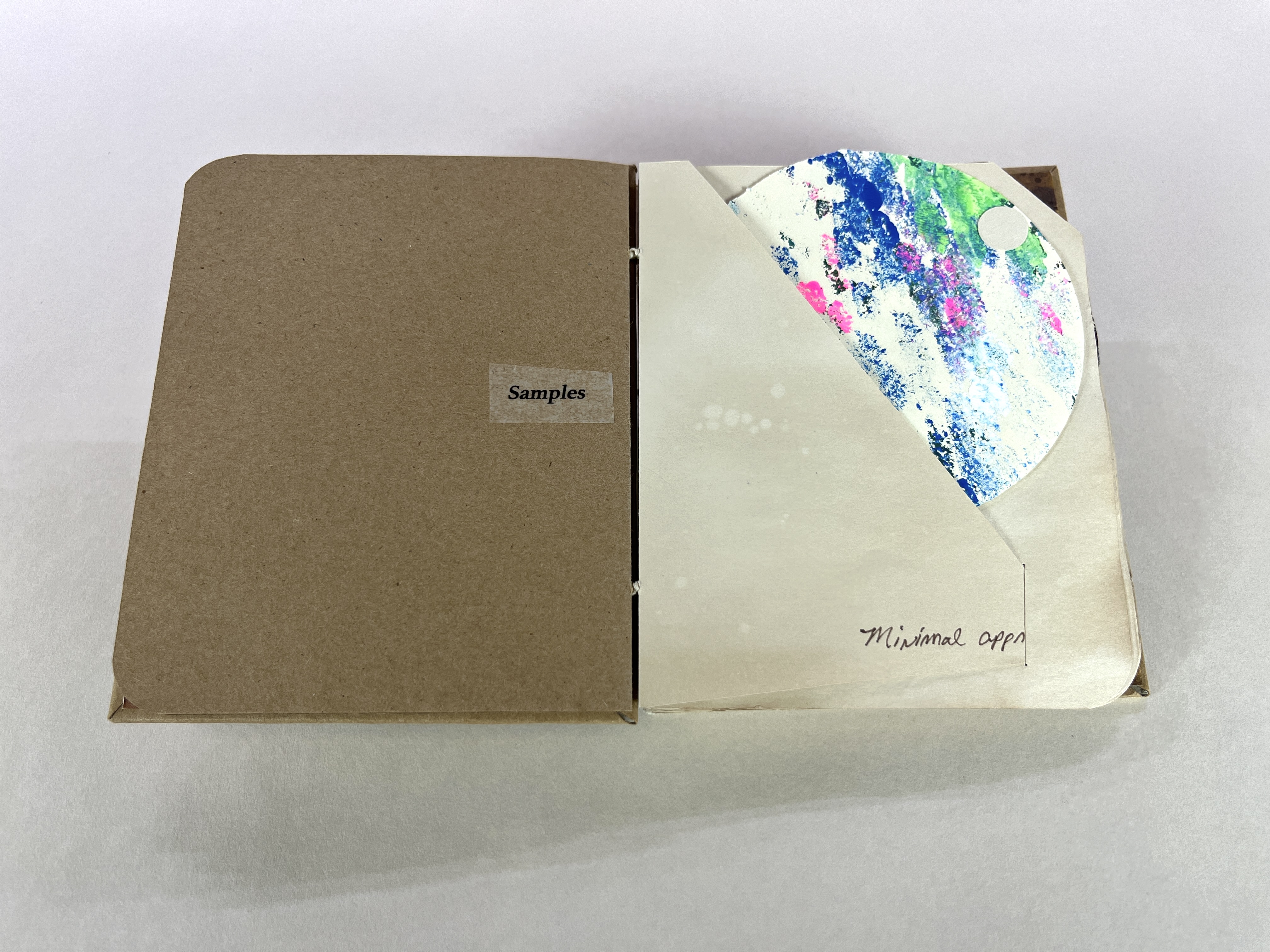
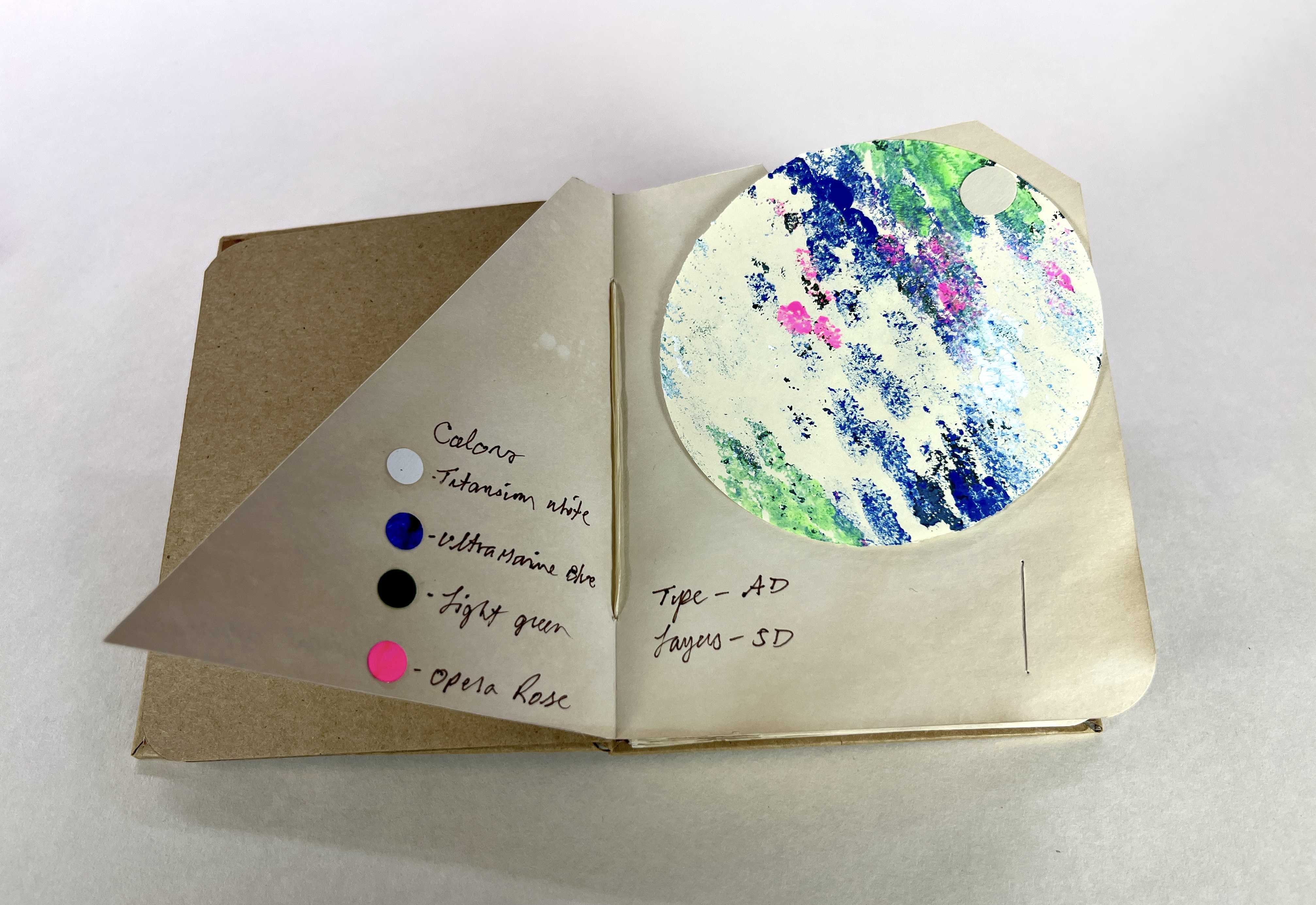


“It must be Gelli…”
Gelli prints made with acrylic paint, assorted paper
The process of printing on a gel or gelatinous base has been around for quite some time. Mixing powdered gelatin with water was a common way to create gel prints in the past. Currently, the creation of a modern and reusable plastic-like substance called a gelli plate, which contains mineral oil, allows the printing of images using mainly acrylic paint. My sample book contains samples of gelli plate prints with short explanations of the process used to make them. Gelli prints are an accessible way to make multiple images while experimenting with color, shape, and content. Gelli printing is fast. I love that I can make a number of prints in a short amount of time, with a very simple clean up. Although gelli plates have been around for some time, I found that there is a niche group of people who know about them. I made this sample book as a way to introduce more people to this wonderful process. Maybe you will like what you see, and want to try gelli printing, too!



Dye Experiments
Multiple samples of dyed handmade paper, linen thread, and parchment
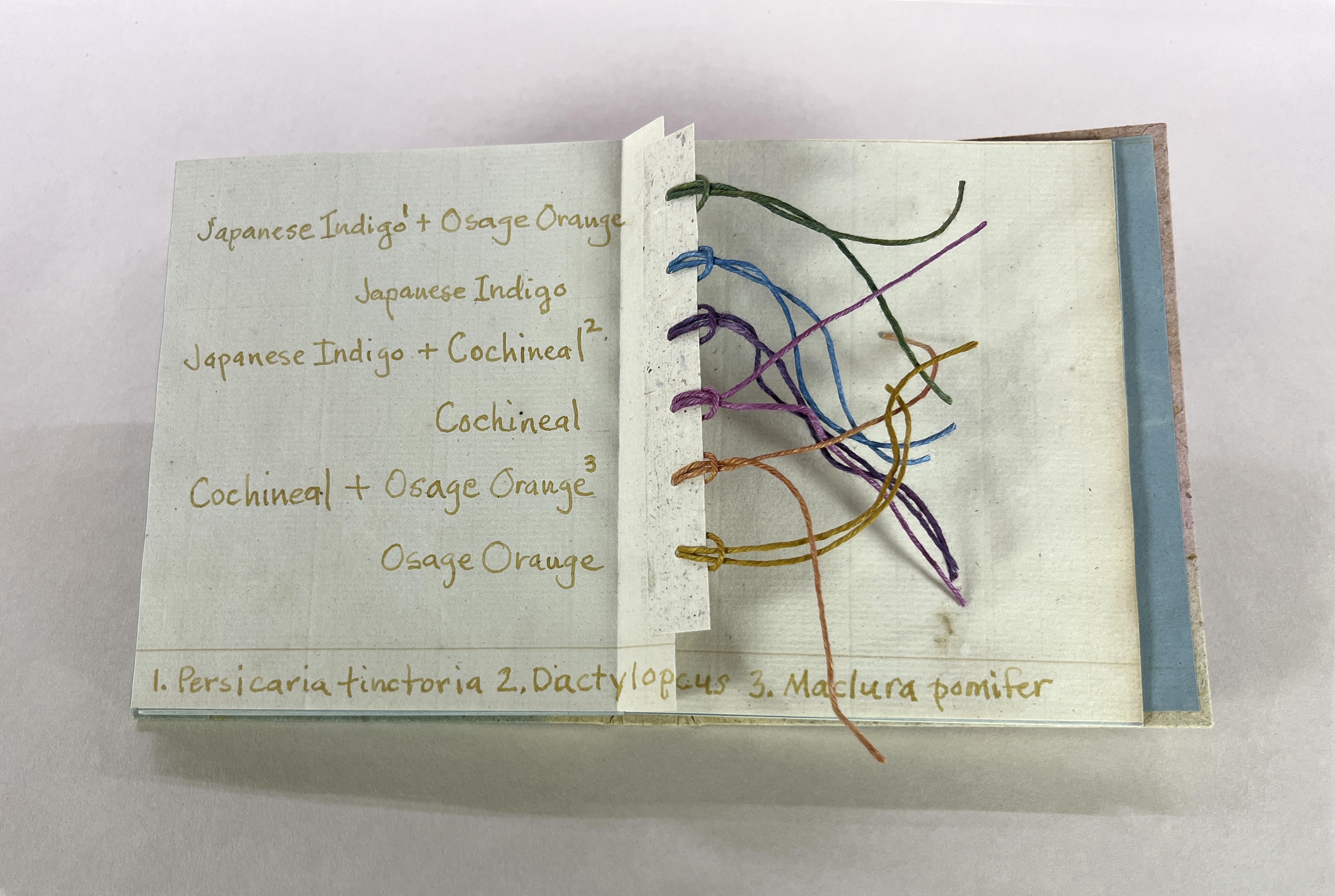
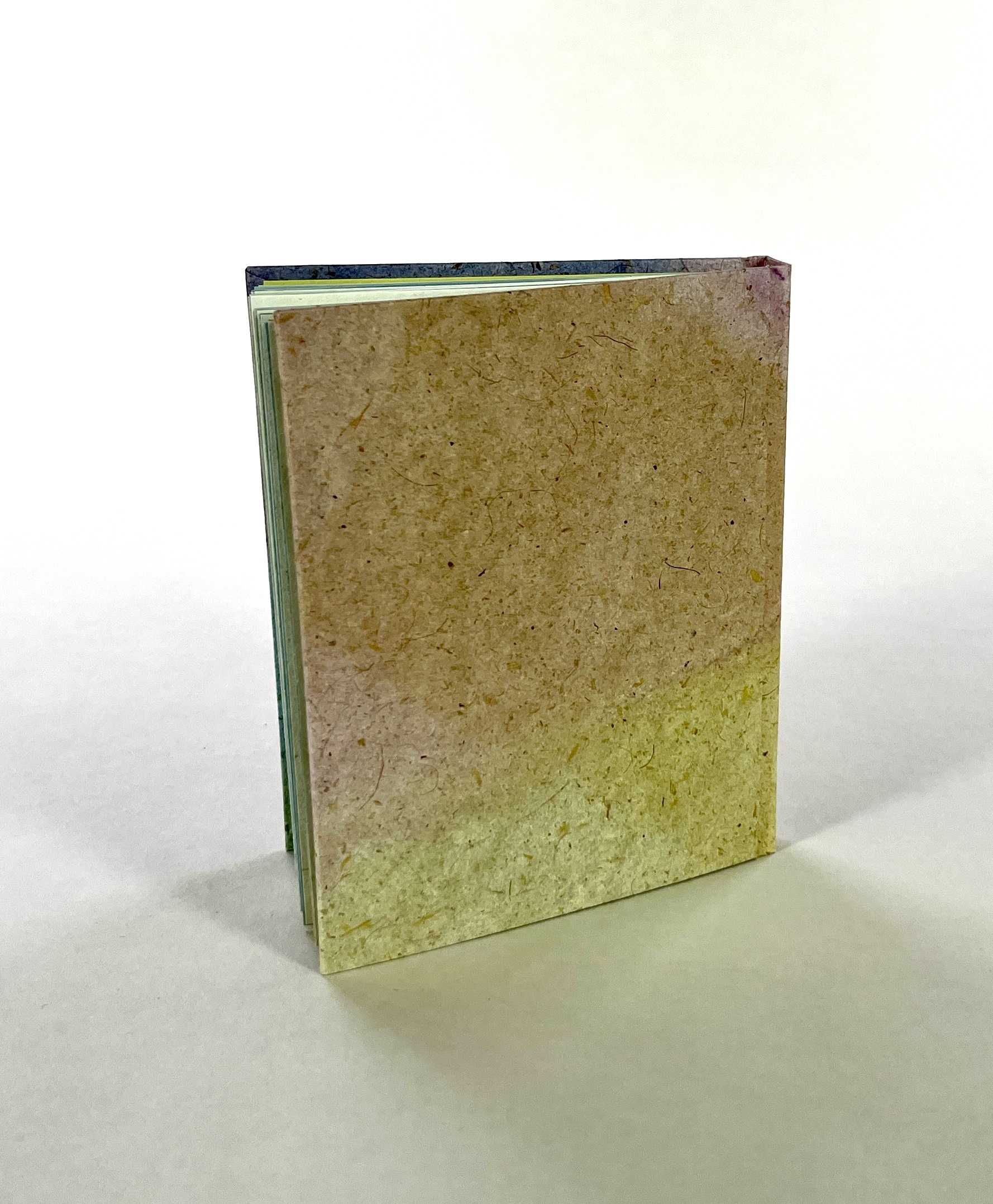
This sample book contains examples of various materials that were dyed, and in some cases overdyed, using three natural dyes: cochineal, Japanese indigo, and Osage orange. Cochineal (Dactylopius coccus) is derived from ground female cochineal insects, Japanese indigo (Persicaria tinctoria) is produced from the leaves of the plant, and Osage orange (Maclura pomifera) is extracted from wood shavings of the tree.



An Alchemist’s Meditation on Wishes — Stardust Sample Book
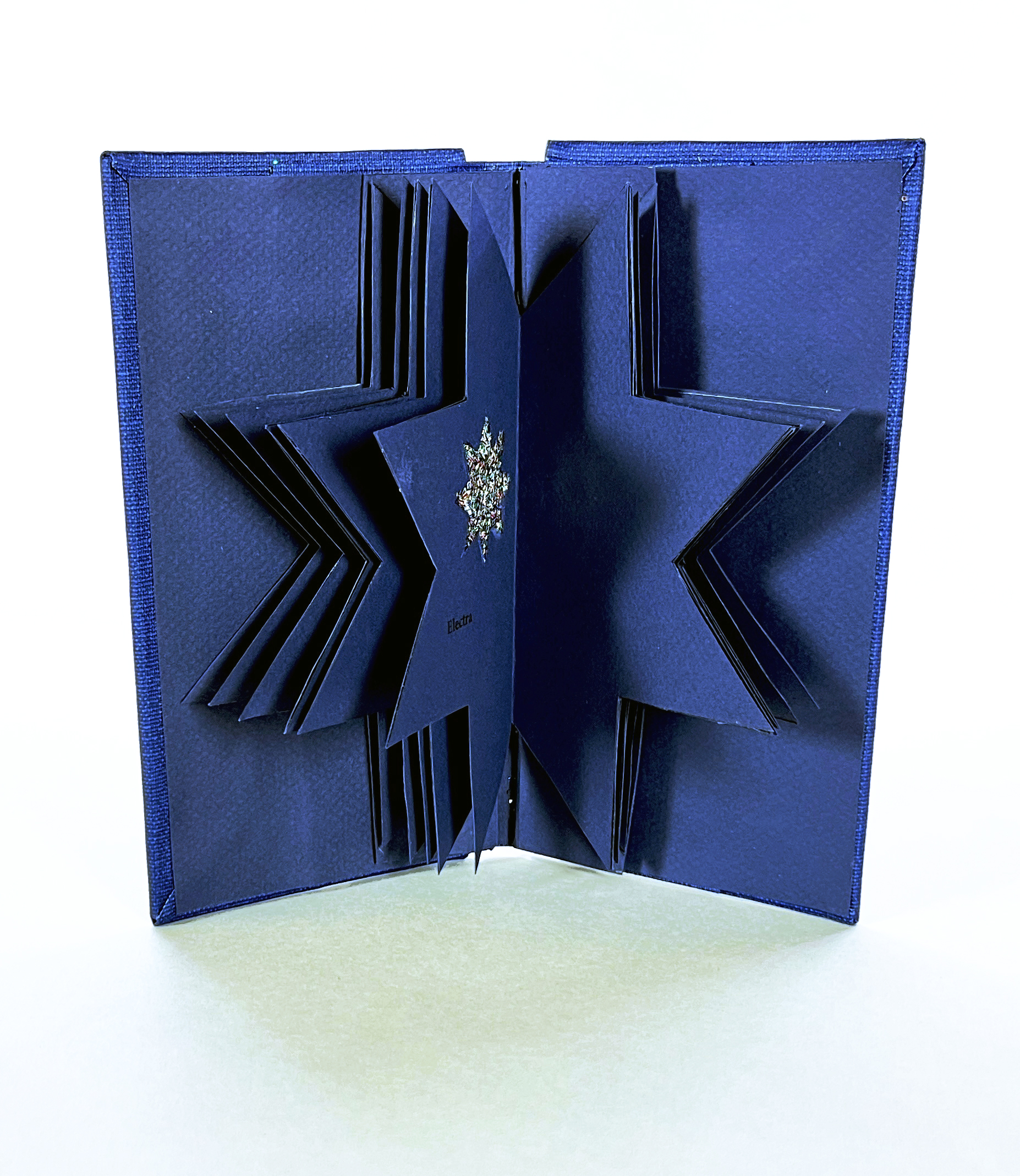
Pigment prints, stardust


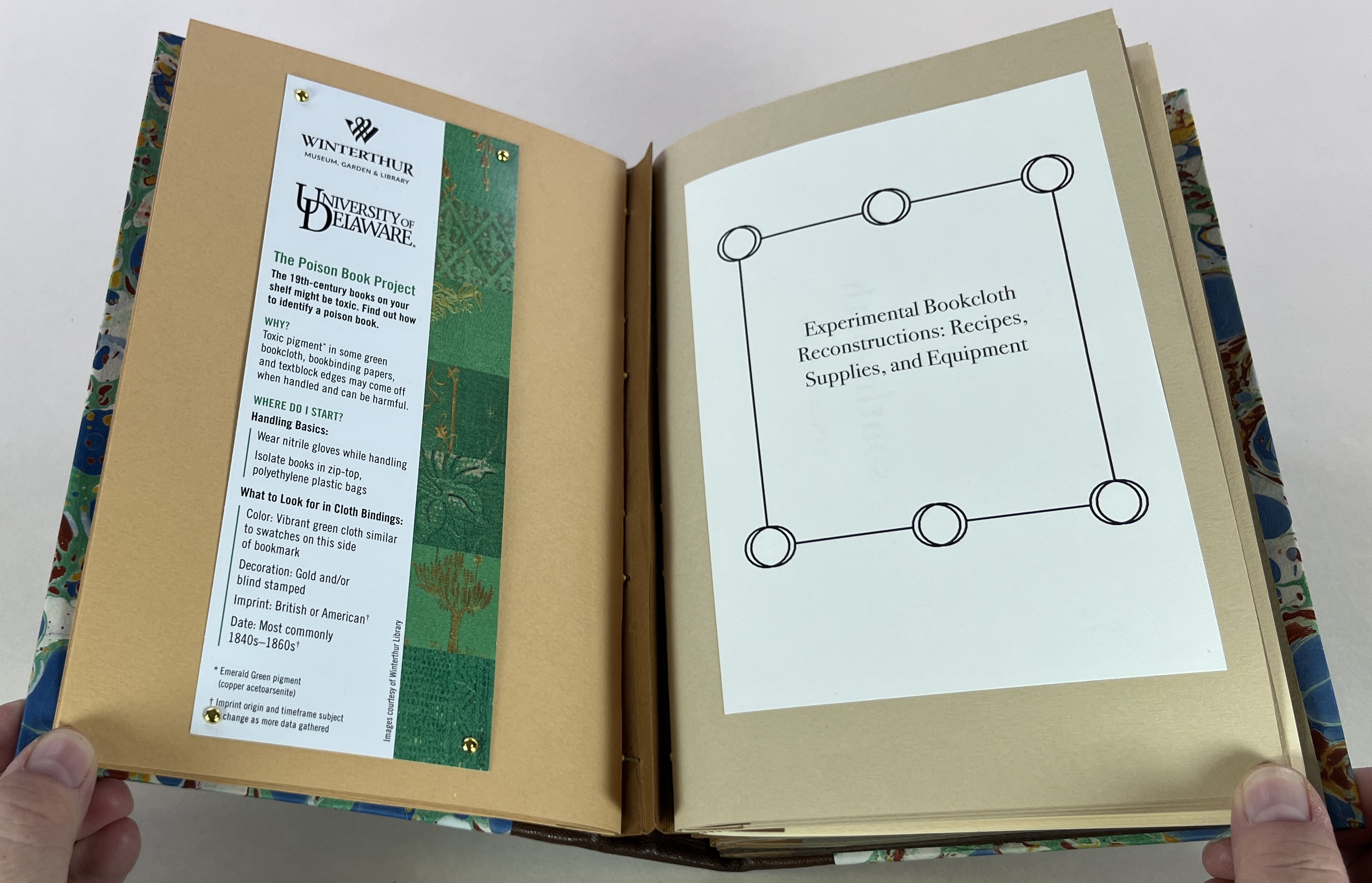
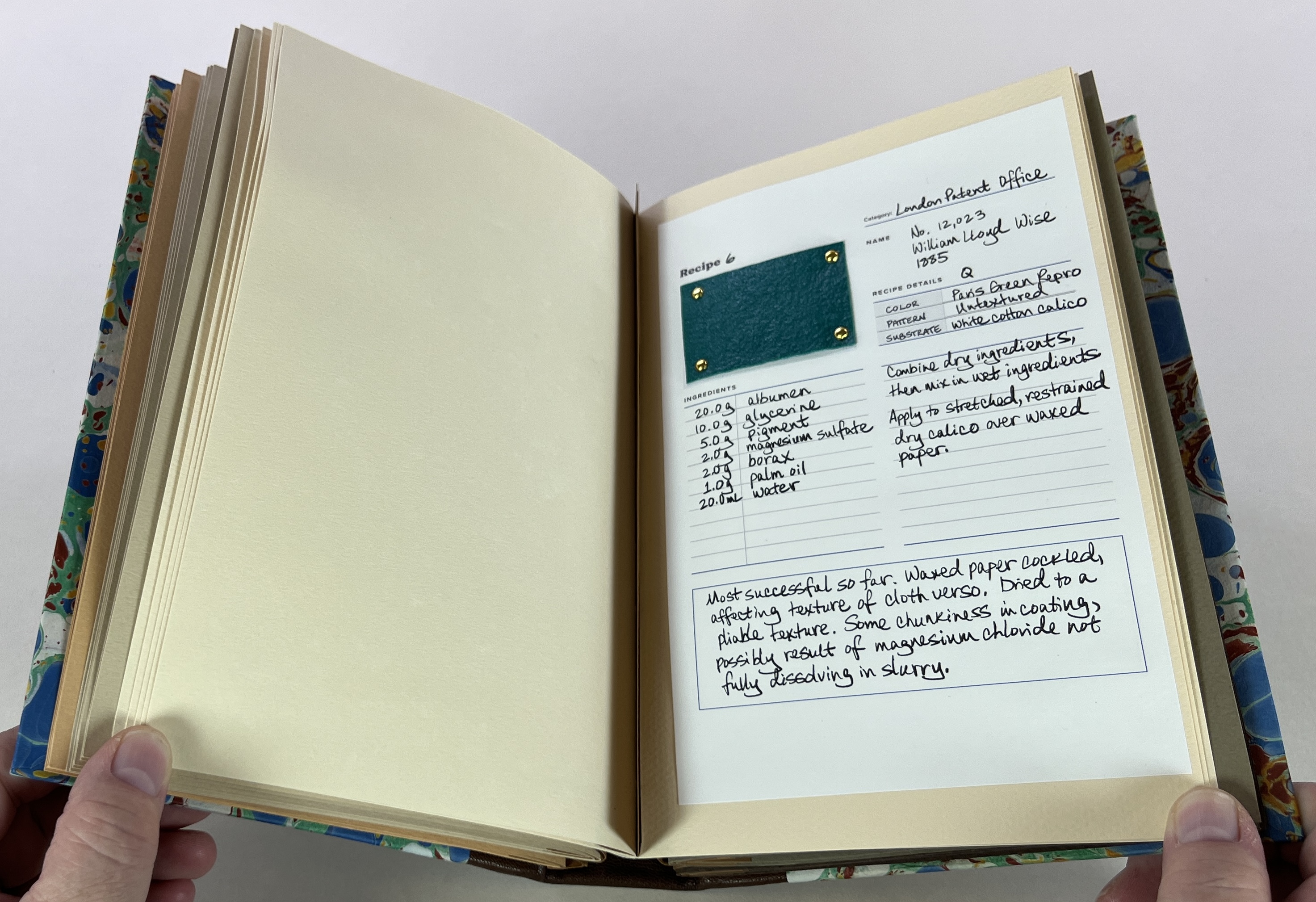


Victorian Bookcloth Sample Book: An Historical Imagining
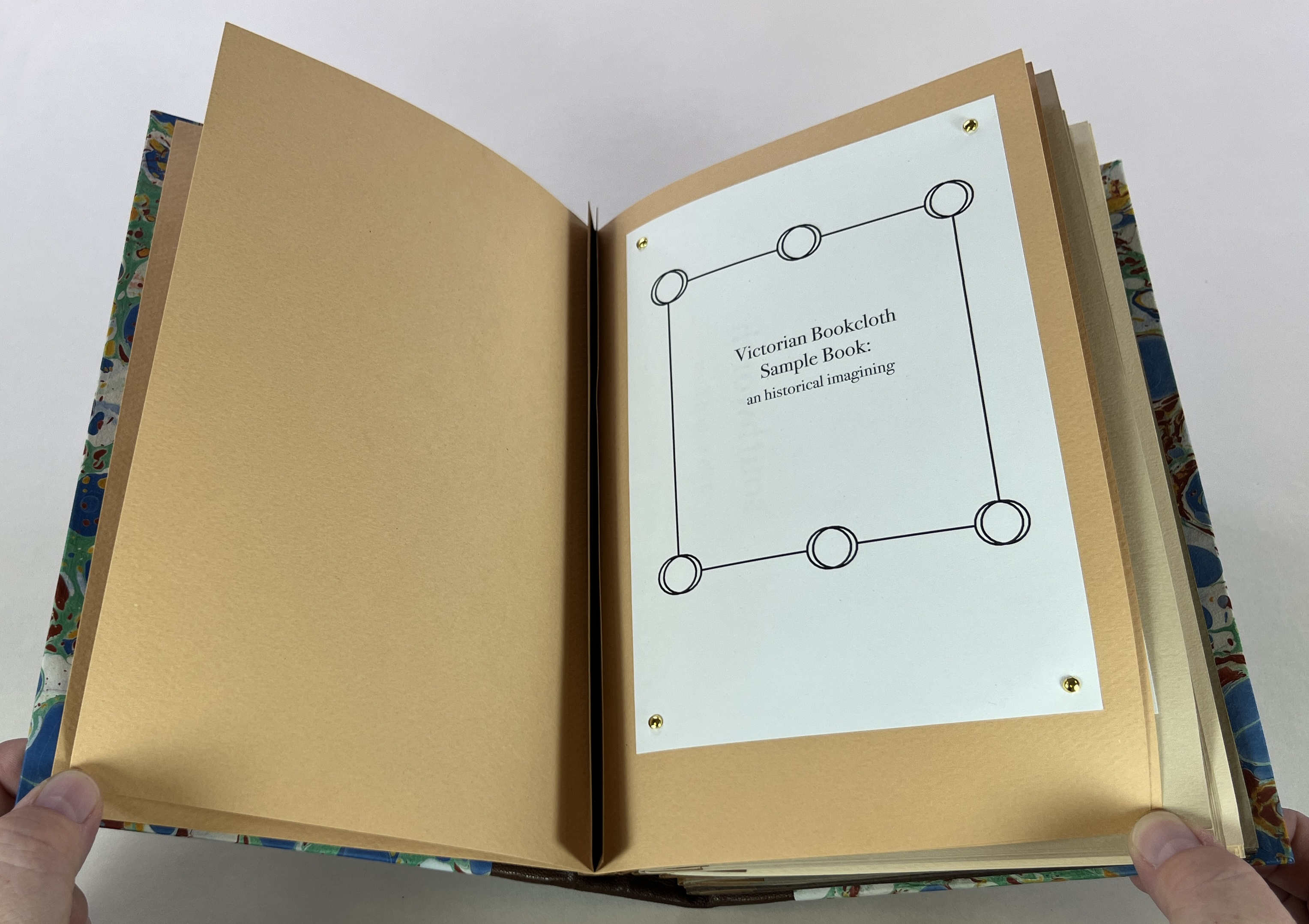
Book: Papers, leather, linen thread and tapes, starch adhesive
Bookcloth samples: Mineral pigments in a slurry of various binders and fillers over bleached cotton calico
My academic research, known as the Poison Book Project, investigates the use of toxic heavymetal pigments in 19th-century, mass-produced, EuroAmerican bookbindings. This has led me down a rabbit hole exploring the materiality of Victorian-era bookbinding cloth, a product that revolutionized the book industry and drew on scientific advances in starch manufacture and color technologies. The project is equal parts experimental history and artistic imagining. This book is meta-handcraft, combining hand bookbinding, a collection of experimental bookcloth samples, and a journal documenting my experimental and creative process. The samples of bookcloth here are Victorian-inspired designs based on partial recipes and industrial patents discovered during archival research at the Science and Industry Museum in Manchester, England. The layout and structure were inspired by 19th-century color and dye manuals in the Science History Institute collection and textile sample books at Winterthur Museum, Garden & Library.

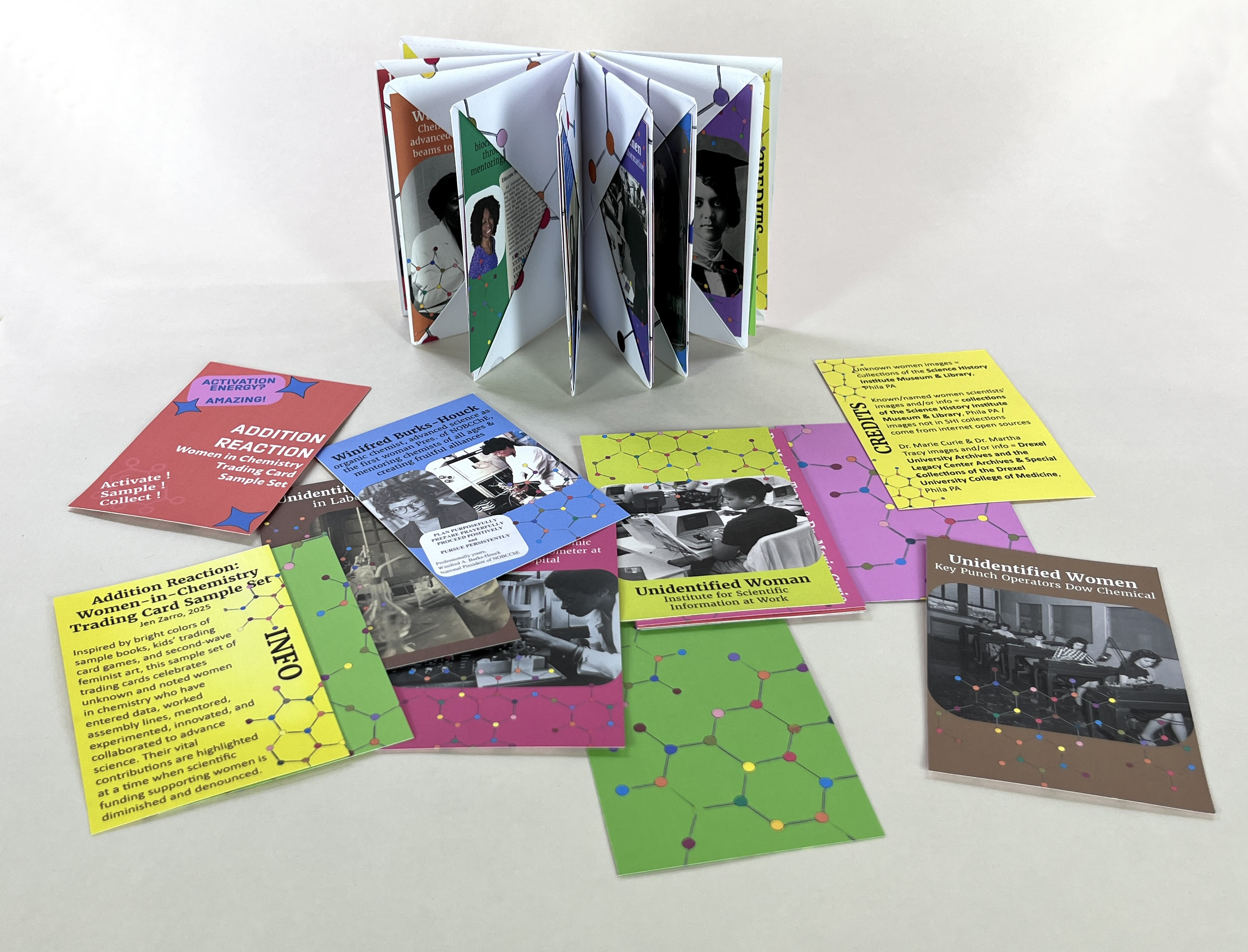
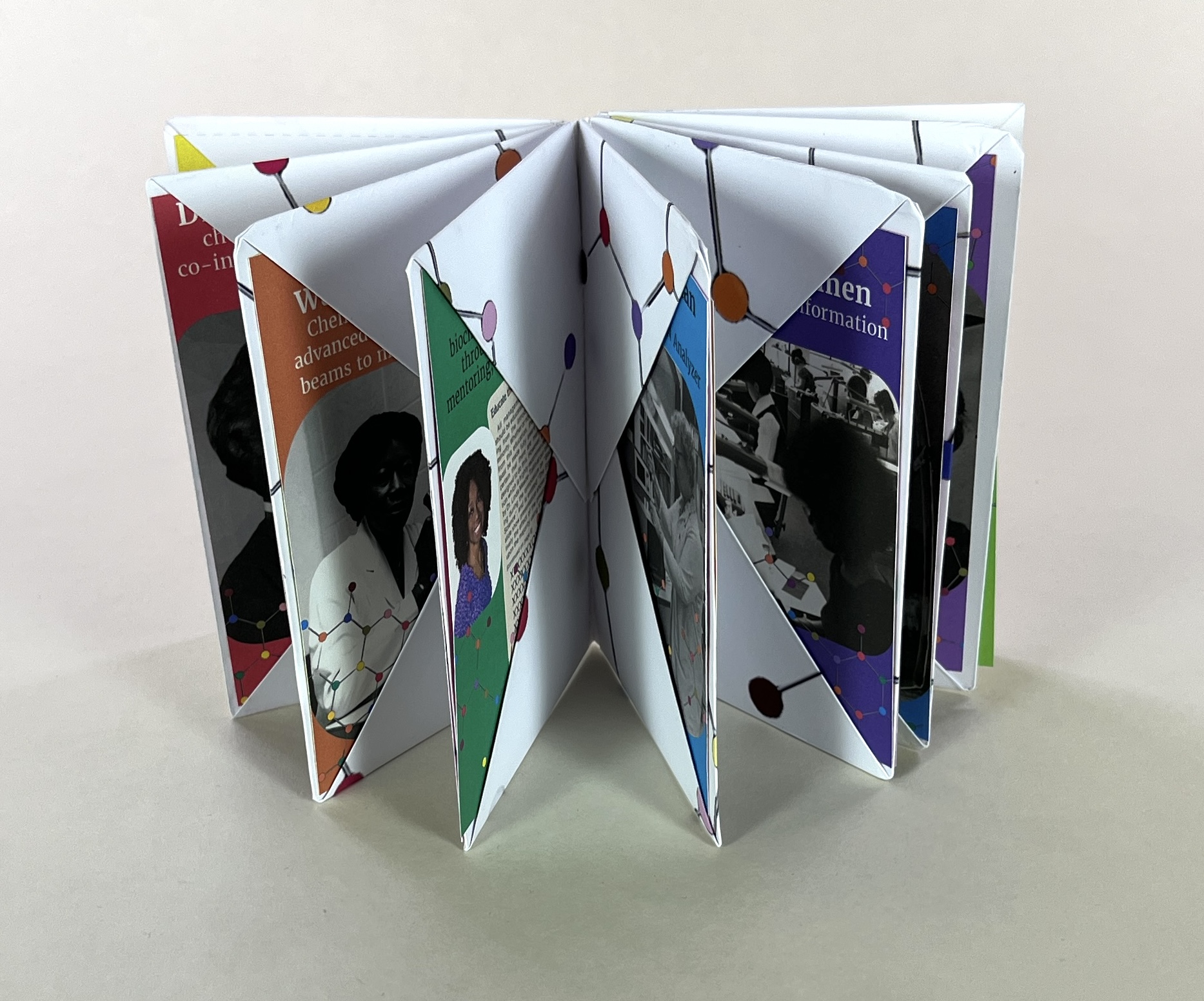

Addition Reaction: Women-in-Chemistry Trading Card Sample Set
Inkjet printed paper
This sample set of women-in-chemistry trading cards is housed in a “blizzard book” (a folded book structure invented by artist Hedi Kyle), and is inspired by bright colors in sample books, kids’ trading card games, and second-wave feminist art that sought to recover women’s histories. Unknown and noted women are celebrated together here—women who advanced chemistry by working assembly lines, entering data, leading labs, or patenting life-affirming inventions. Whether as ancient herbalists or as scientists working today, women in chemistry have faced sexism, racism, and misogyny while mentoring, innovating, and collaborating to cure disease, promote public health, and expand opportunities for scientific discovery. This set celebrates their vital contributions at a time when scientific funds supporting women is diminished and denounced.
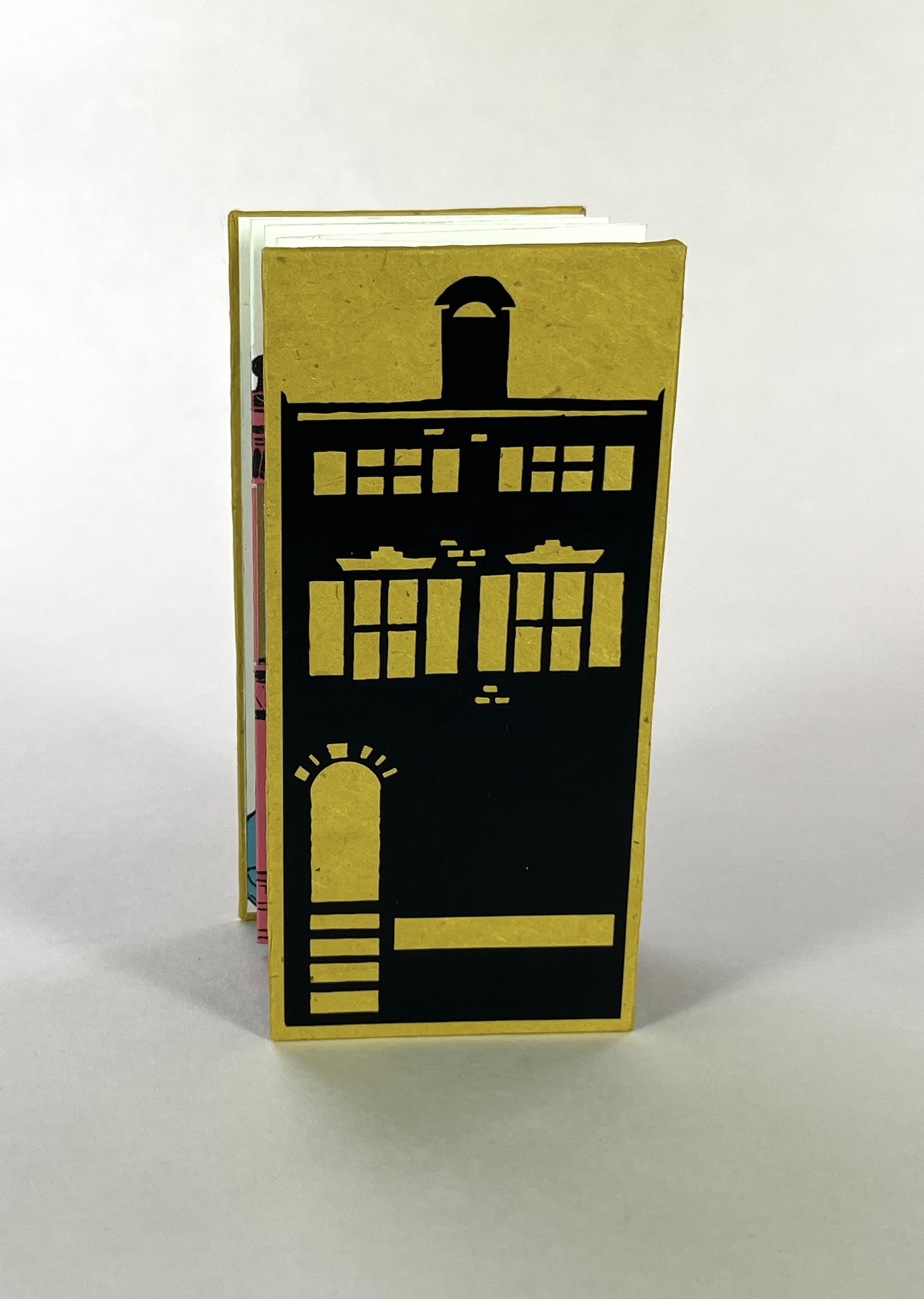
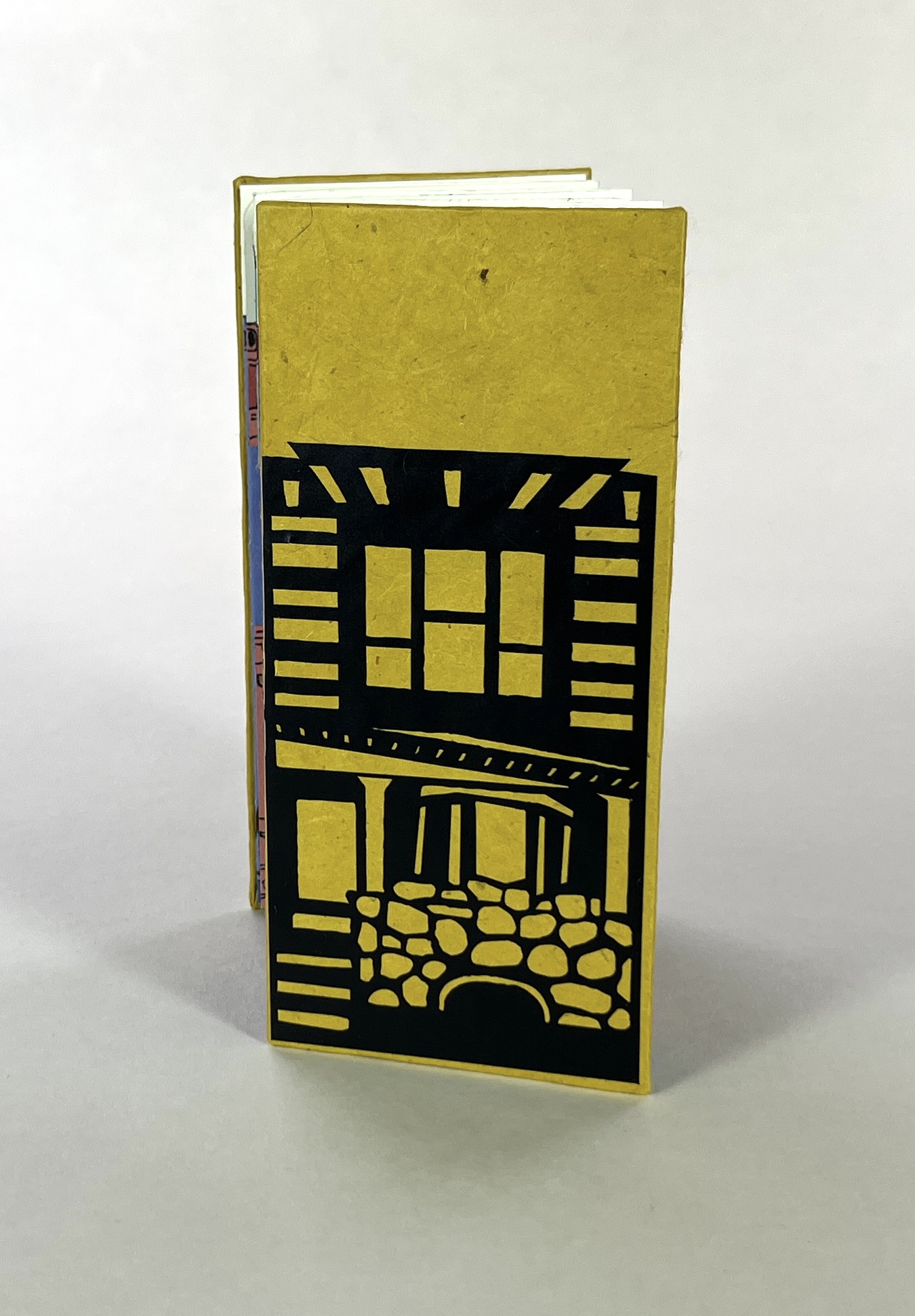


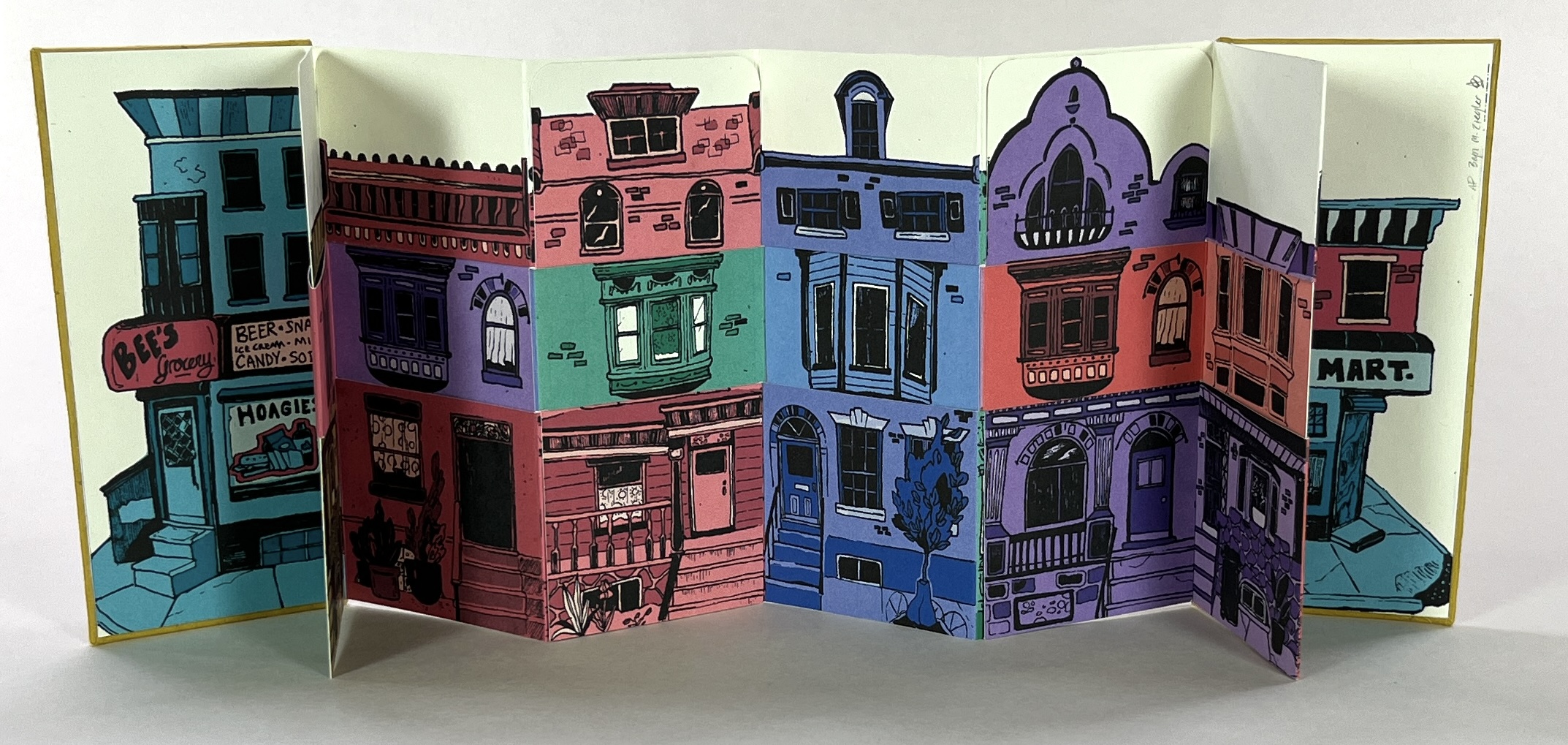
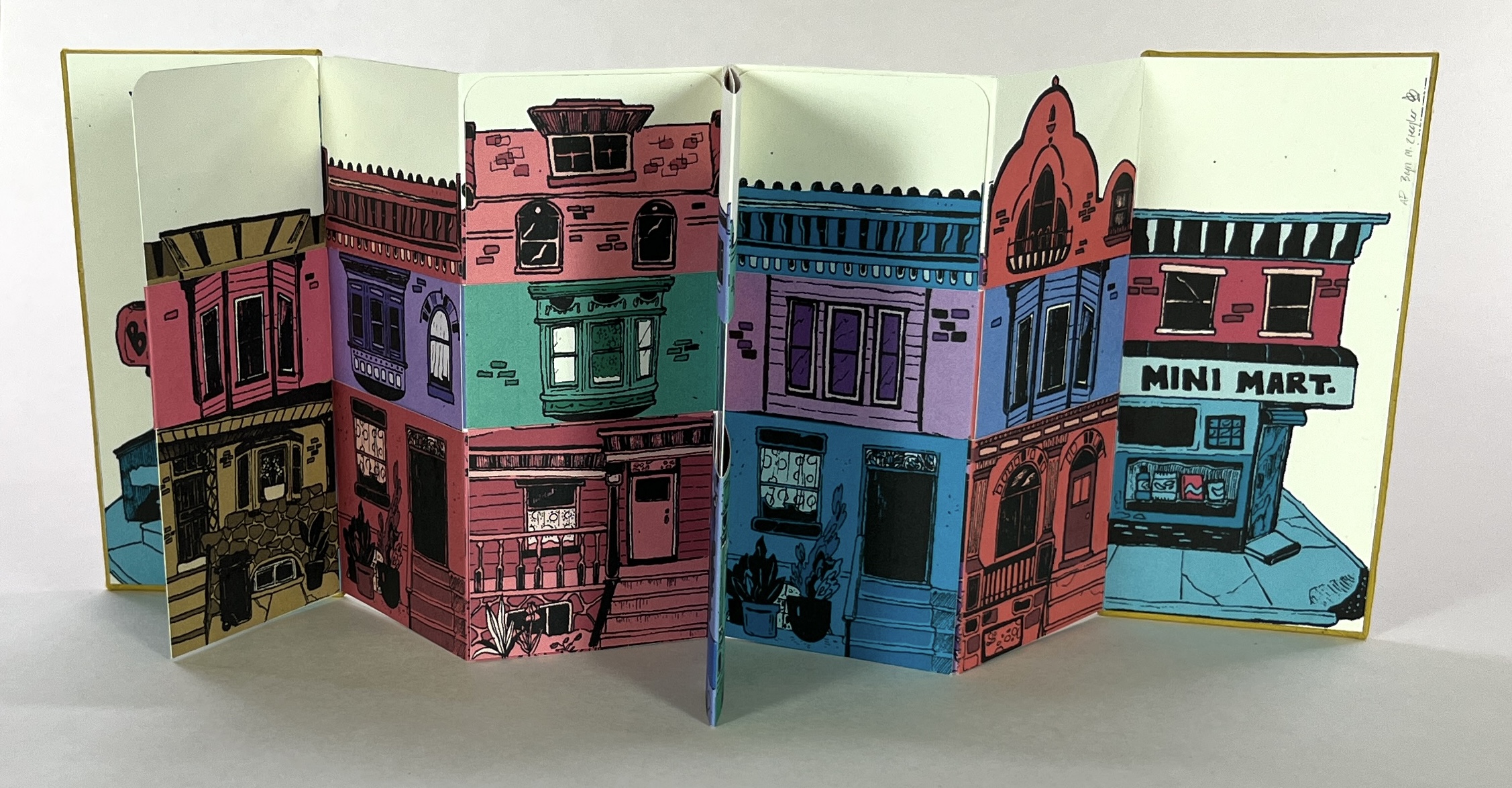
Philadelphia City Block Sample Book
Woven accordion book, inkjet print, cut vinyl
This Philadelphia City Block Sample Book depicts a colorful mix-and-match city block bookended by corner stores, which can be opened and closed in various ways thanks to the woven accordion binding style. The book draws on the collection of the Othmer Library in several ways, such as the presence of rich colors, accordion structures, and interactive spreads. The chips of tinted metals and textile swatches showing off bright chemical dyes in the sample books of the Othmer Library made an immediate impression and inspired the visual direction of this book. Conceptually, the Othmer Library collections relate to the classic Philadelphia Row House which evokes both large-scale industrial production and interesting, constantly evolving variety
 The Delaware Valley Chapter of the Guild of Book Workers