The Delaware Valley Chapter of the Guild of Book Workers presents Paper First, a year-long exhibition presented in the historic Homestead at Rittenhouse Town in Philadelphia, home of the nation’s first paper mill.
This exhibition celebrates paper as a material of possibility at the site where American papermaking began.
Paper First highlights the many facets of paper – from creative craft to cultural catalyst. Paper can become books, bibles, ballots, bills, broadsides, contracts, currency…and so much more. Paper creates laws, nations, our lives, and our histories. And paper is rich with meaning and questions: Who writes or prints on paper, and who reads? Whose stories and lives become books, and whose never meet the page? Who signs a paper check, and who gets paid? Material, personal, political, environmental — what else might paper communicate and celebrate?
Paper First invited submissions that amplify the importance and possibilities of paper in book arts, bindings, or paper- or fiber-forward works of art.
Opening on Saturday, June 27, 2026 and remain on view for one year, through June 2027.
To see pics of the exhibition >>>>>>>
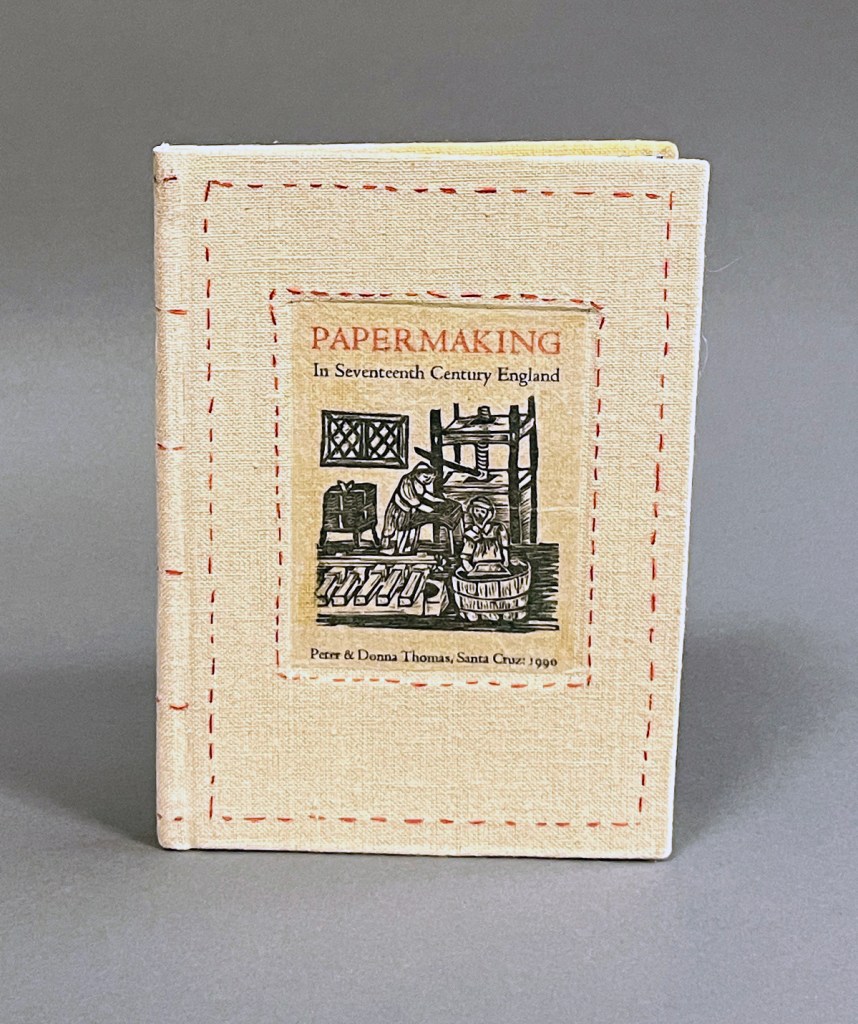
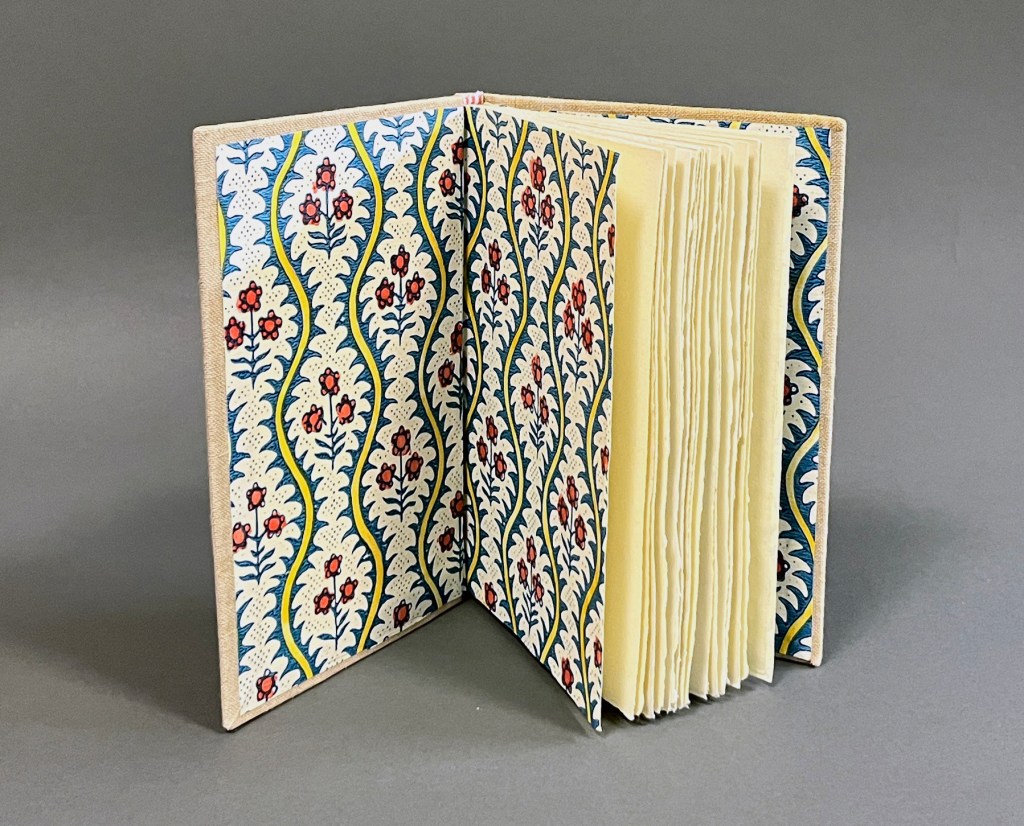
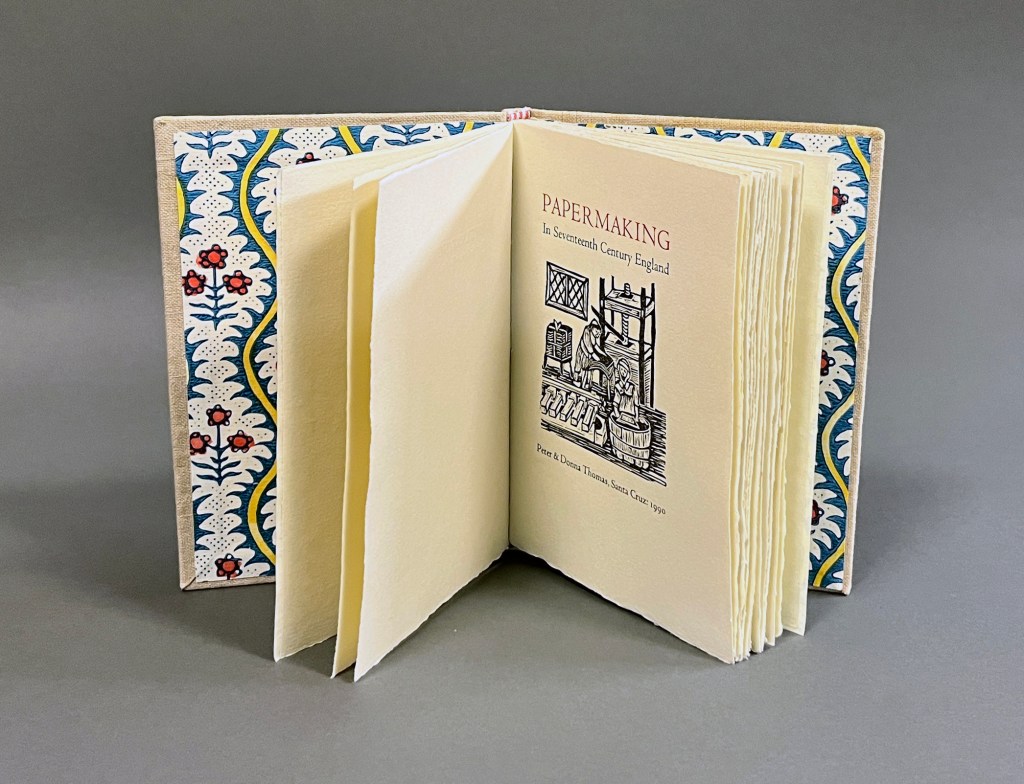
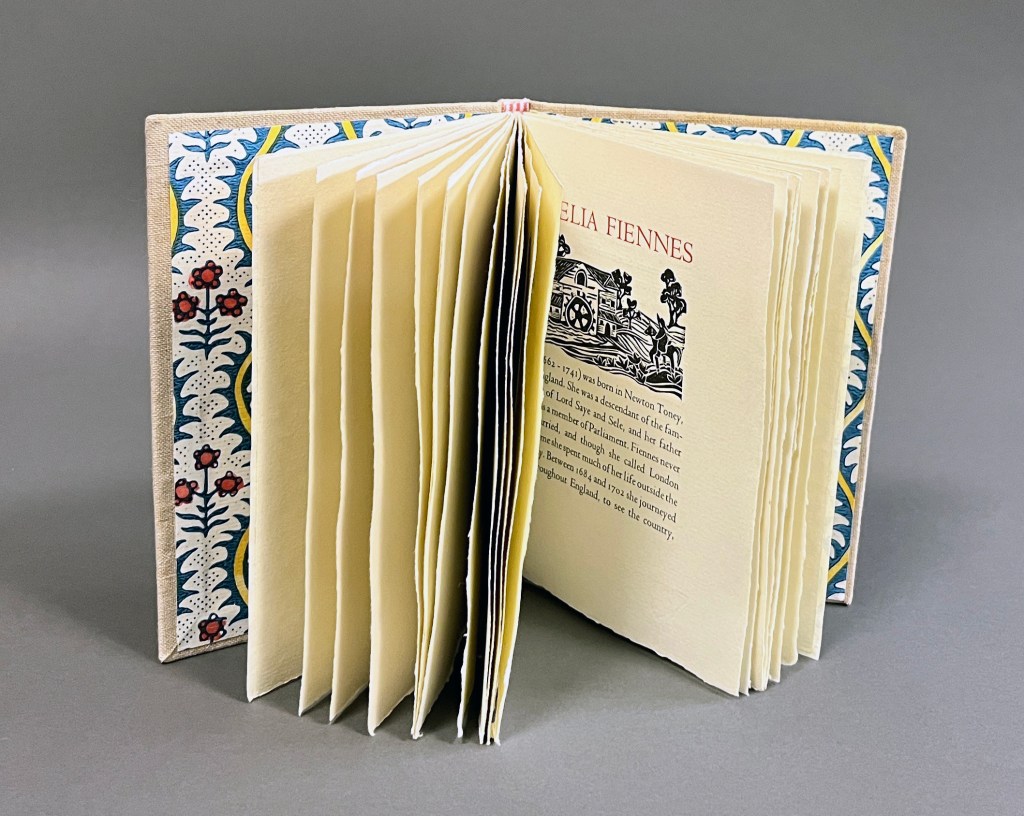
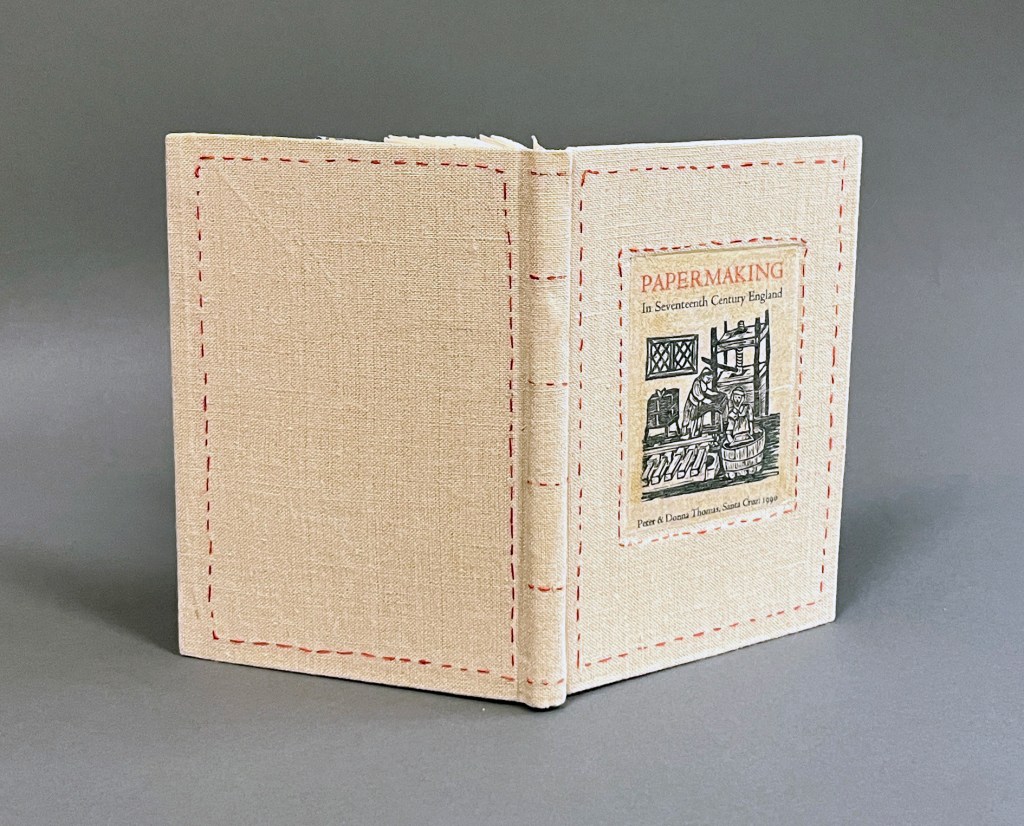
Interpretive Binding for: Papermaking in Seventeenth Century England, by Peter and Donna Thomas, et al., published in 1990. Bound in 2026 for the Delaware Valley Chapter of the Guild of Book Workers’ exhibition, “Paper First.”
The text block was obtained “in sheets” by the binder, and sewn with linen thread. Linen was selected as the covering material to represent the linen rags used in the early years of the Rittenhouse Town paper making production to create a tactile, tangible context of the era. A Folk Art style bookbinding was created to represent what a handmade book may have looked like if made to protect a papermaking treatise in the late seventeenth or early eighteenth centuries. The cover was embellished with embroidery using red cotton thread intended to correspond with the red ink used to print the actual words of those who visited the paper mills in the seventeenth century. Block-printed endpapers, cloth-over-core end bands using red and white striped cotton “shirting” traditional in early American bookbindings. A photocopy of the title page on translucent long-fiber tissue was adhered to a recess on the upper cover to identify the book. Peter Thomas’s research includes the two known visitors’ accounts written as a result of their observations in English seventeenth century paper mills. One of those accounts is by a woman who had the financial and emotional independence to explore England to pursue places of interest to her. The extraordinary illustrations by Donna Thomas are very similar to the methods used at the Rittenhouse Paper Mill.
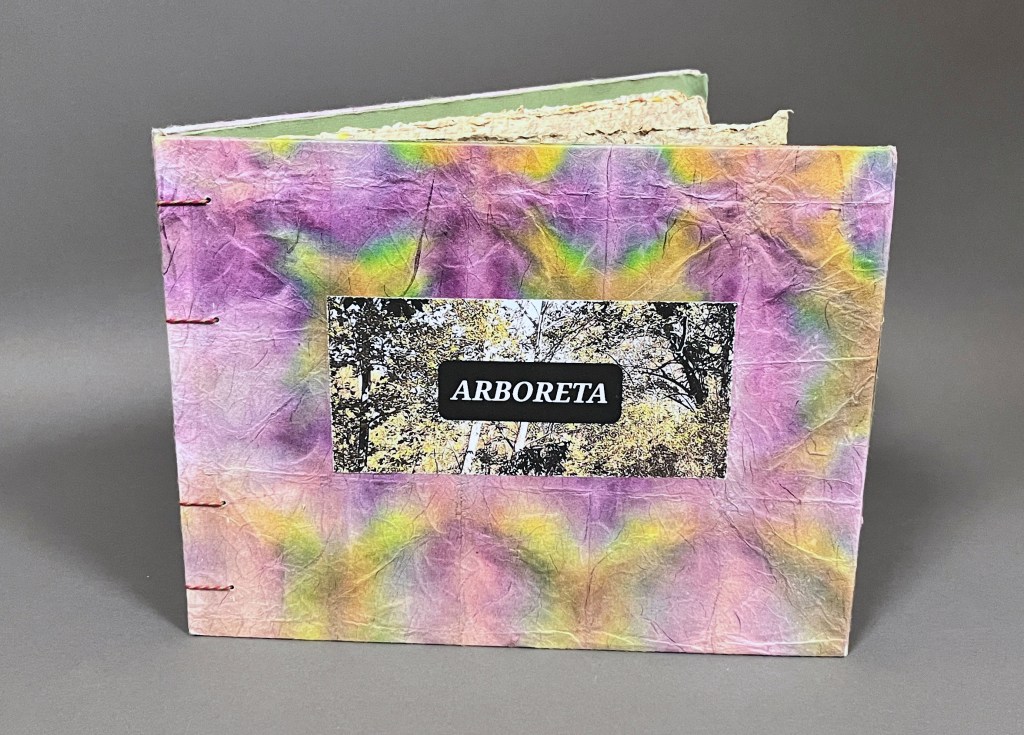
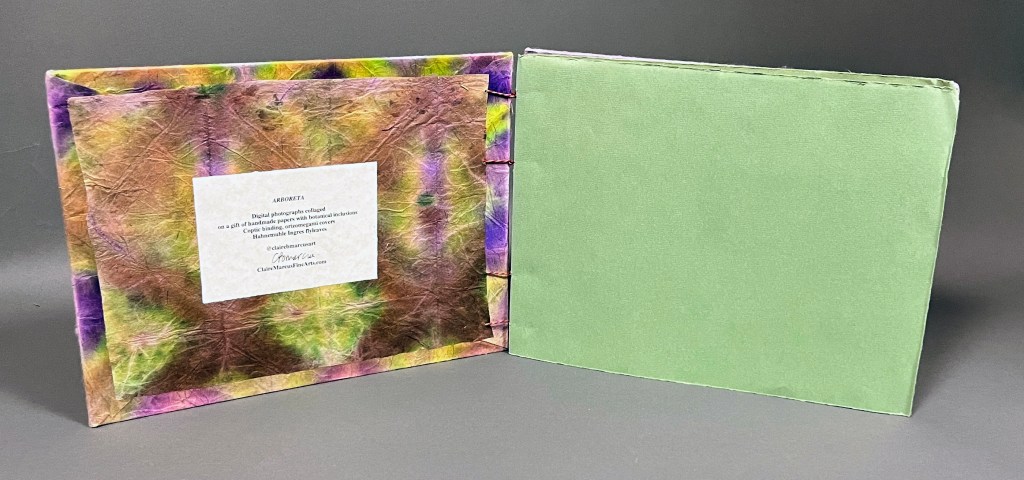
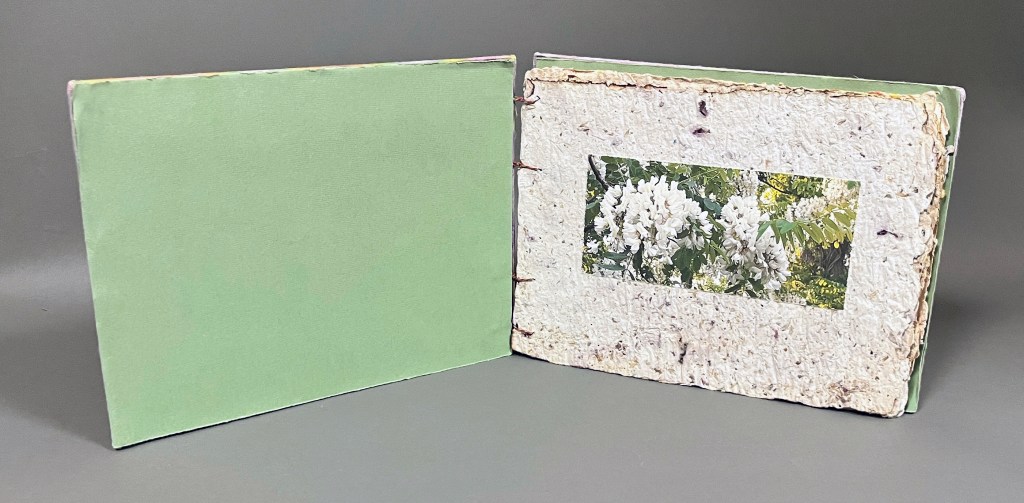
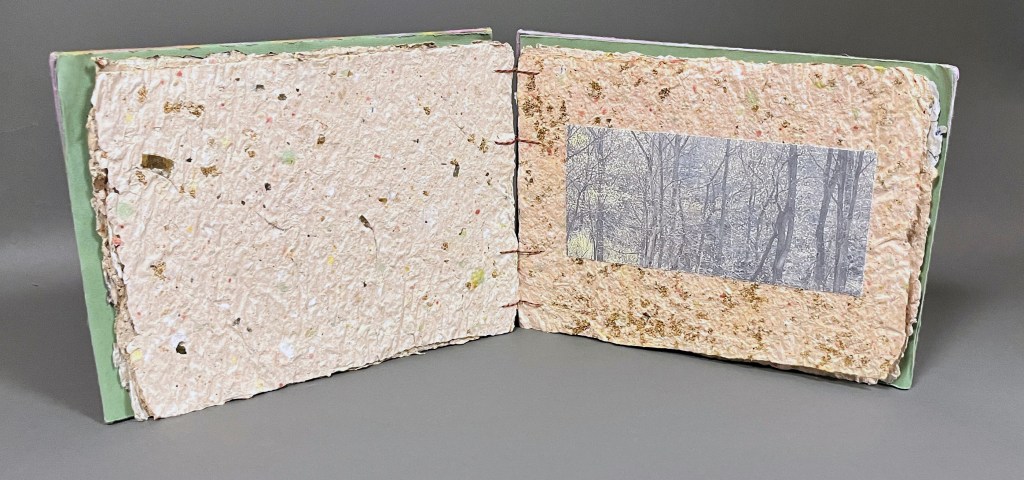
ARBORETA, 2026
Digital photographs of tree structures, collaged with a gift of handmade papers. Botanical inclusions. Covers: orizomegami on Japanese paper. Coptic binding.
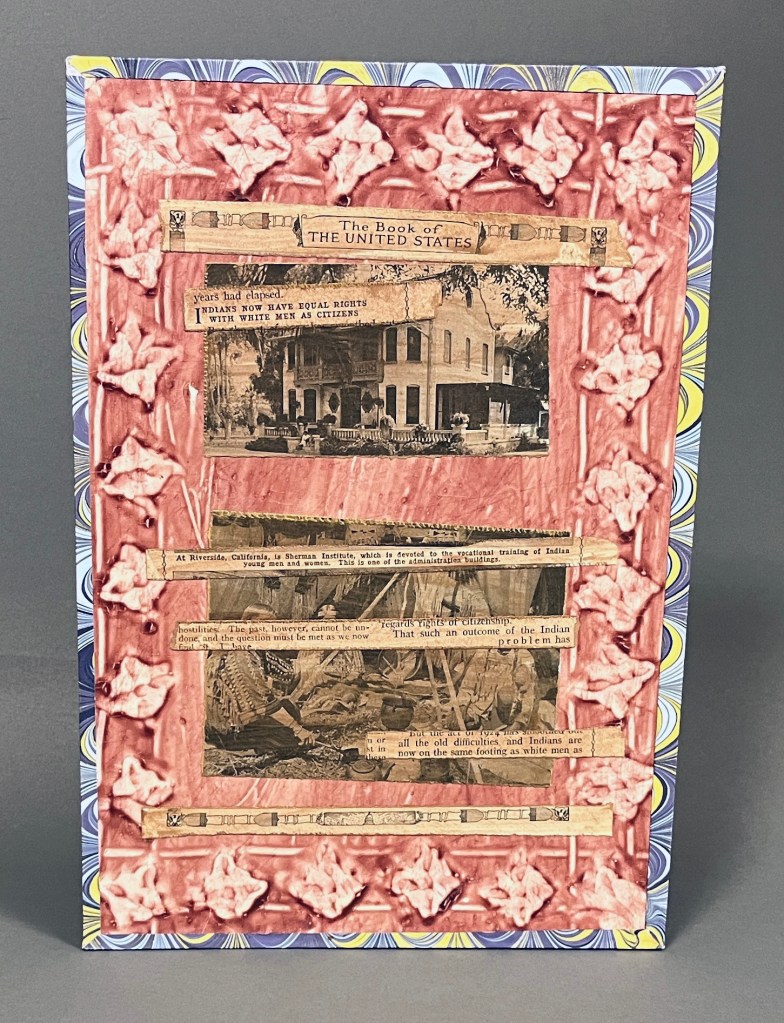
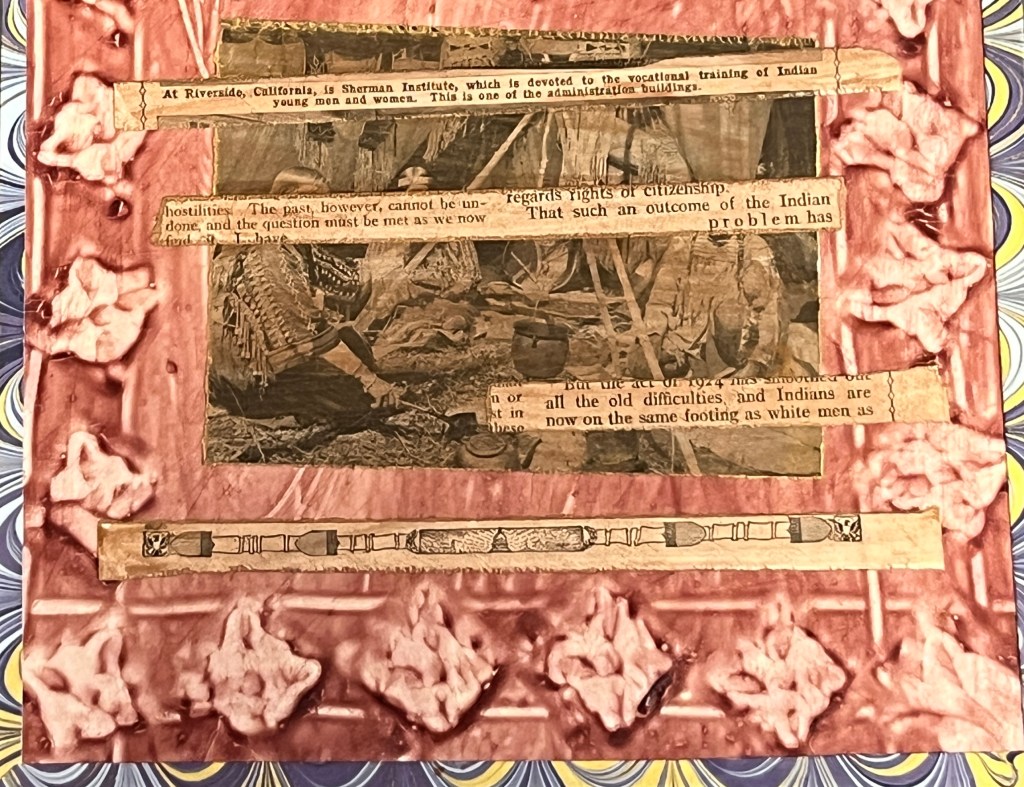
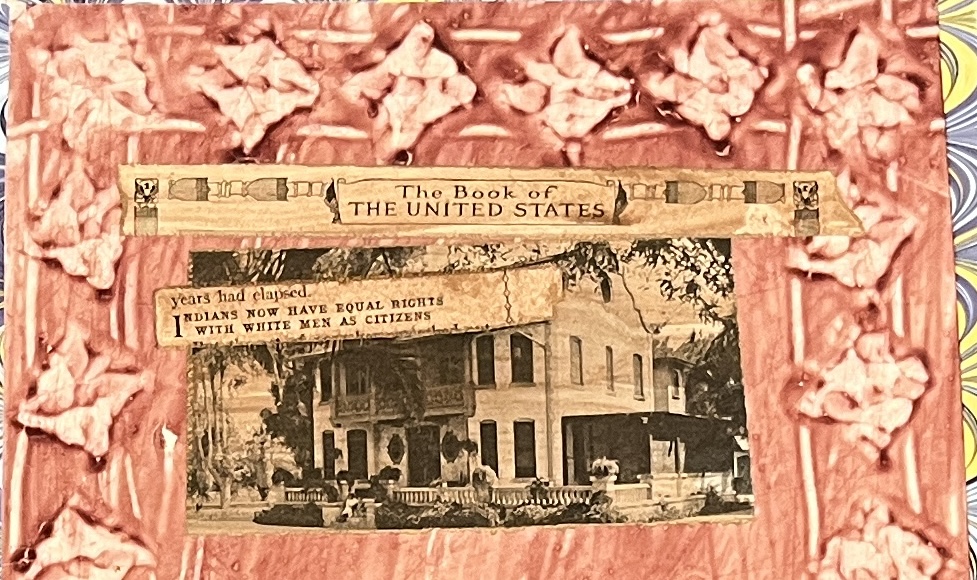
Unfinished Project, 2026
Paste papers and collage
Unfinished Project collages paste papers and old children’s encyclopedias to explore the history of our country’s relationships with Native Americans. At the same time, it also references processes and feelings I often have about the art I make.
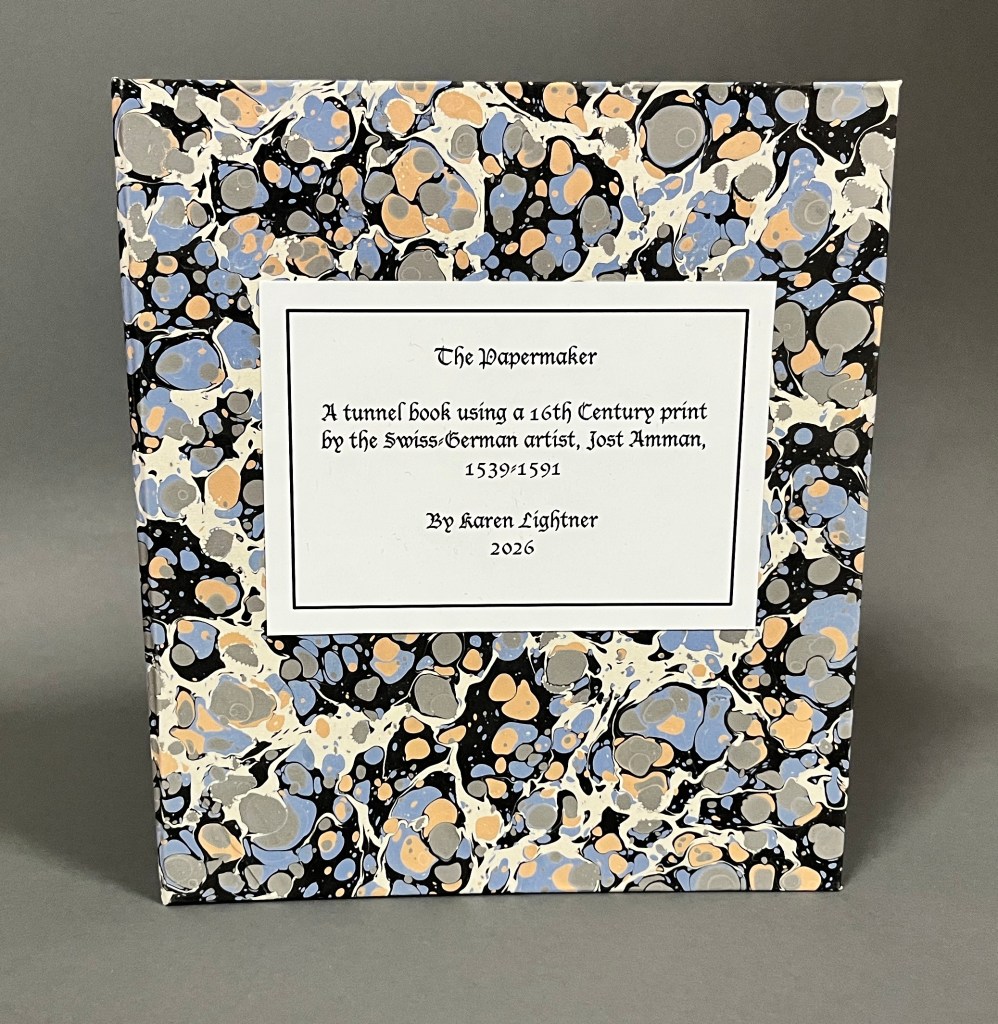
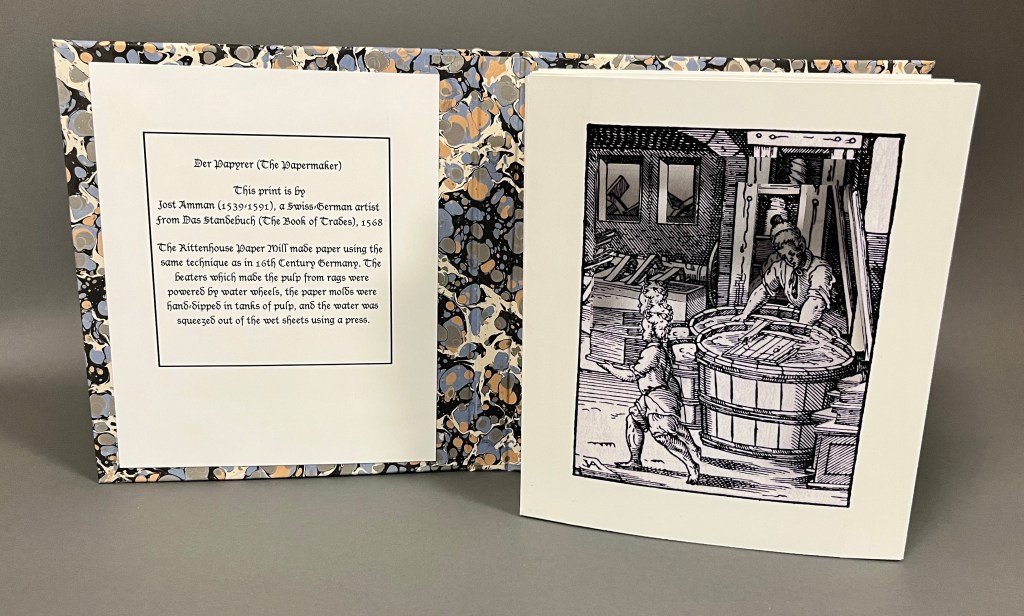
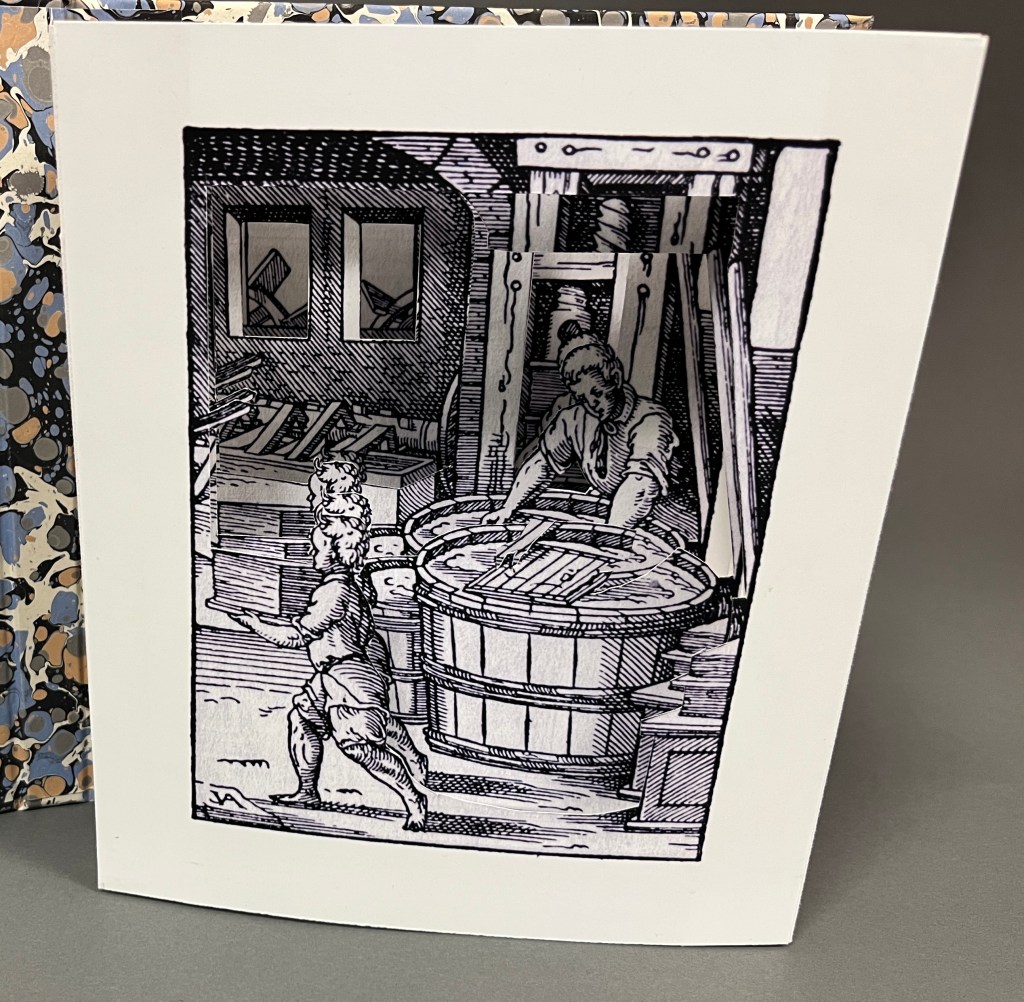
The Papermaker, 2026
A tunnel book using a 16th Century print by the Swiss-German artist, Jost Amman (1539-1591). Pigment print on Epson matte paper, covers are marbled paper over board
Jost Amman, a 16th century Swiss-German artist based in Nuremberg created Das Standebuch (The Book of Trades) in 1568. The book featured woodcut illustrations of 114 professions accompanied by a short poem and documented occupations ranging from Emperor and Pope, to papermaker, engraver, printer and bookbinder, lawyer, clockmaker, thimble maker, and jester. The book provides a unique cross-section of daily life and social attitudes of the 16th century.
The Rittenhouse Mill made paper using the same techniques shown in Amman’s image. The beaters which made pulp from rags were powered by water wheels. The paper molds were hand dipped in tanks of pulp, and the water was squeezed out of the wet sheets using a press. The sheets were then hung to dry.
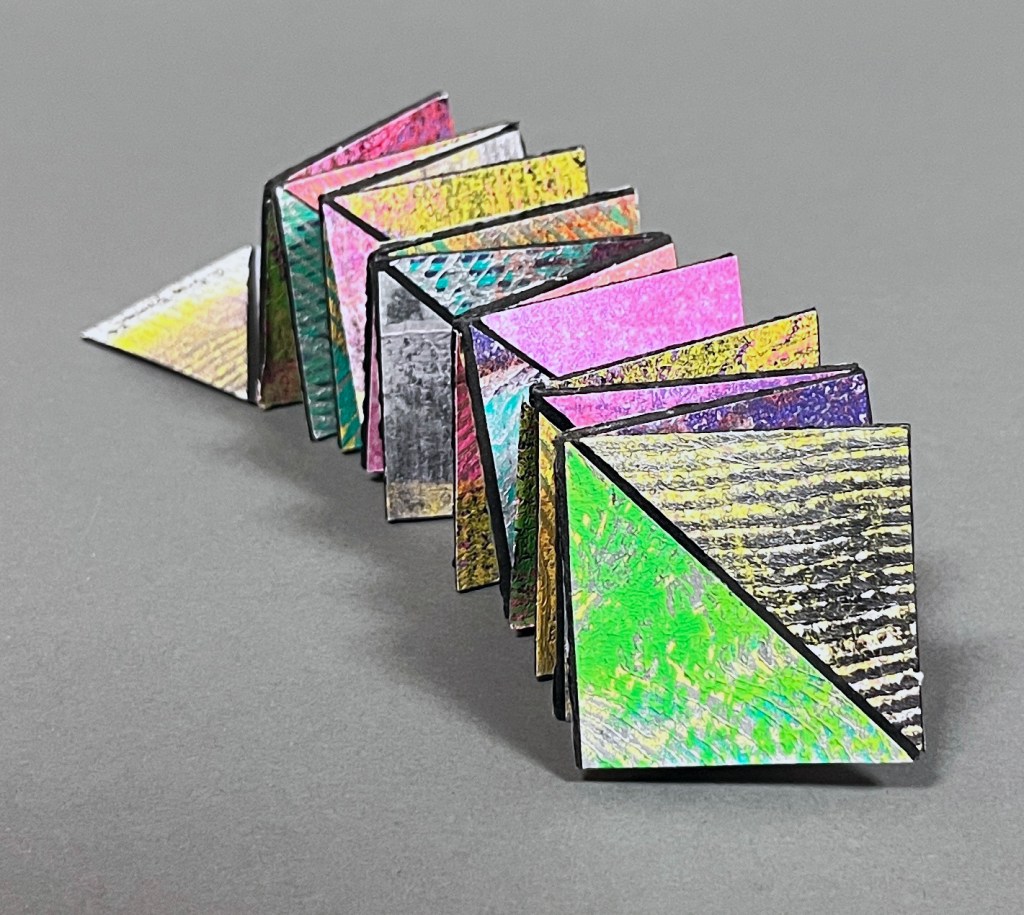
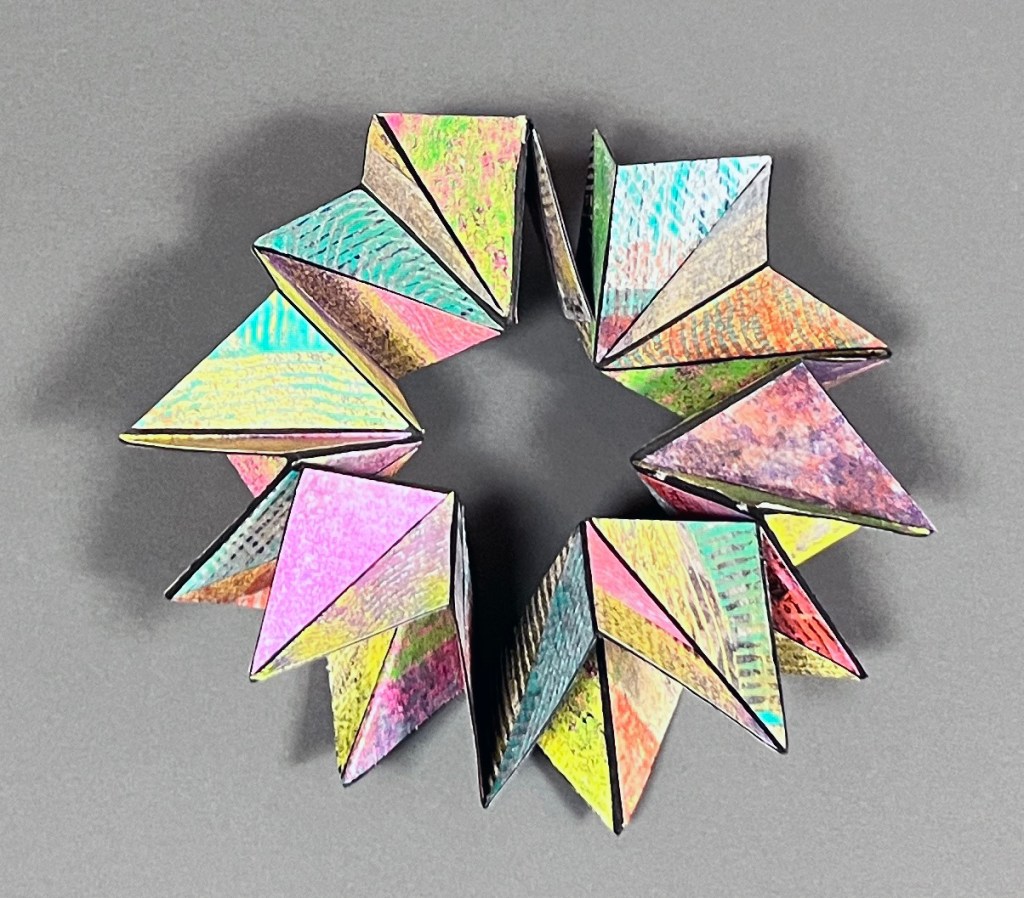
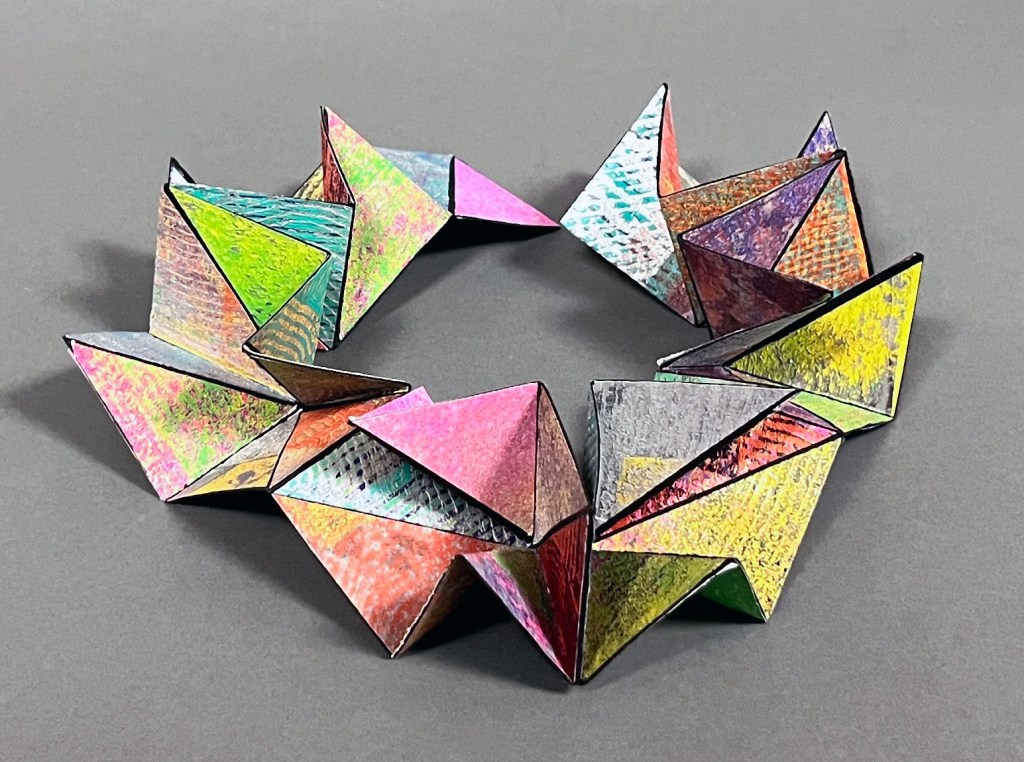
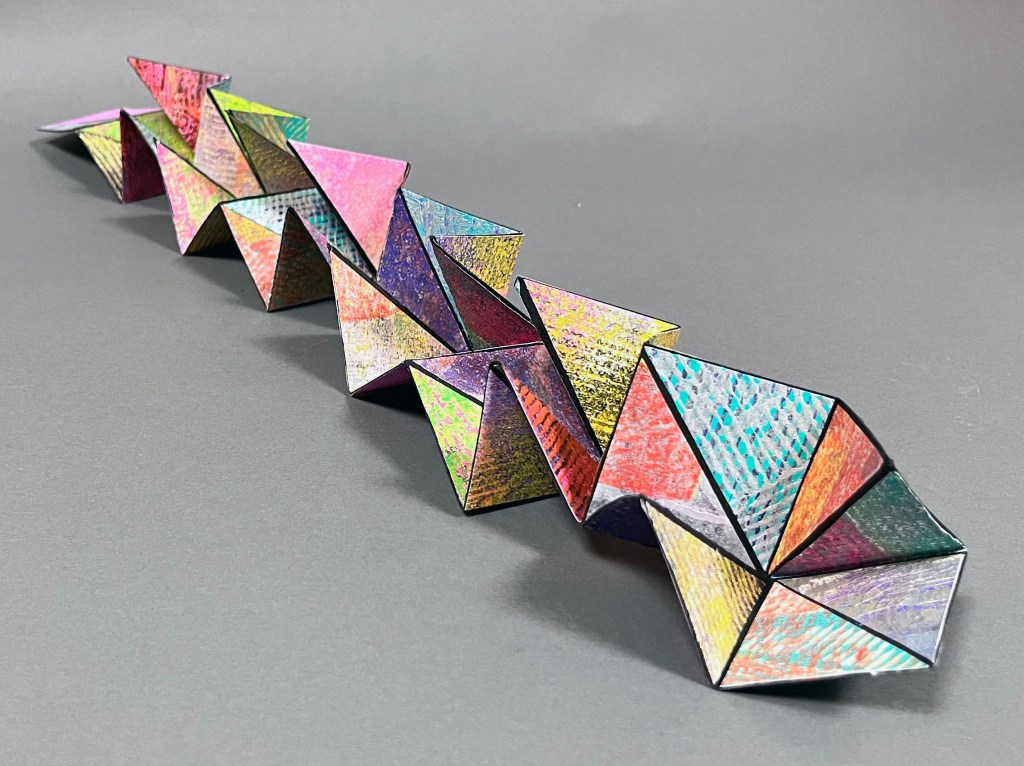
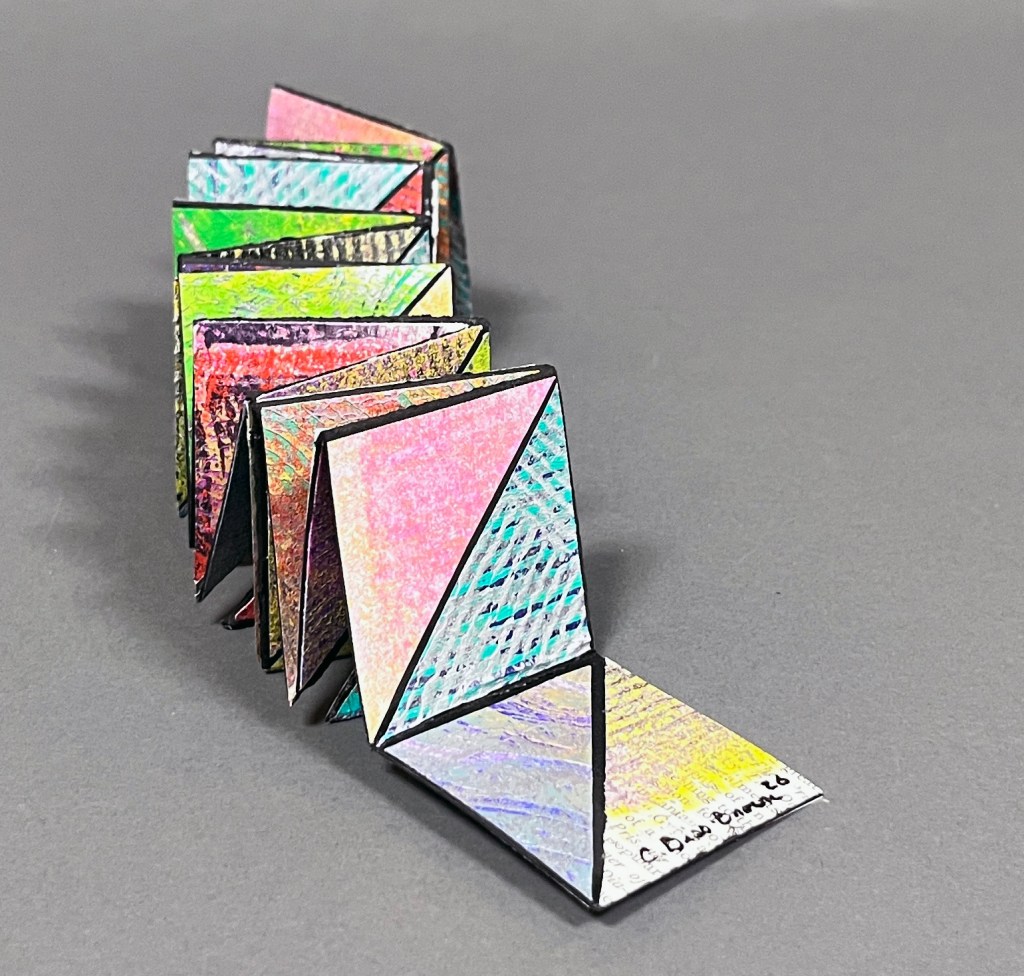
Untitled, 2026
Legion Stonehenge paper (90 lb.), tracing paper, cotton rag paper, recycled encyclopedia pages, copy paper, magnetic paper, acrylic, PVA adhesive
In 2025, I began experimenting with hectographic prints with bookmaker Eriko Takahashi and illustrators Mônica Carnesi and Adrienne Wright. Hectographs are monoprints, meaning only one true image is created. Secondary prints, or ghosts, may also be pulled, but these are fainter than the monoprint and fine details are often lost. Layering monoprints and ghosts creates unexpected textures and patterns that are influenced by both ink and paper. I used a meandering lotus design for the book’s structure, allowing the prints to move and interact as the book is manipulated—a nod to the layered history of Rittenhouse Town and its paper production. Hidden under two panels, magnetic paper allows pages in the book to join, forming a circle or Möbius strip, echoing the cyclic nature of making and recycling paper.
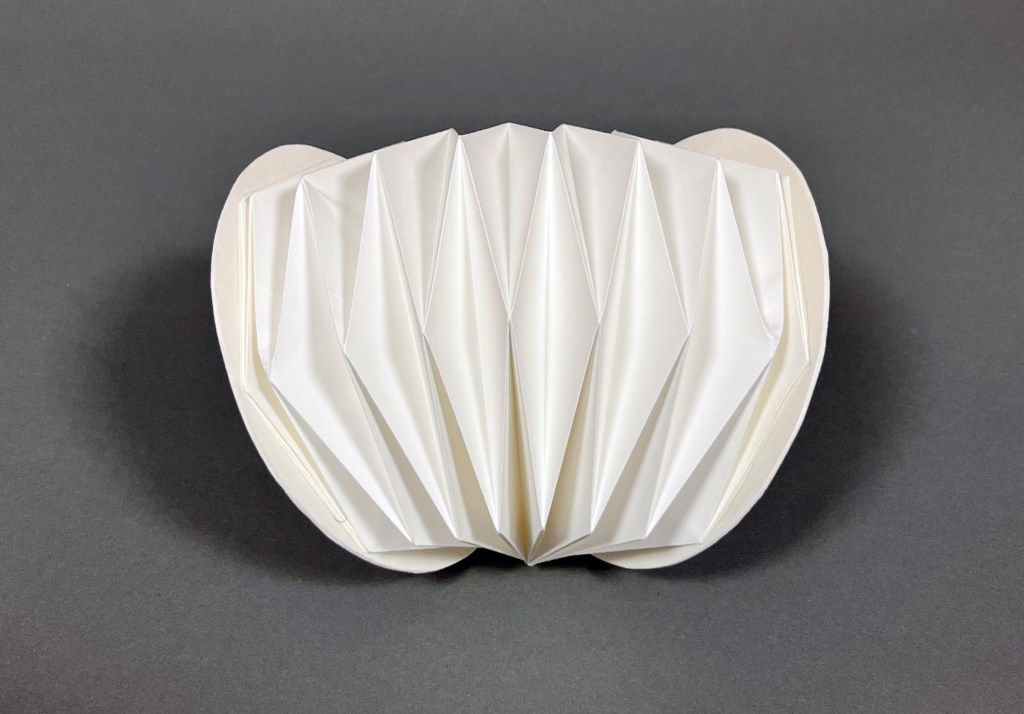
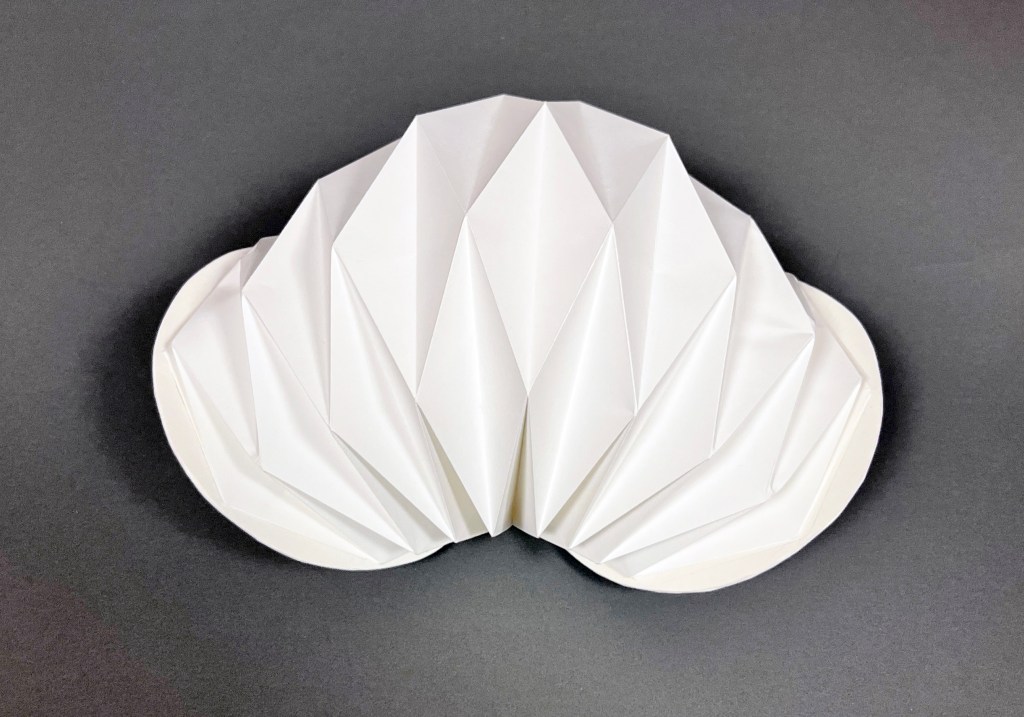
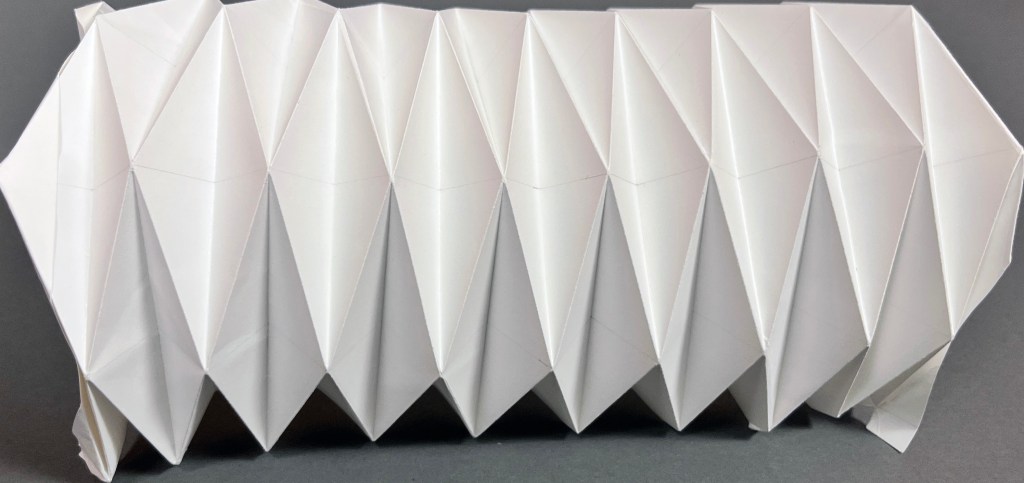
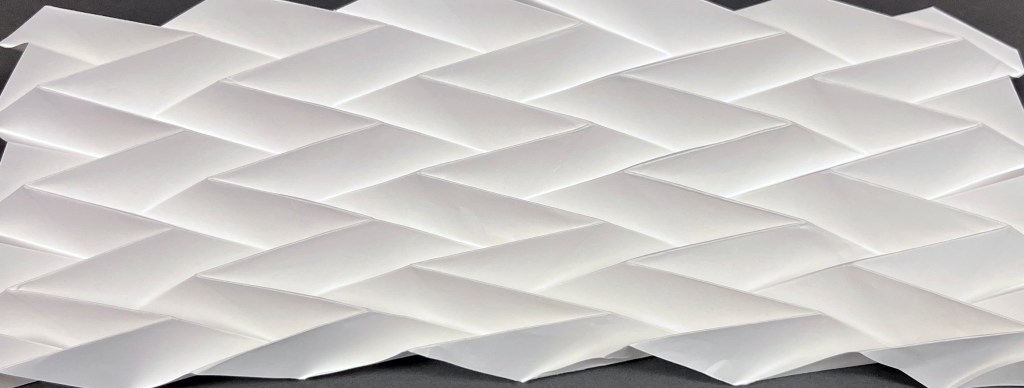
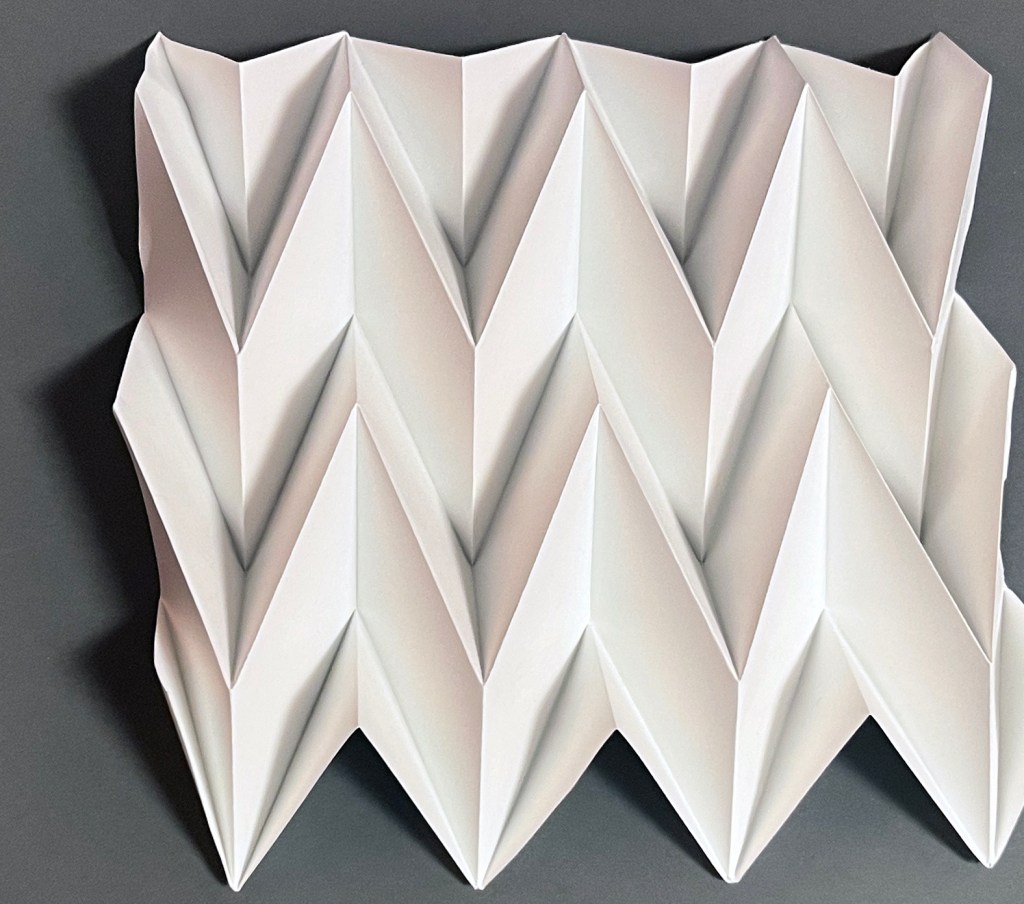
Paper Arc de Triomphe, 2026
Paper, mat board
Deployable folds of Miura origami
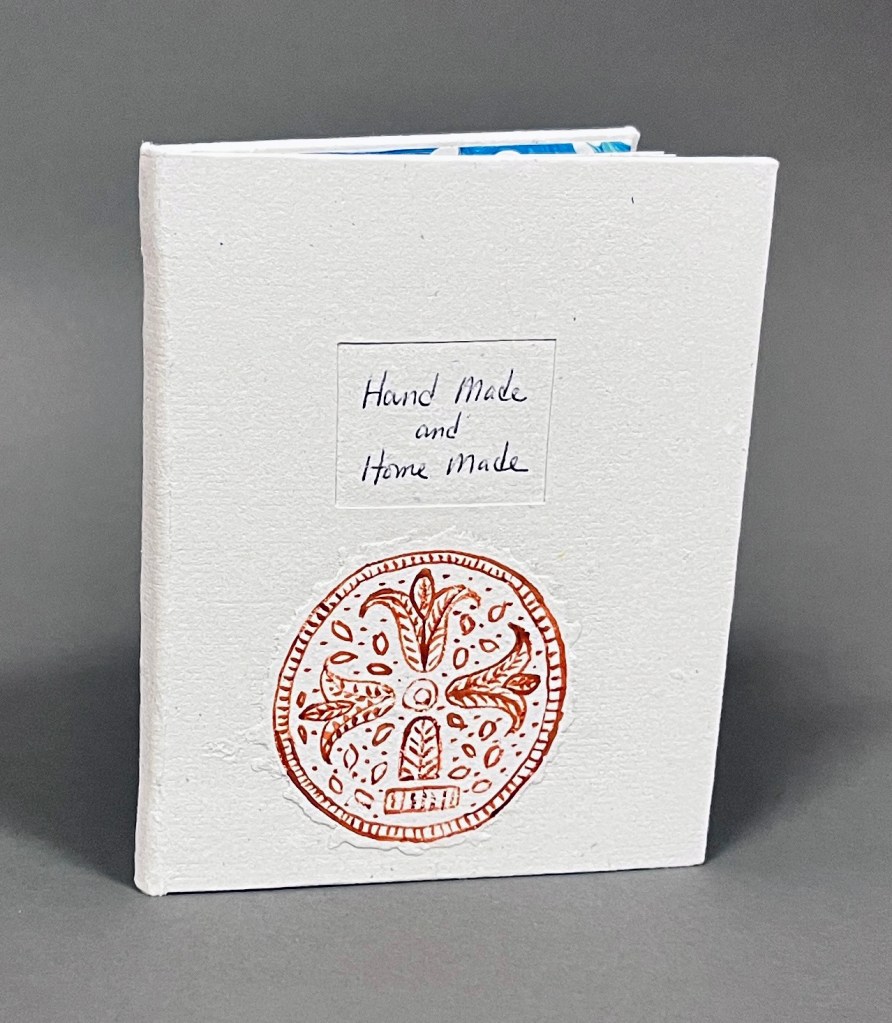
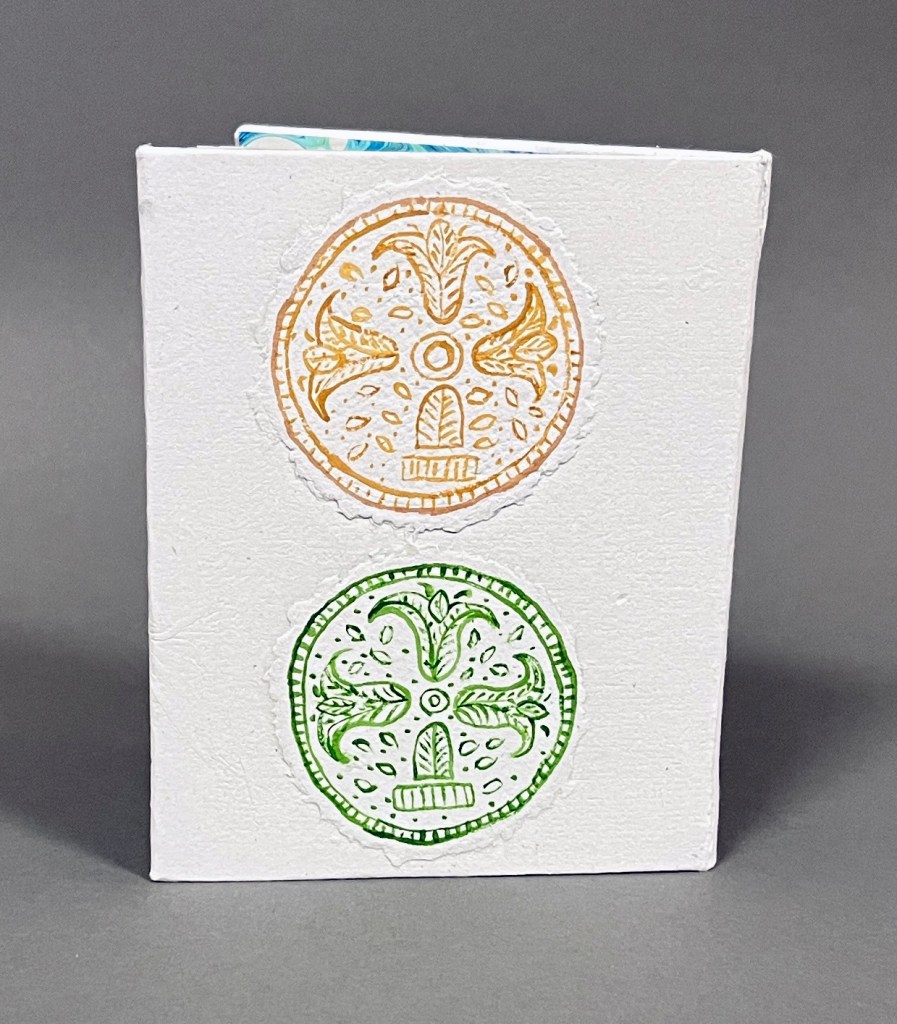
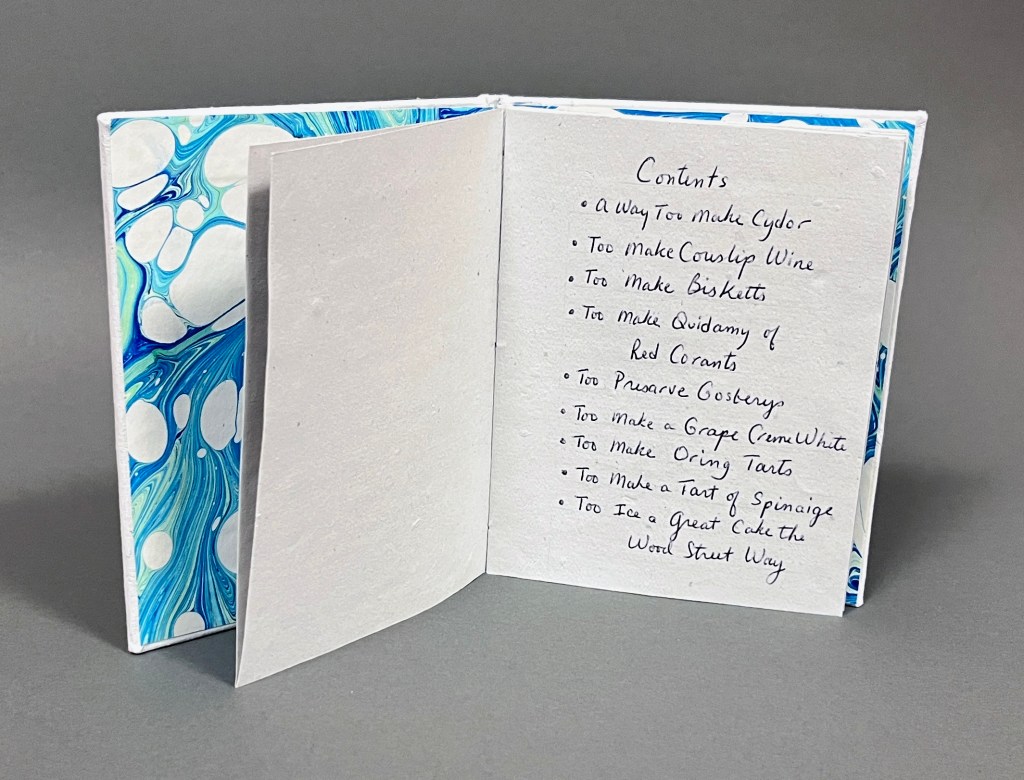
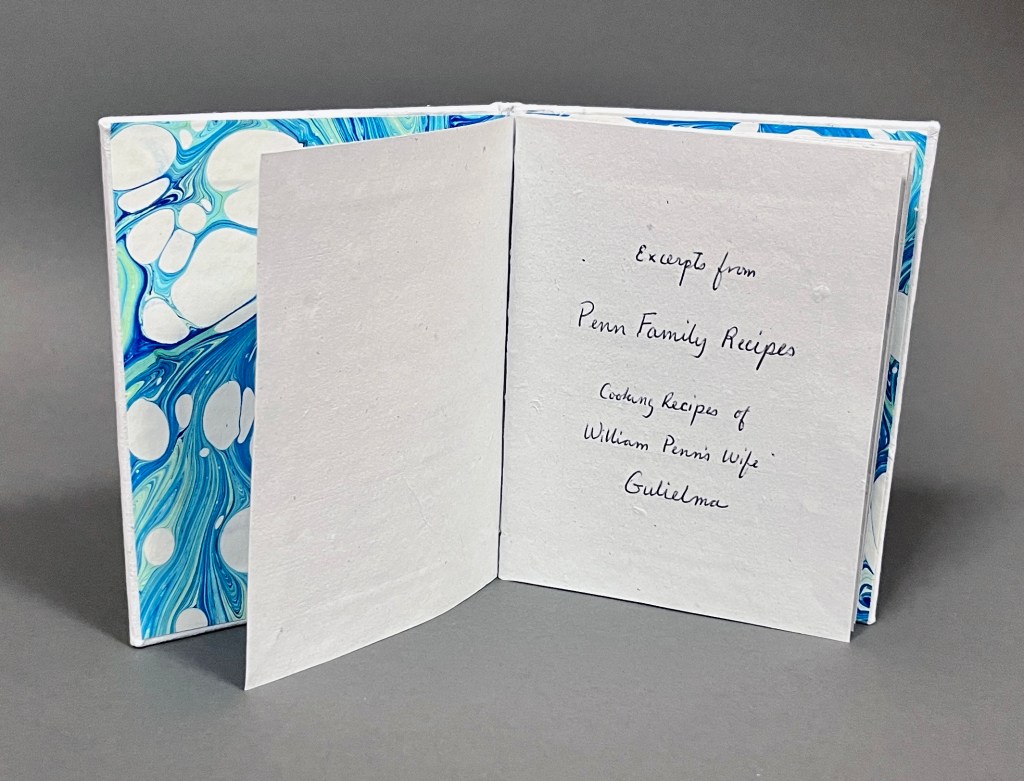
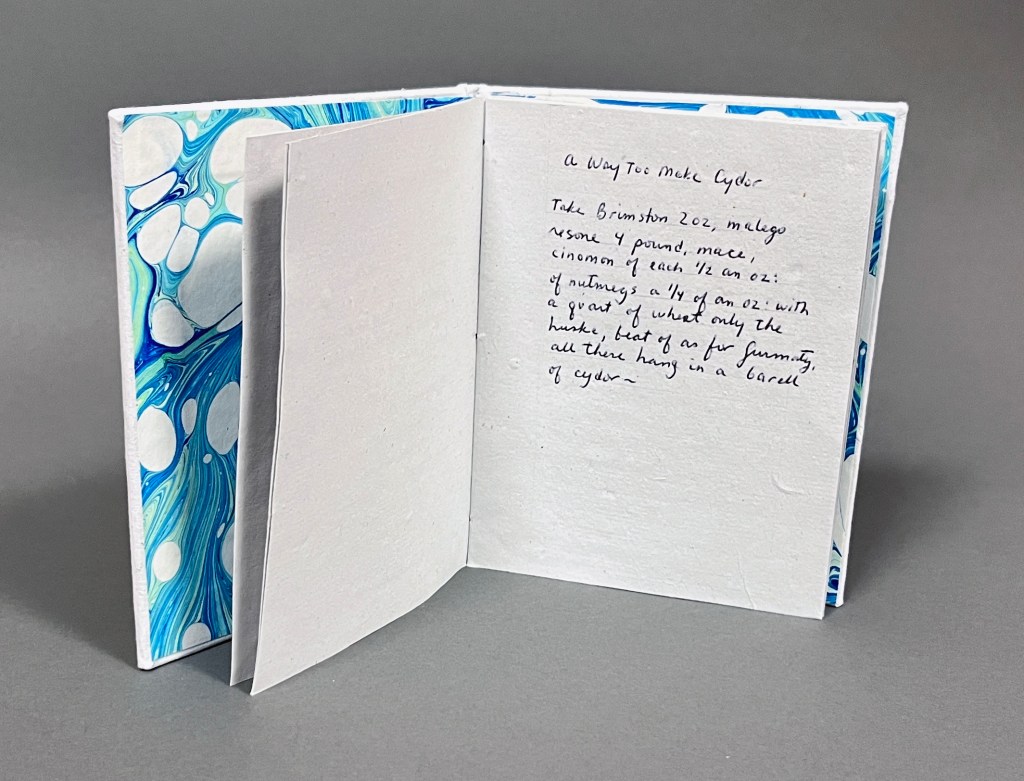
Hand Made Paper & Home Made Food, 2026
This book is made entirely with handmade paper & handmade marble paper and was inspired by the Rittenhouse Paper Mill and the on-site historic colonial hearth cooking. The front and back covers have decorative painted watercolor discs. Select recipes are handwritten and copied from “Penn Family Recipes”. These recipes came from a 1702 manuscript from Gulielma Penn, William Penn’s first wife.
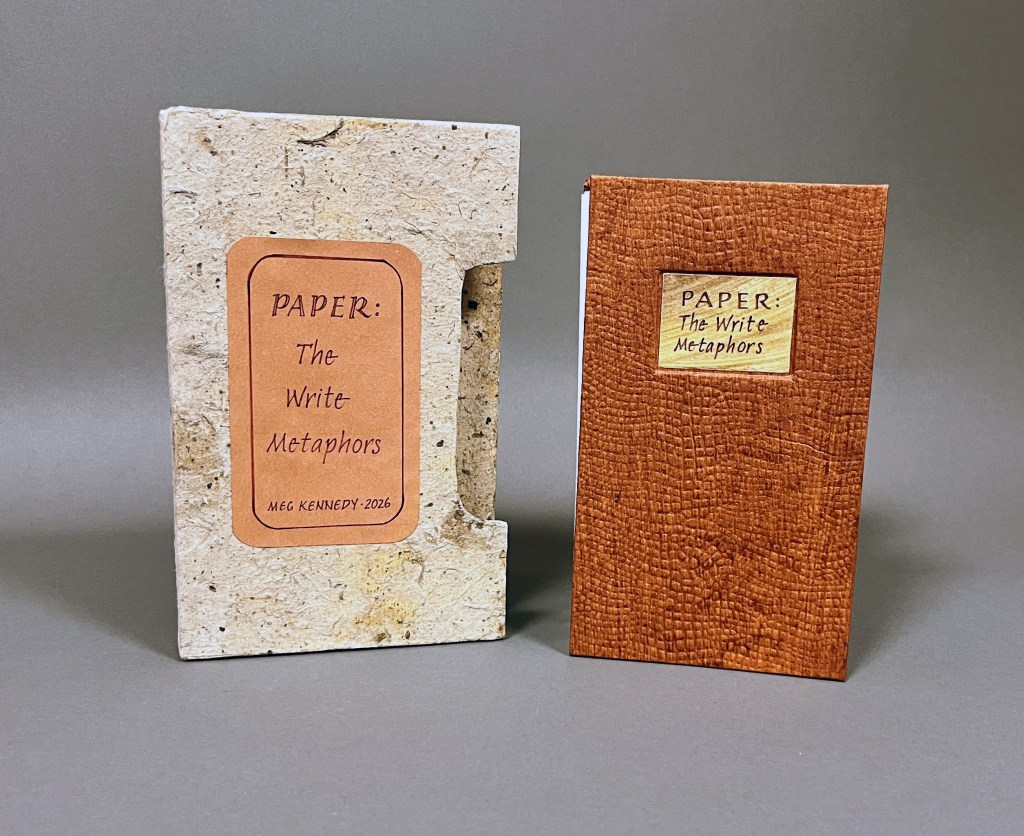
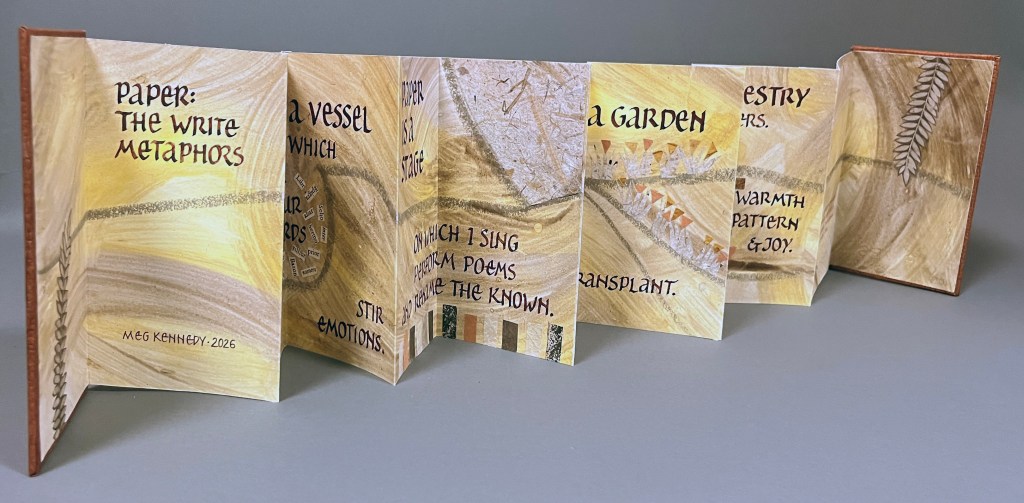
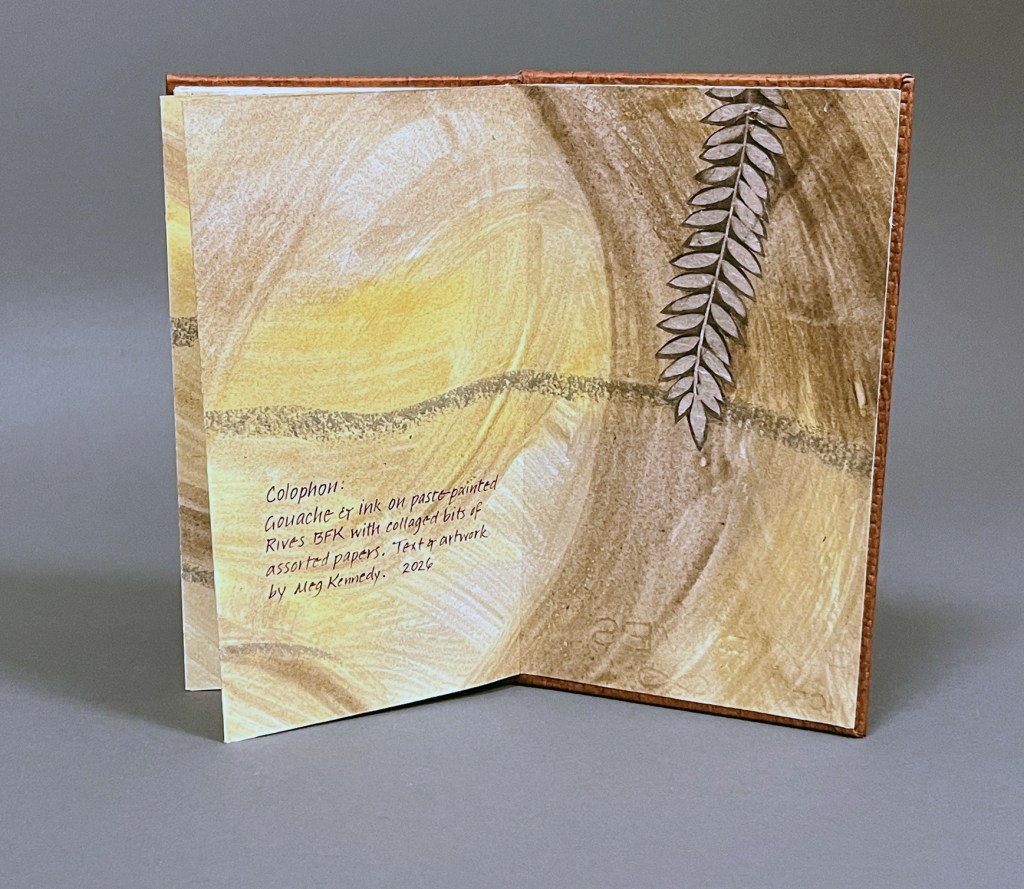
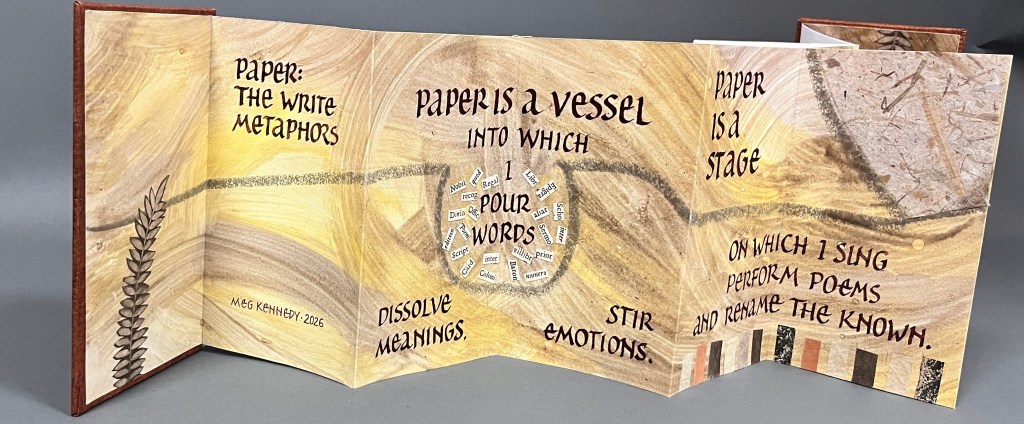
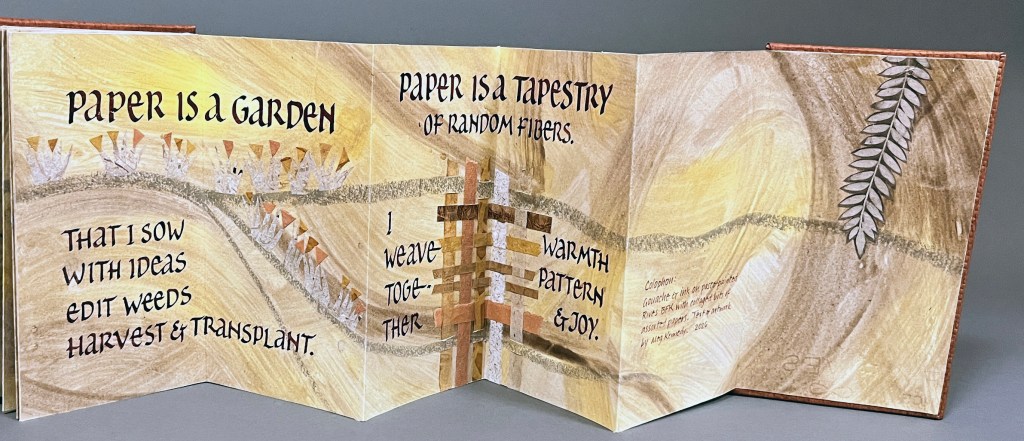
Paper: The Write Metaphors, 2026
Gouache and ink on paste-painted Rives BFK, with collaged bits of assorted papers. Text by the artist.
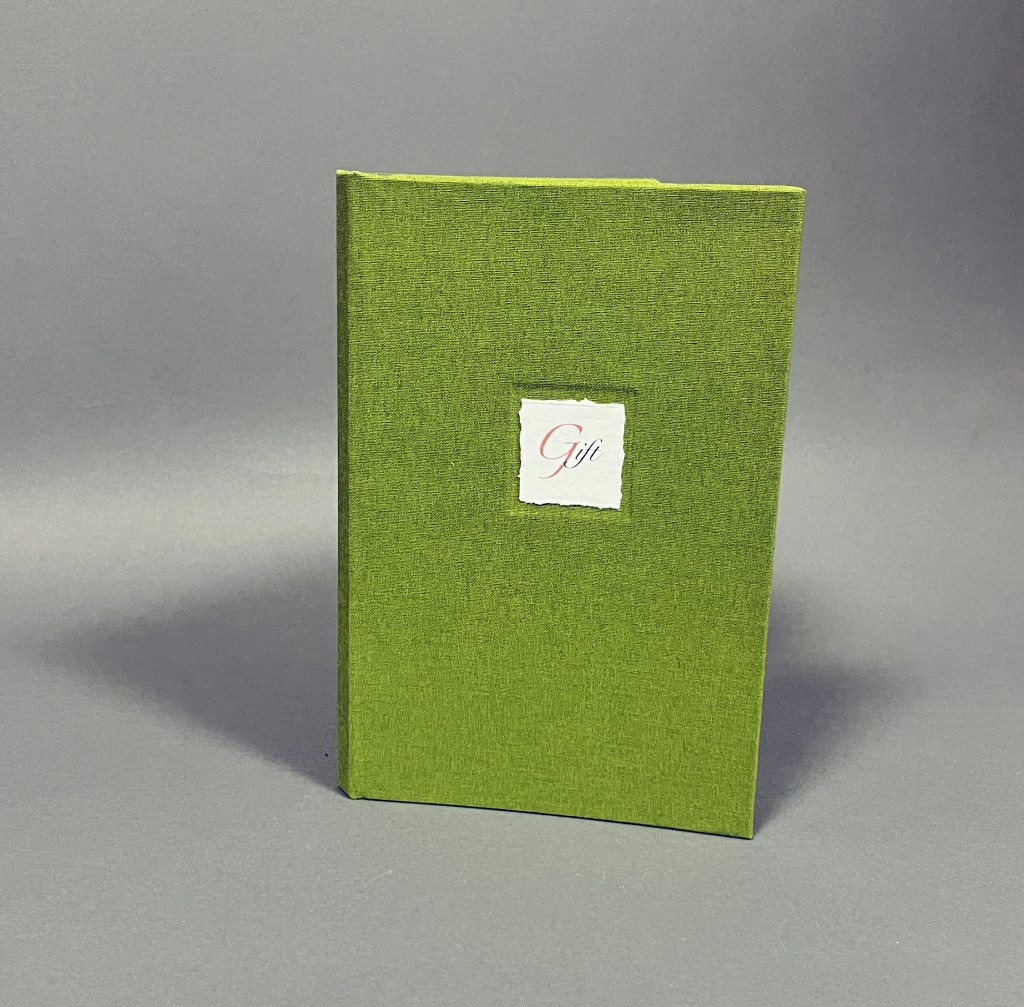
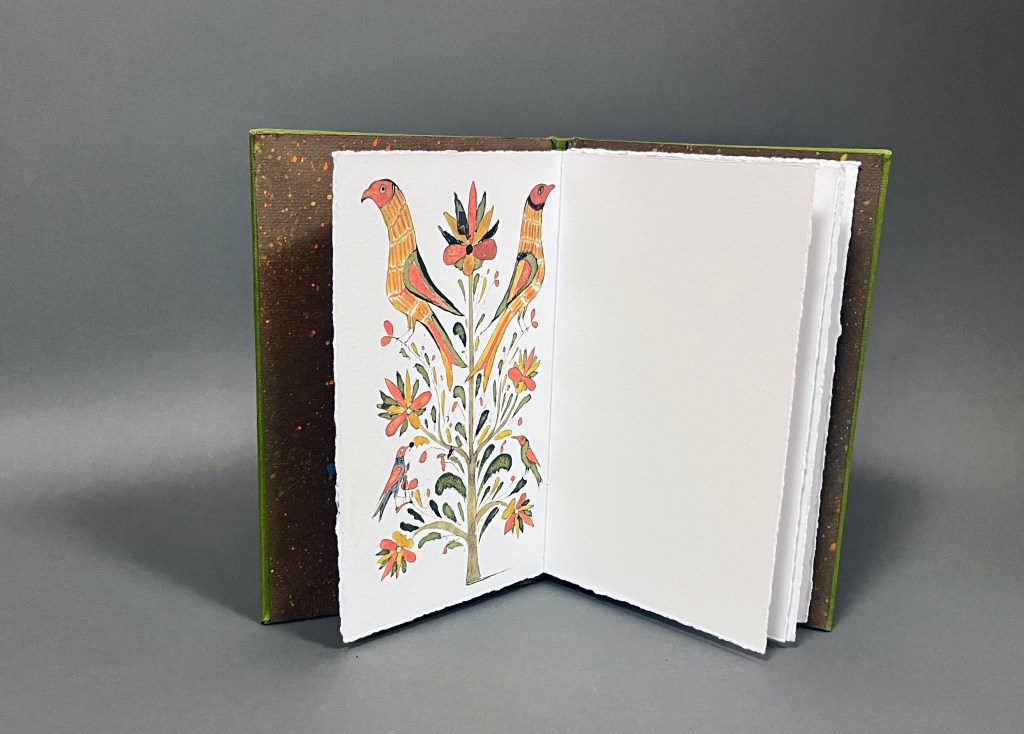
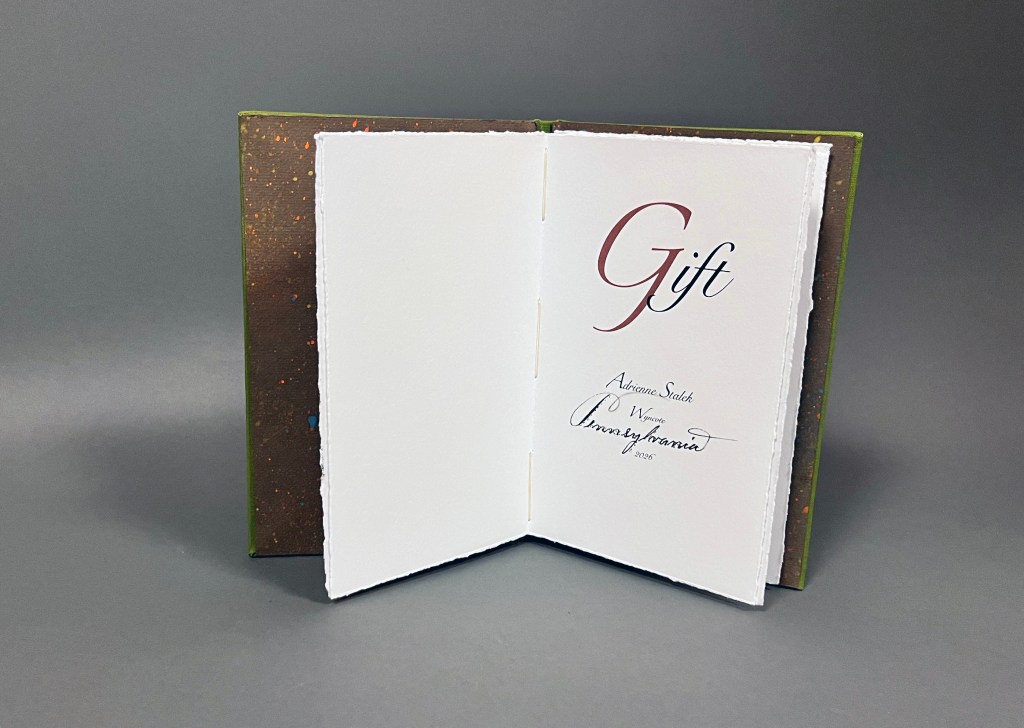
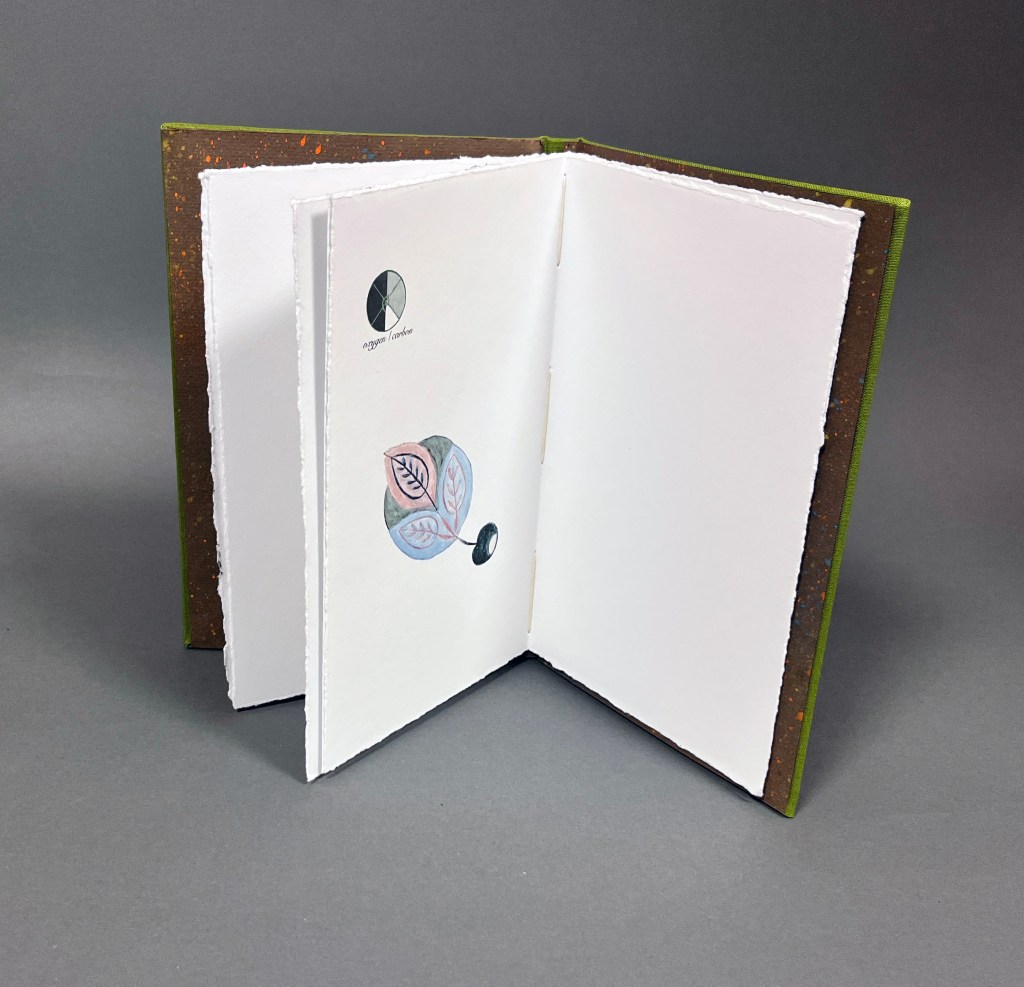
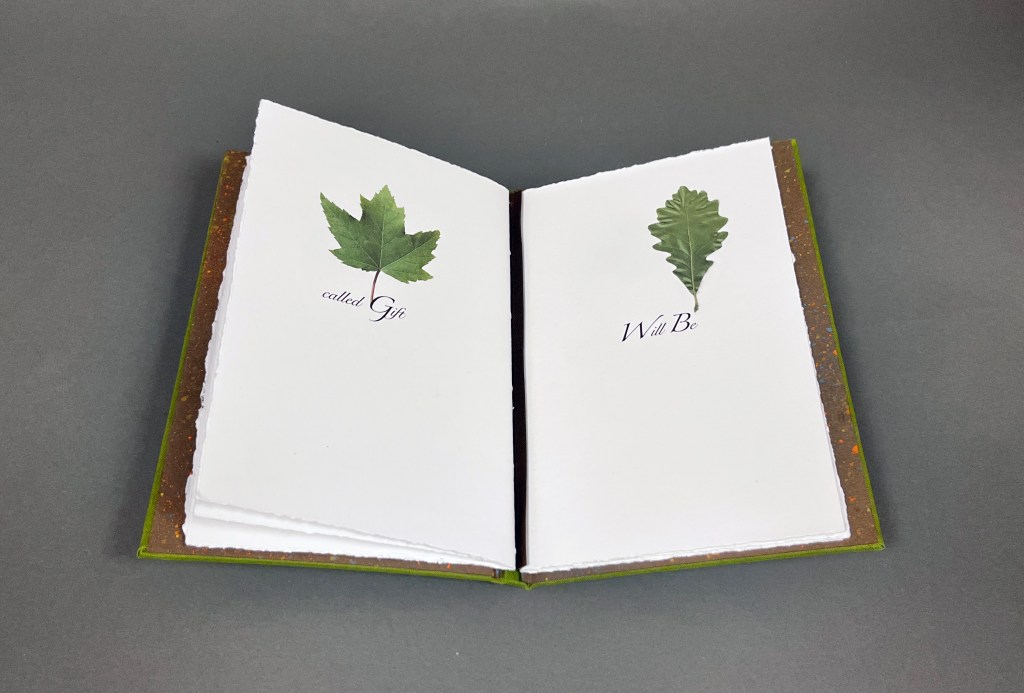
Gift, 2026
Gift is a meditation on the material paper. The seed of this piece is the transformative power of a gift. Plant life, used to create paper – the material for this book – can be viewed both as something that needs to be cleared by a new land owner, or as a gift. Plant life provides material for this paper and also the nutrients and oxygen of our planet, and it stabilizes the earth. Likewise, the paper in this book could be quickly cast in a recycling bin as valueless, or given freely as a gift and placed with other treasures in a collection. This paper records an unseen worth: it captures spirit.
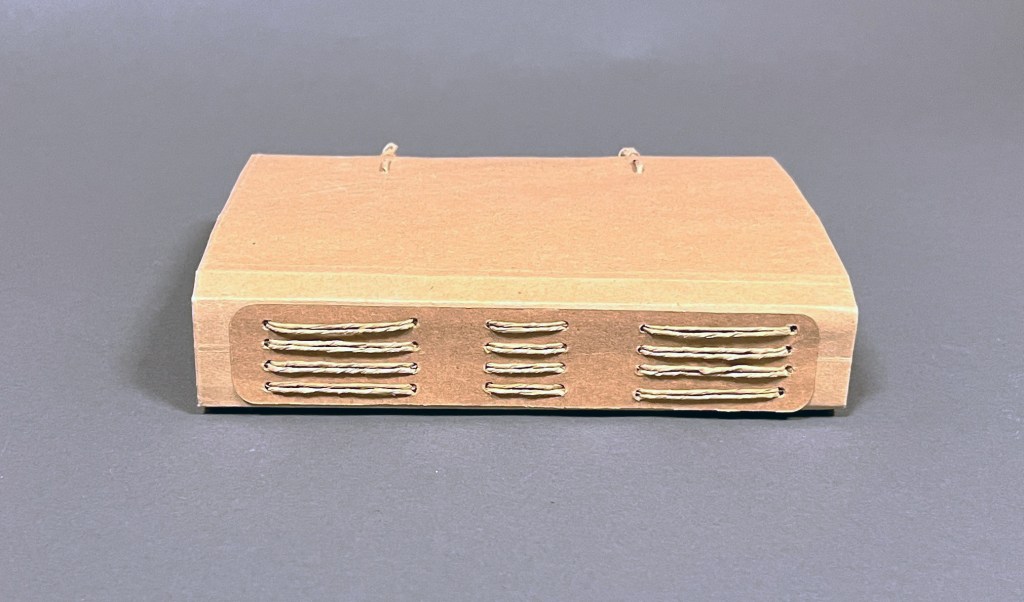
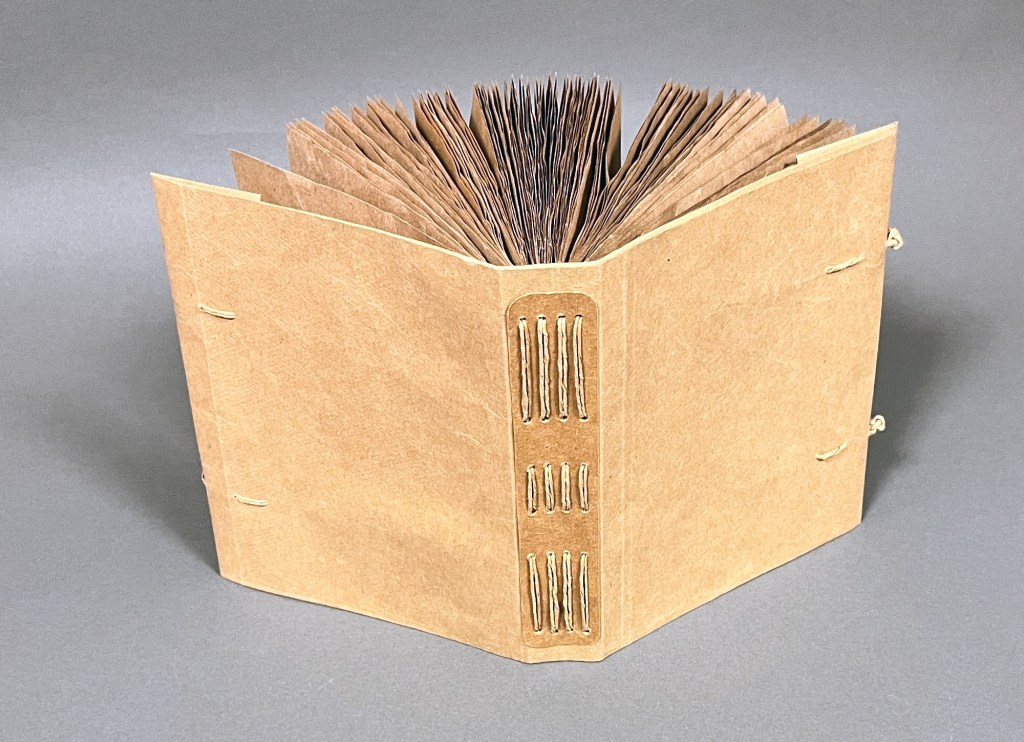
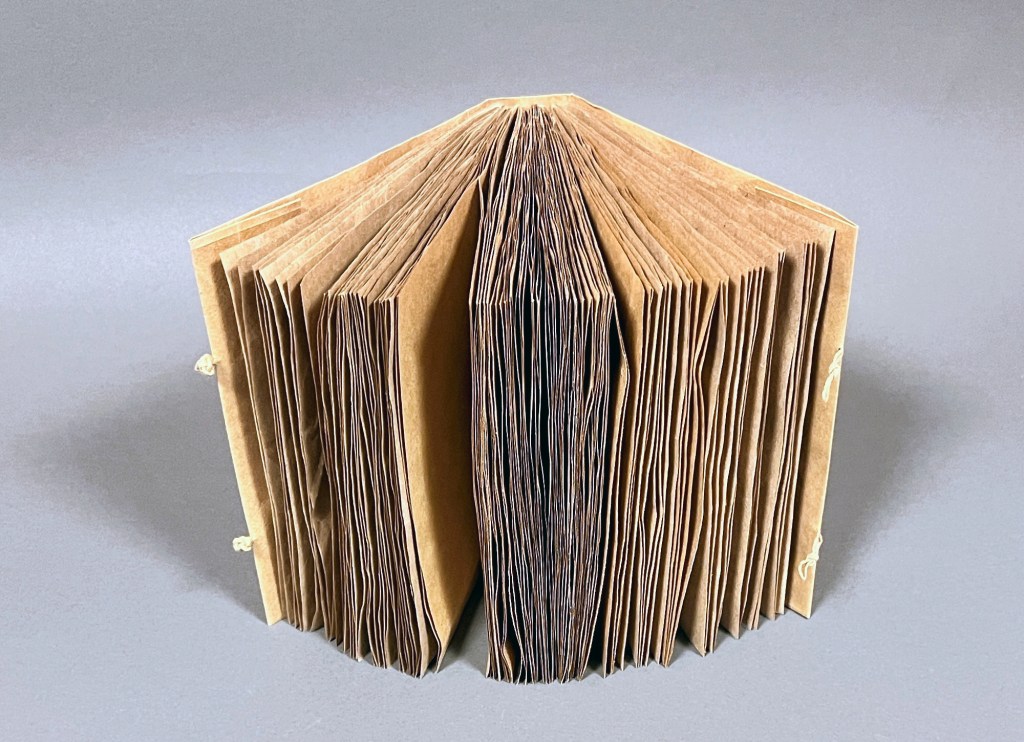
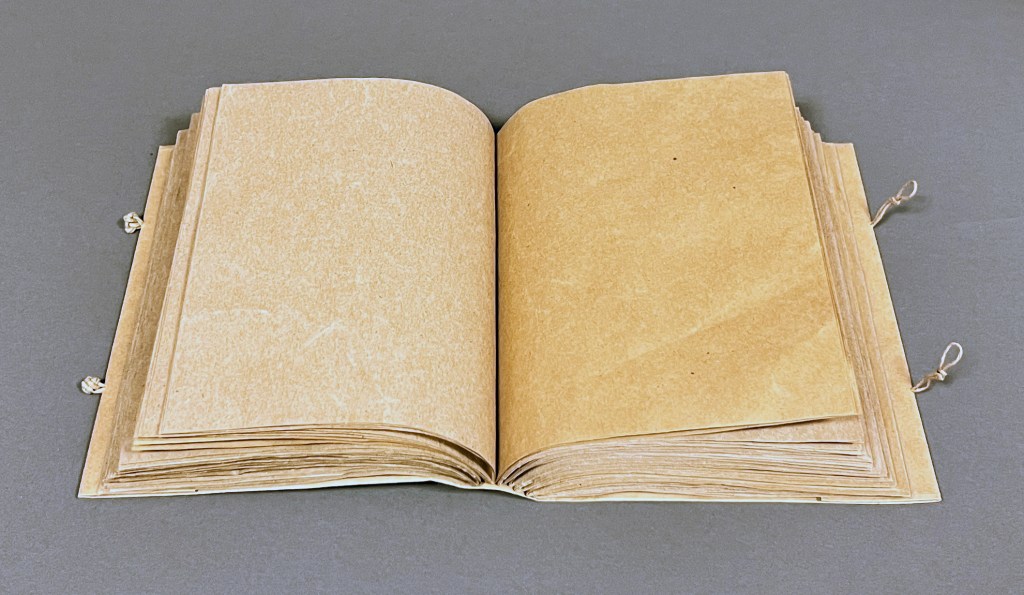
100% Brown Paper Book, 2026
This book is made entirely of brown paper, including the string that holds it together. The paper came from various sources: the stuffing used in Amazon shipments, an Acme grocery bag, a fruit box liner from Costco, and a CVS pharmacy bag
Rittenhouse Mill,2026
Inkjet photographs on Red River Premium Matte paper, vellum, handmade Mexican paper
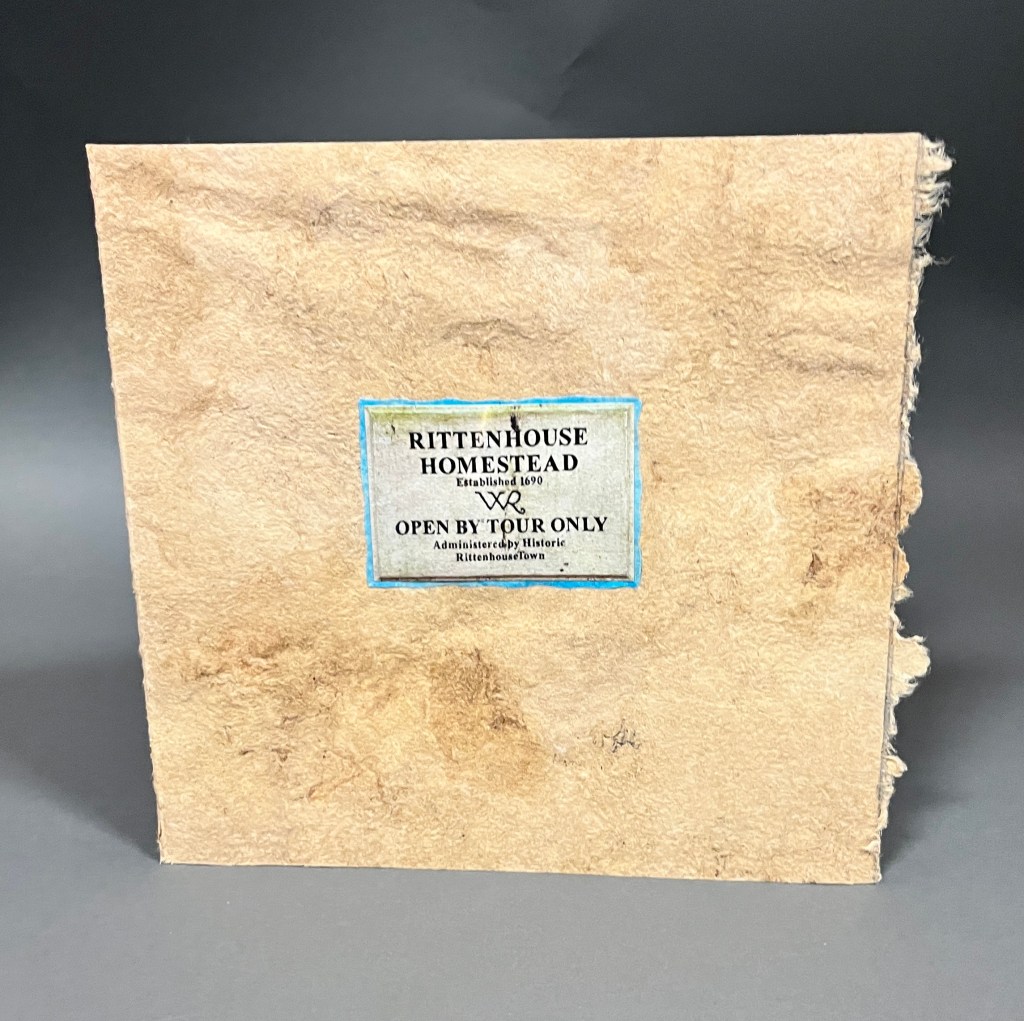
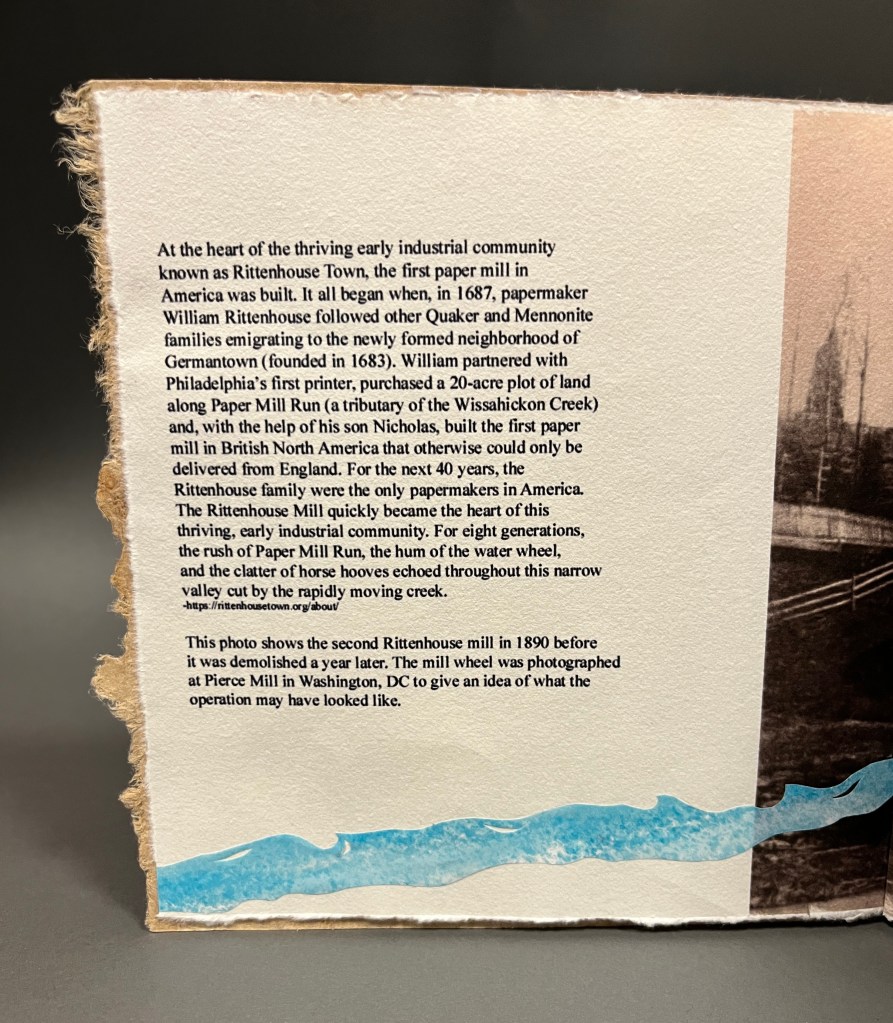
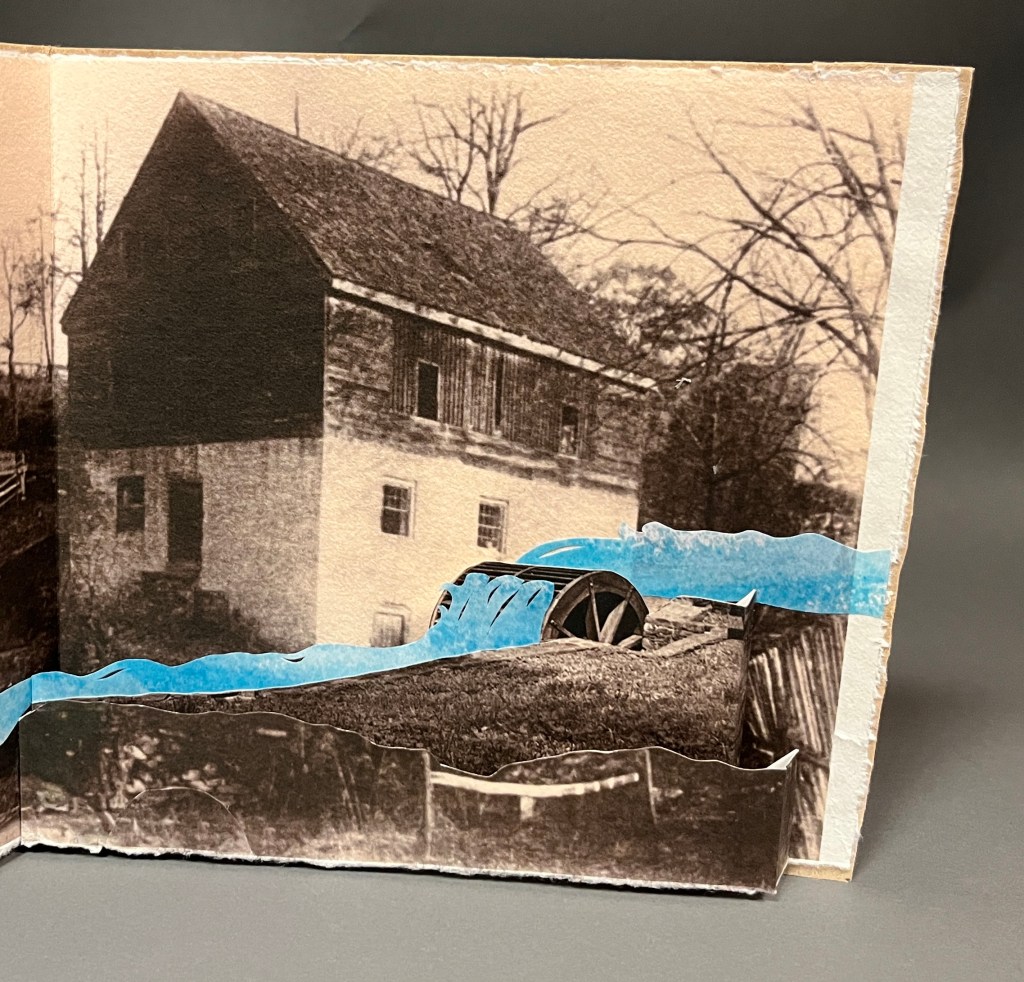
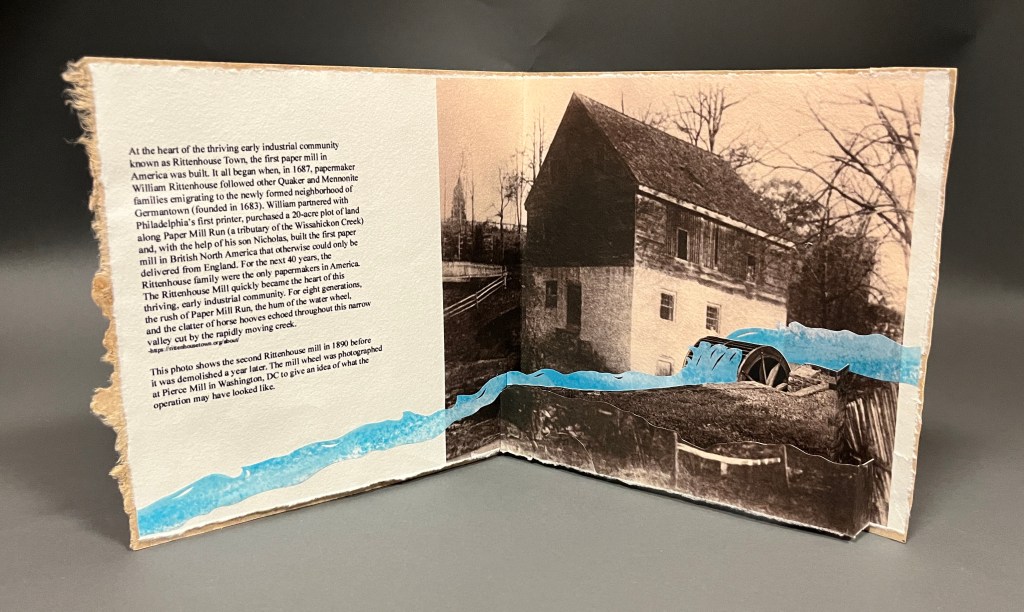
This book celebrates the first paper mill in British North America, operated by William Rittenhouse beginning in 1687 and made possible by water from the tributary of Wissahickon Creek known as Paper Mill Run. The photo shows the second Rittenhouse mill in 1890 before it was demolished a year later. The mill wheel was photographed at Pierce Mill in Washington, DC to give an idea of what the full operation may have looked like.

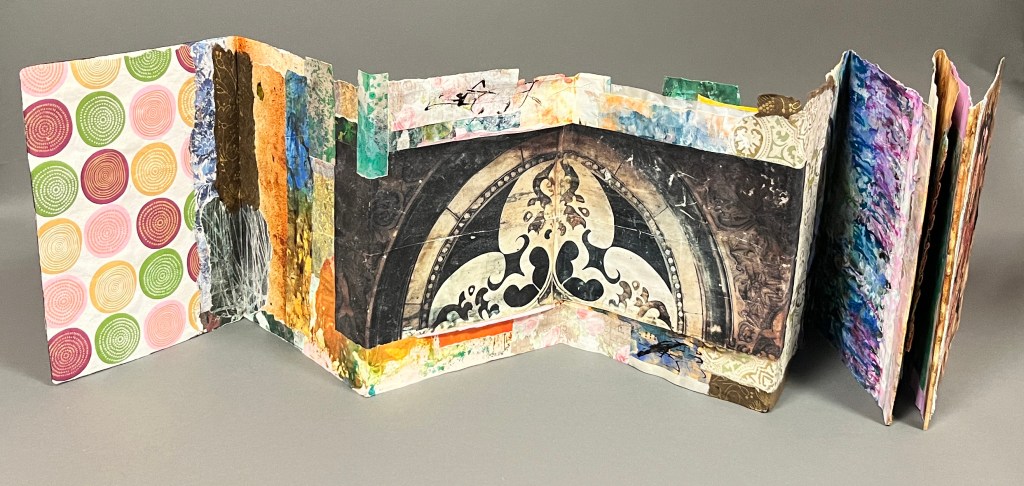
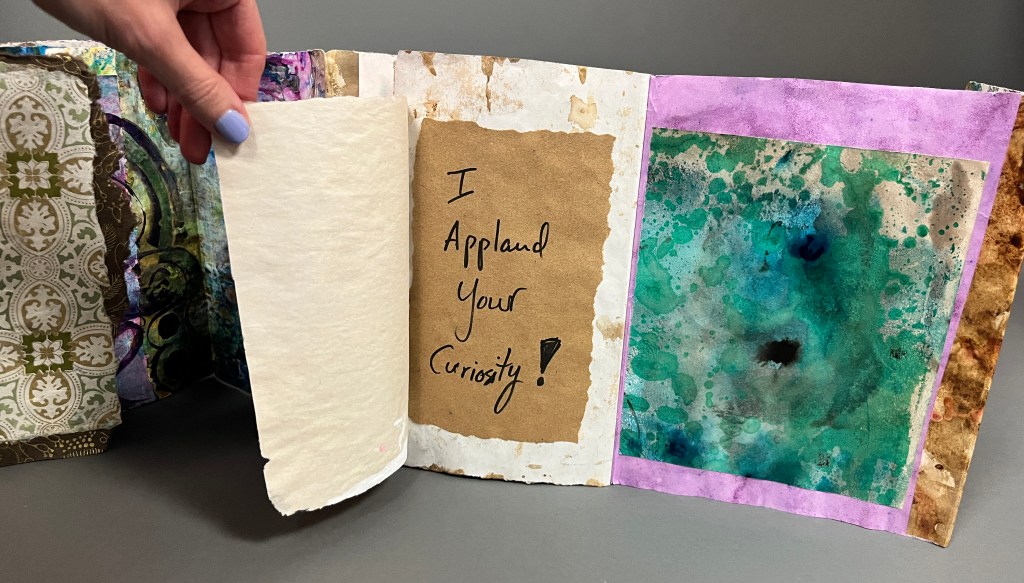
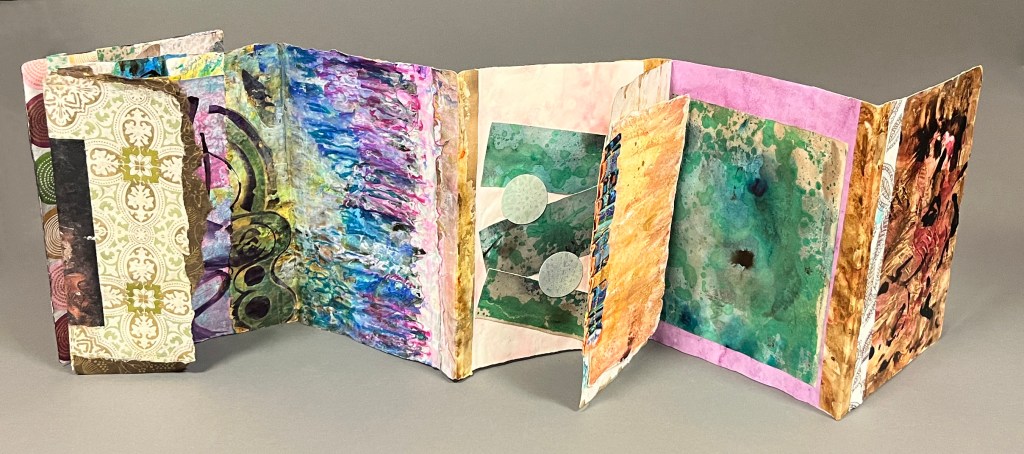
For the Love of Paper, 2026
Fine art, painted papers and digital design, accordion binding
This book started with a simple idea – tension, opposites, two pieces of paper that didn’t quite fit together. From there, akin to how the pearl forms around a grain of sand, additional papers, textures and colors are added until the individual papers create a unique and harmonious home. Separate, distinct, diverse, yet inclusive, just like the promise of the United States. E pluribus unum — out of many, one.


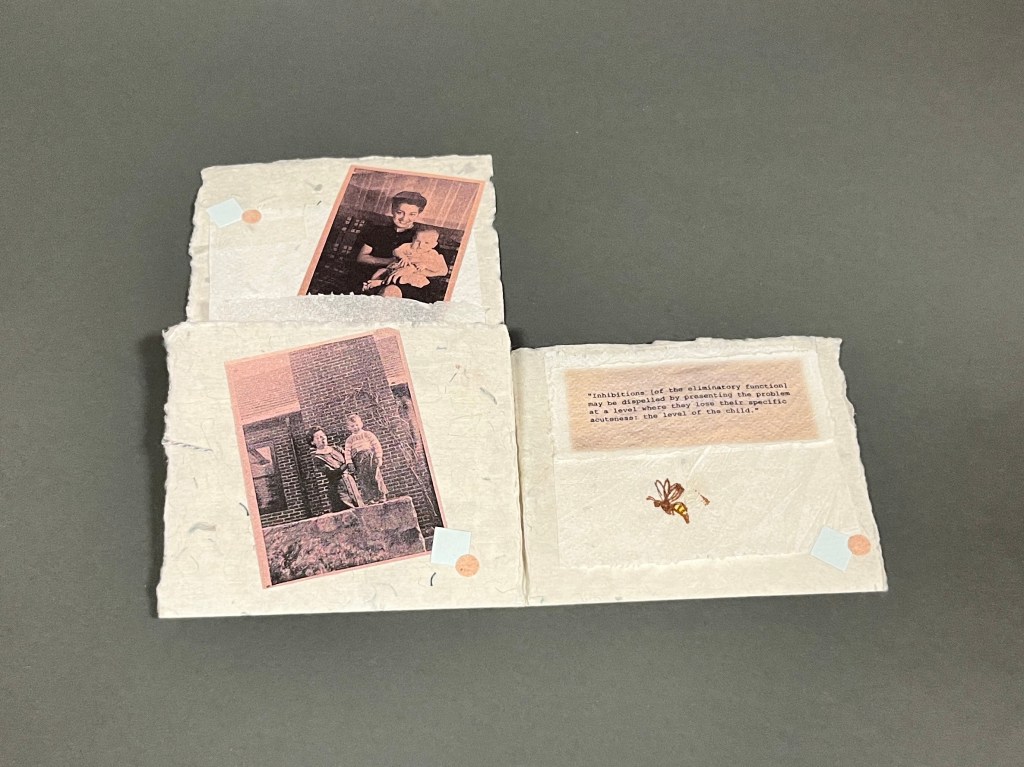

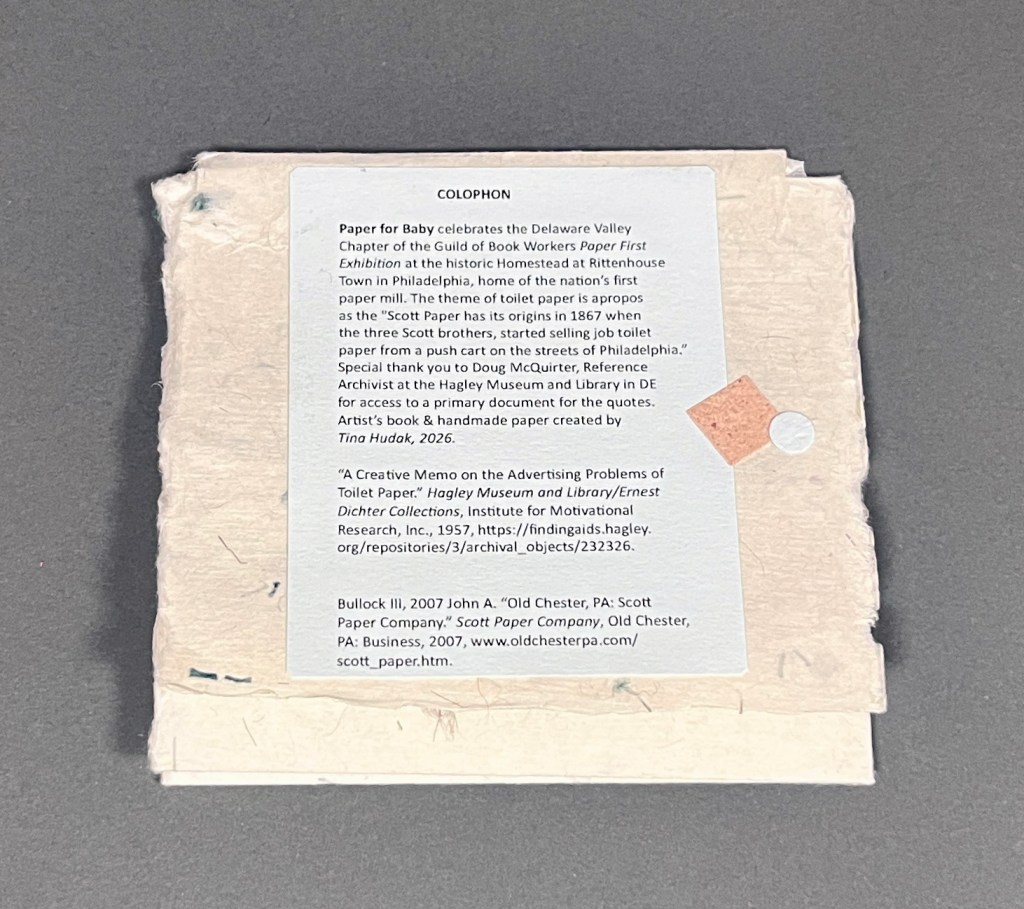
Paper for Baby, 2026
Toilet paper is apropos as the “Scott Paper has its origins in 1867 when the three Scott brothers started selling toilet paper from a push cart on the streets of Philadelphia.” This is a non-adhesive, fold-out book using only handmade paper by the artist and digital printing. Quotes are from the archives showcasing an advertising agency’s attempt to promote Scott Toilet Paper in 1957. Additionally, it is an historical commentary on the times.
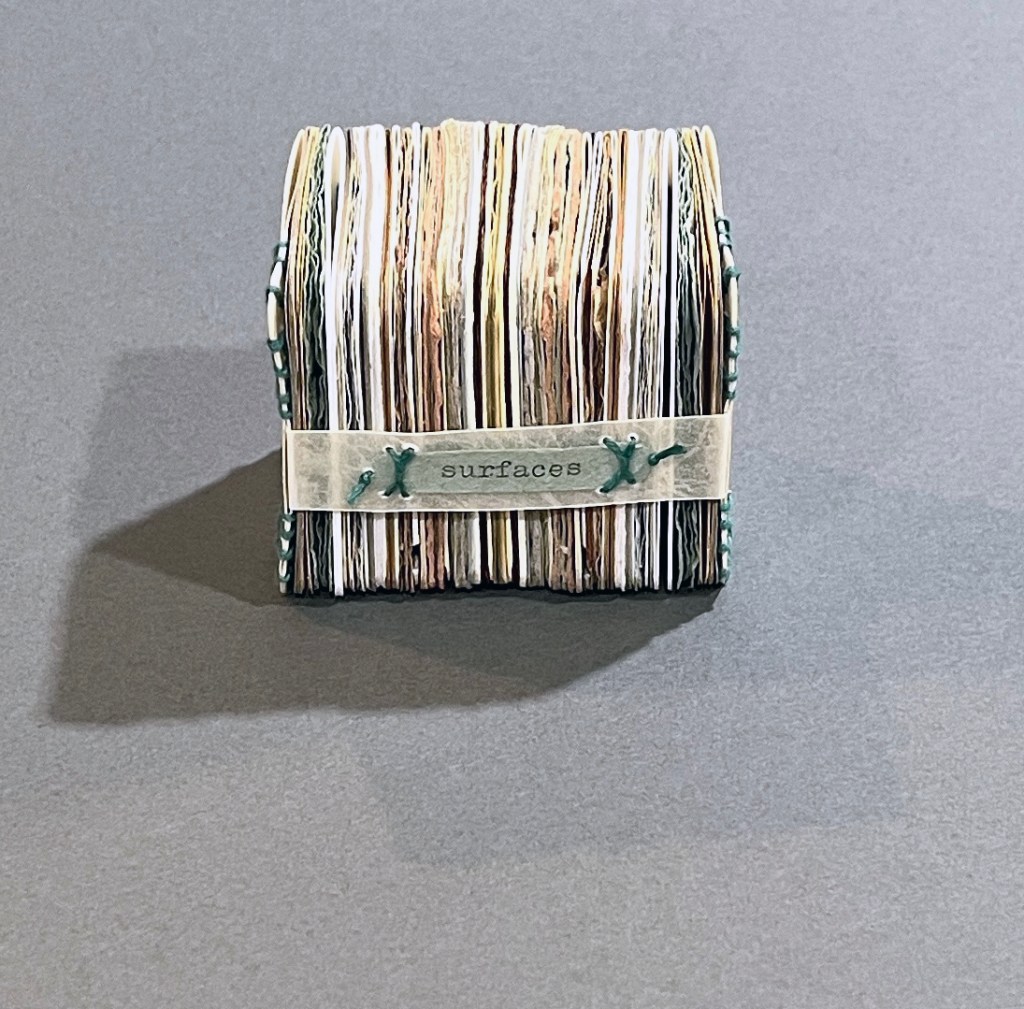
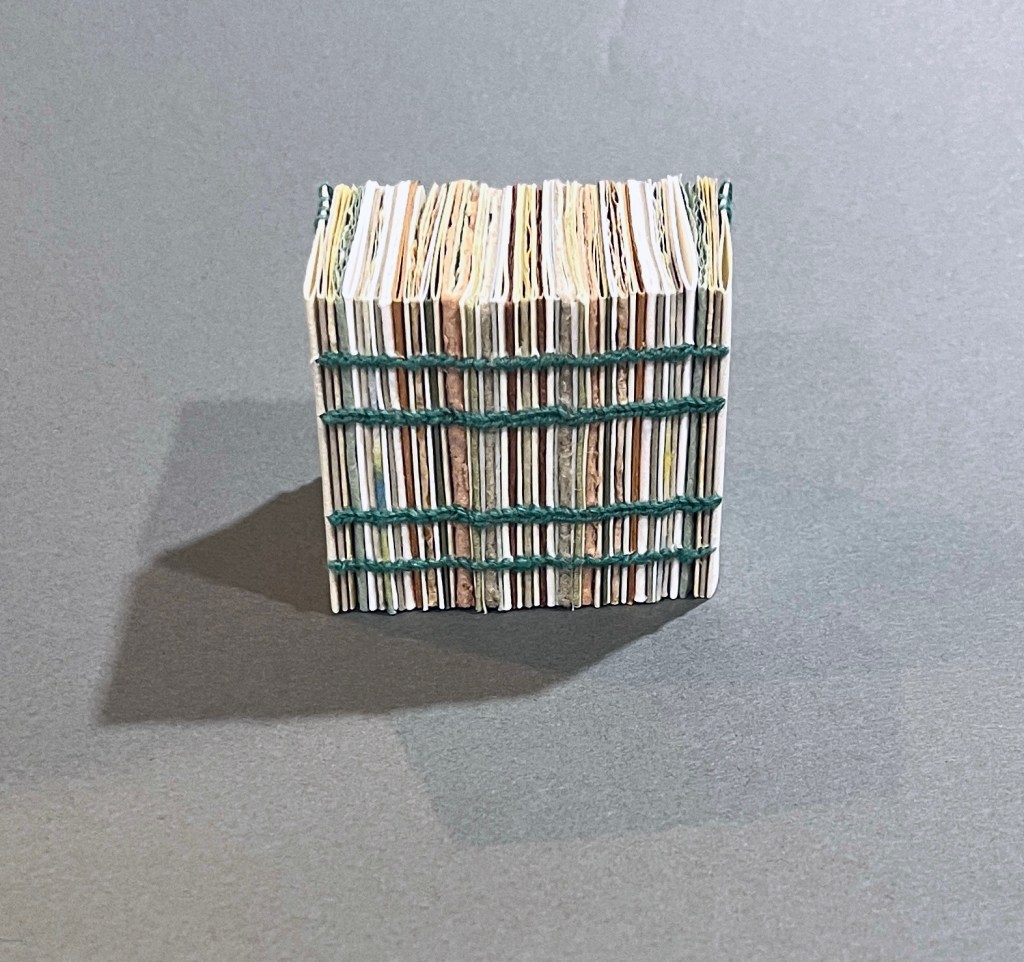
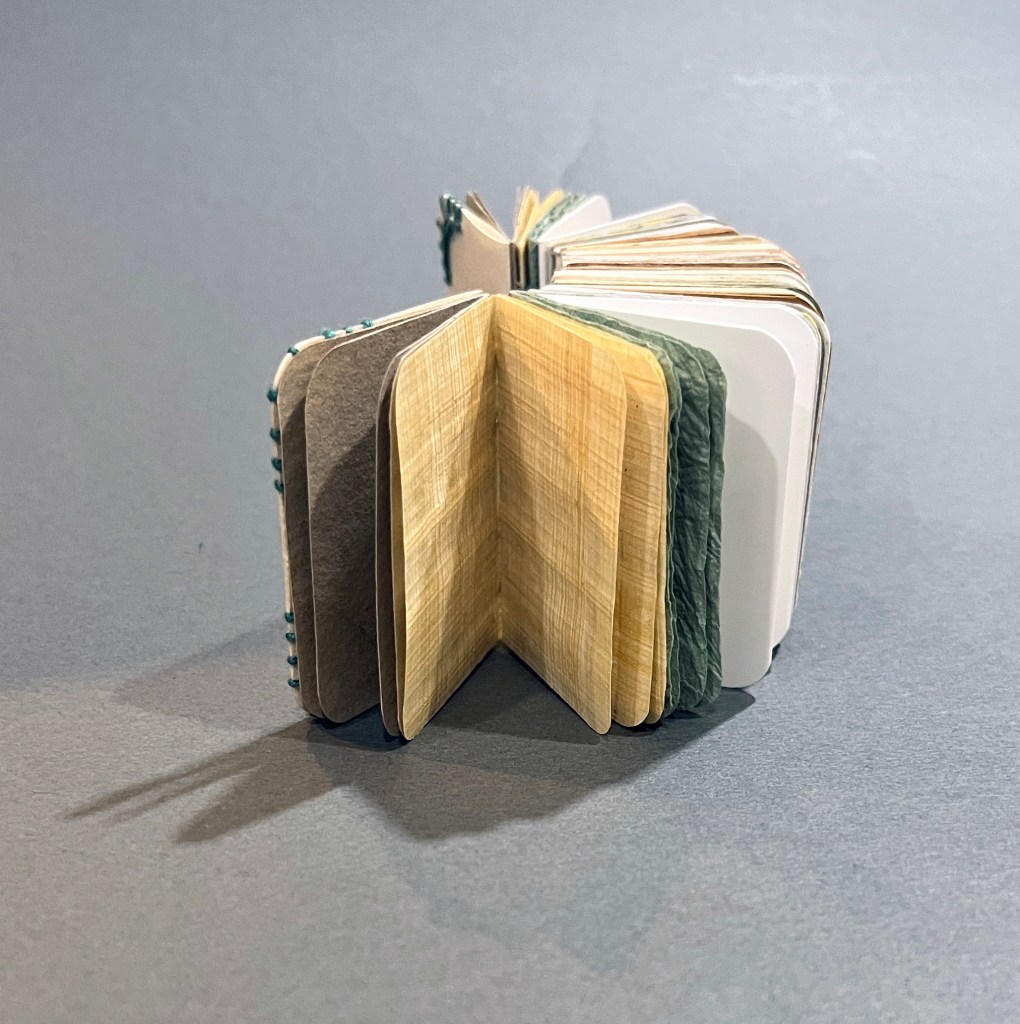

surfaces, 2026
A collection of writing and print surfaces with thread accents. Including palm leaf, parchment, papyrus, Yupo, mineral paper, tracing paper, card stock, vegetable fibers, Japanese paper, Korean paper, Islamic paper, recycled news/construction paper, and other hand/machine made papers.
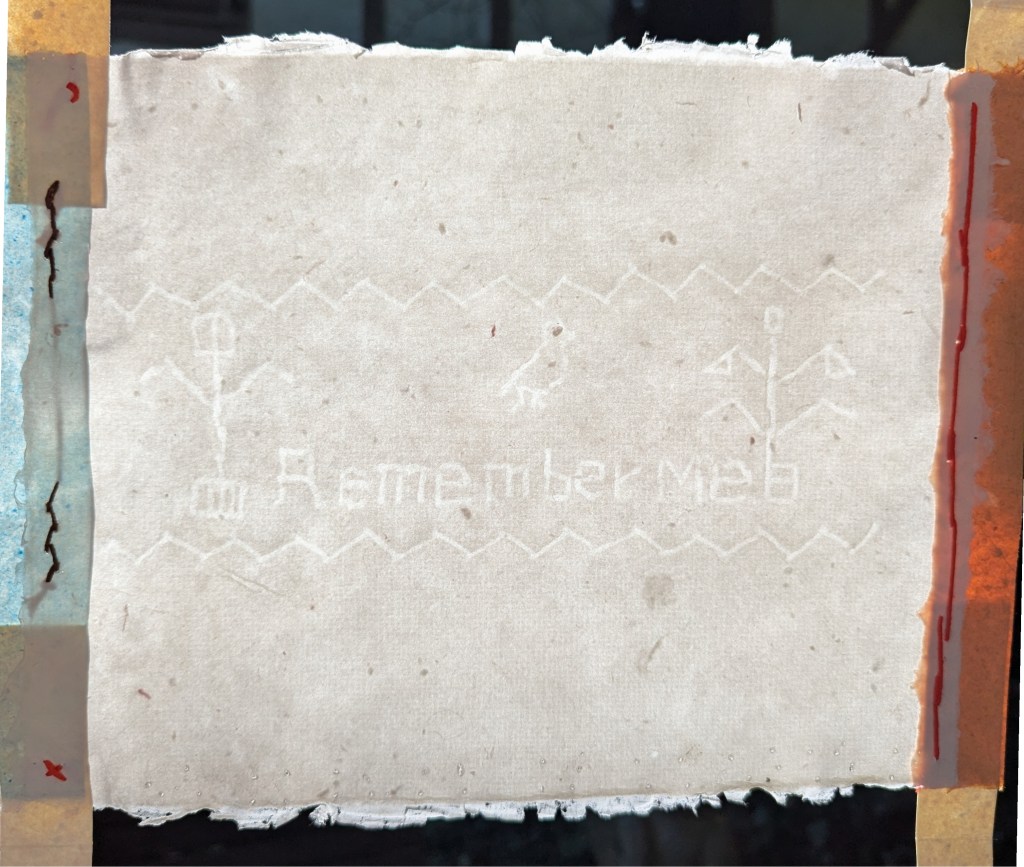
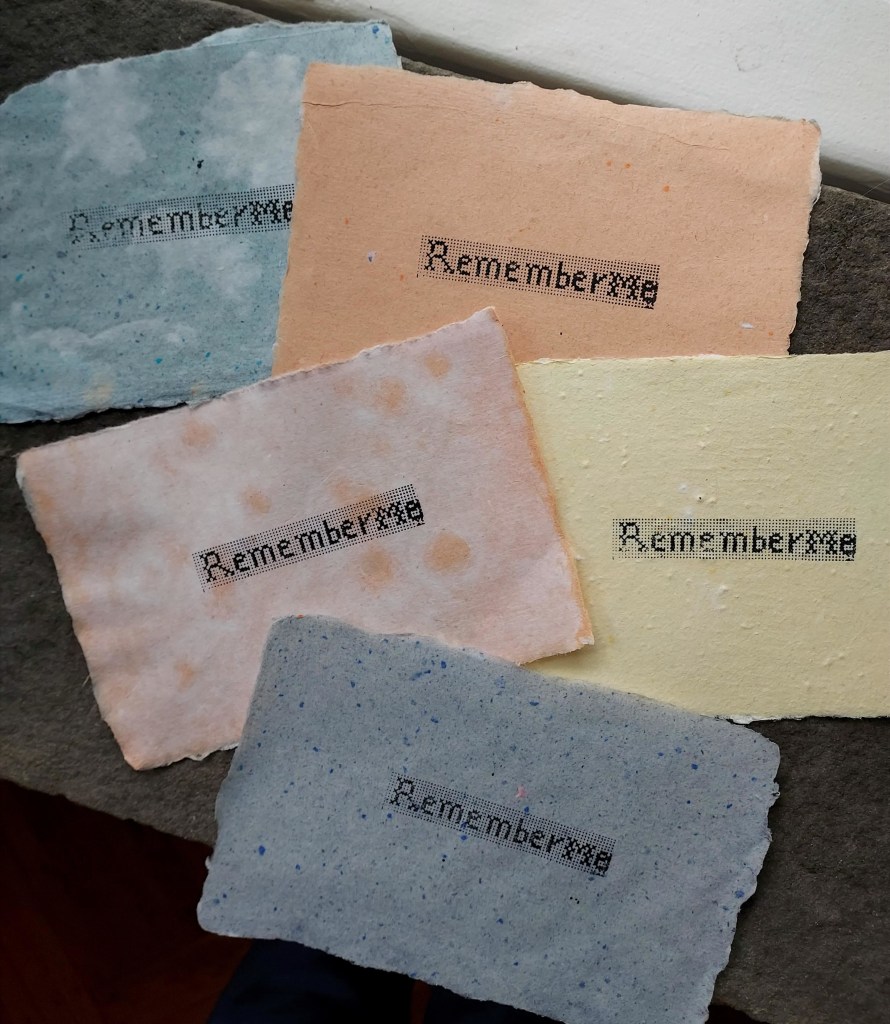
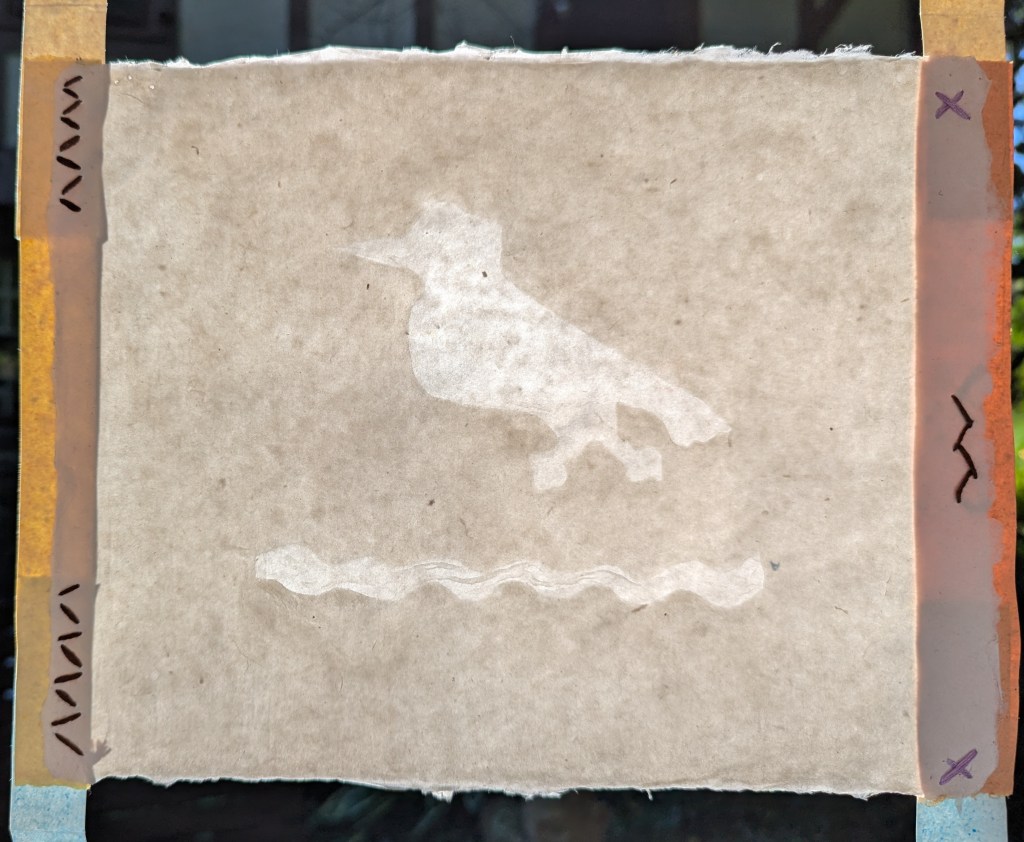
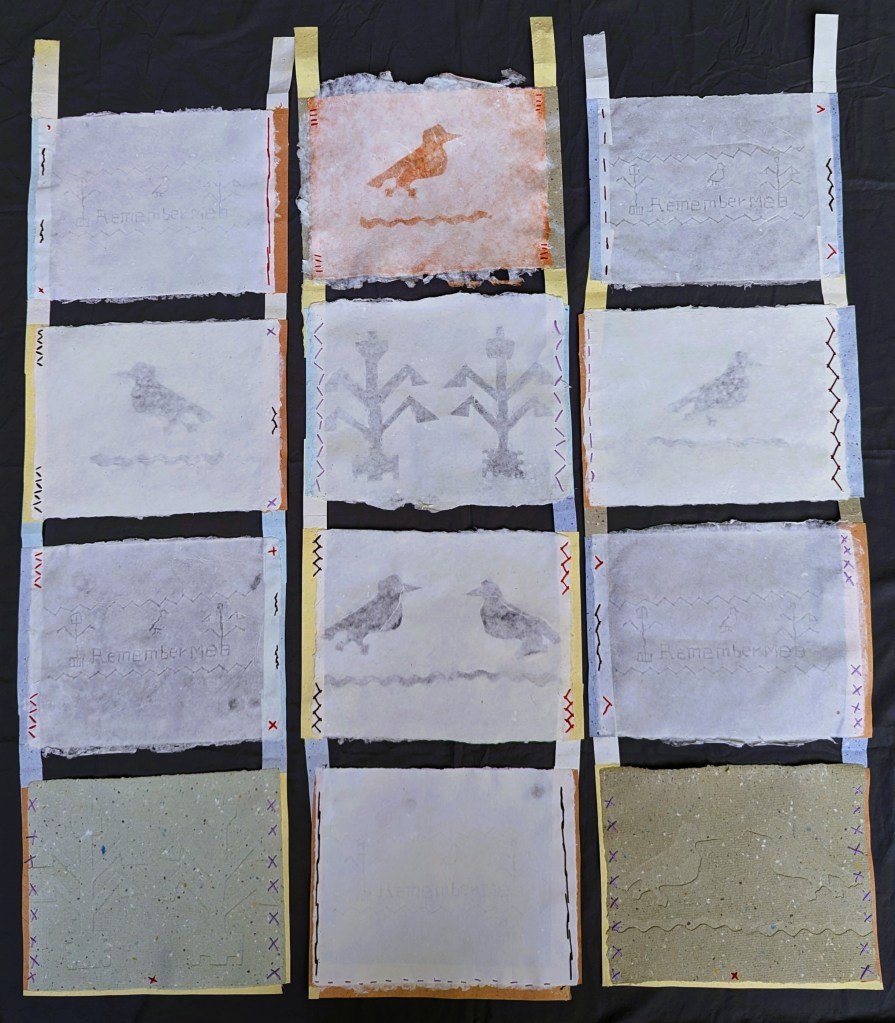
Remember Me, 2026
Handmade linen, cotton, abaca, recycled papers, cotton thread
The watermarks and embossments in these handmade papers are inspired by a needlepoint that hangs on the second floor of the Historic Rittenhouse Town homestead. Created by a girl or woman who lived and worked at Rittenhouse Town, the needlepoint is material evidence of a life lived here and a poignant message sent into the future: Remember Me.

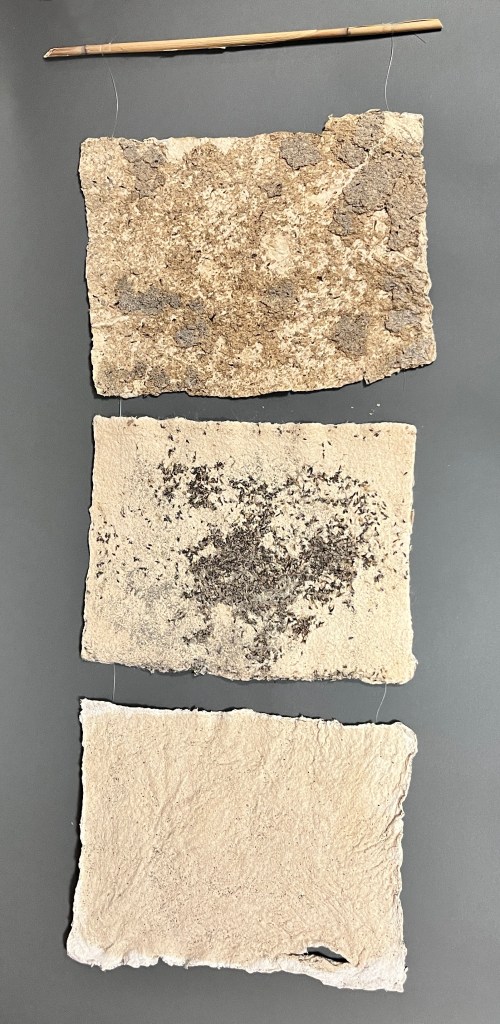
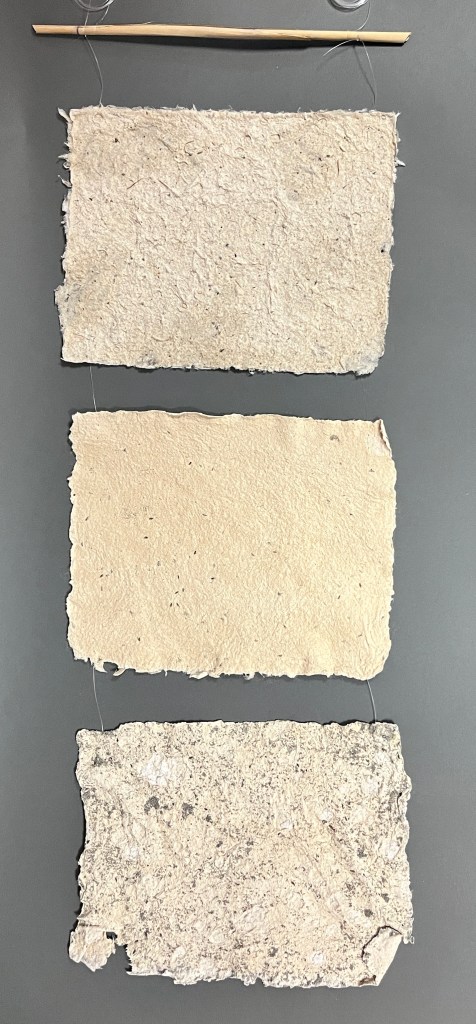
Halocosm, 2026
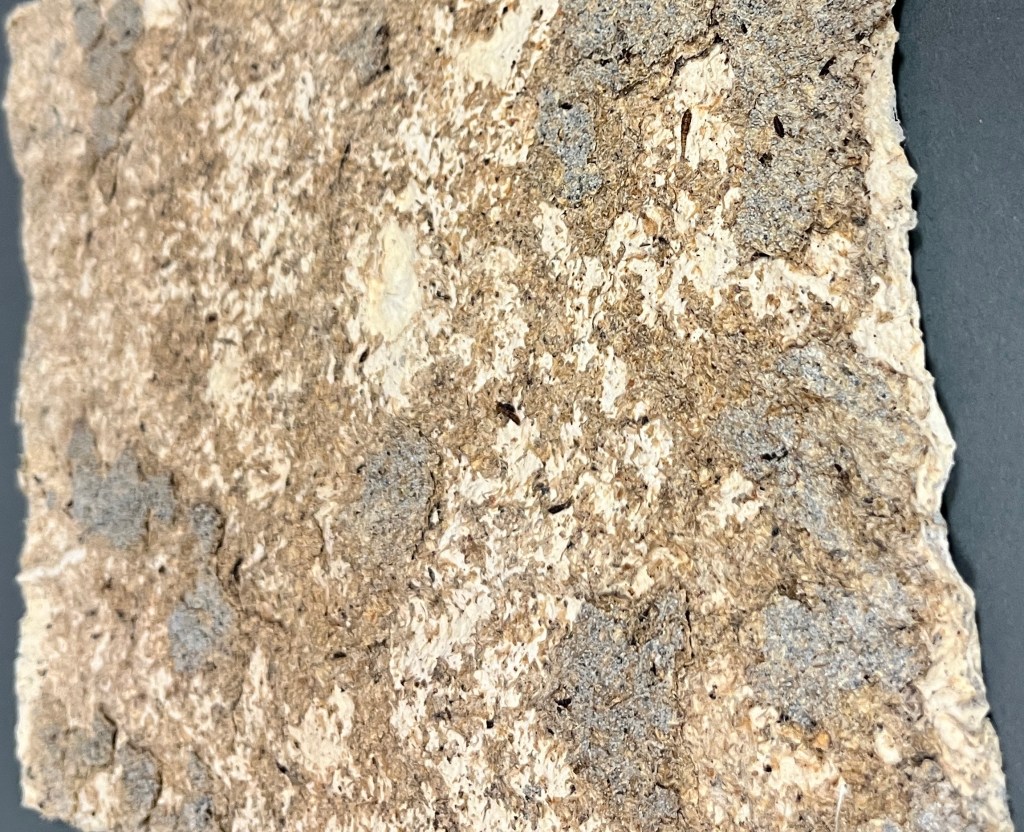
The paper in this piece is made from foraged phragmites—an invasive grass crowding the shoreline of Great Salt Lake in Utah, absorbing valuable water and affecting local ecosystems. A group of papermakers filled vats with the Great Salt Lake’s saline water and couched (transferred) the fresh sheets directly onto its sandy shore. The resulting paper represents a threatened landscape. Its surface may appear bleak at first glance, but upon closer inspection springs to life with brine flies, brine shrimp, oolitic sand, salt crystals, and microalgae. The patient attention of the papermaking process is a mirror for the attention required to revive and sustain this unique and live-giving water body. Halocosm is constructed from paper, fishing line, and the stems of dried phragmites. Contributing papermakers are Jem Ashton, Lyuba Basin, Kyson Jacobson, Tamrika Khvtisiashvili, Jonathan Sandberg, and Michelle Wentling.

